Anti-Money Laundering in Gaming and Lottery Operations in Mexico: Regulatory Framework, SAT Audits, and Sanctions
Wednesday 29 de July 2026 / 12:00
⏱ 3 min read
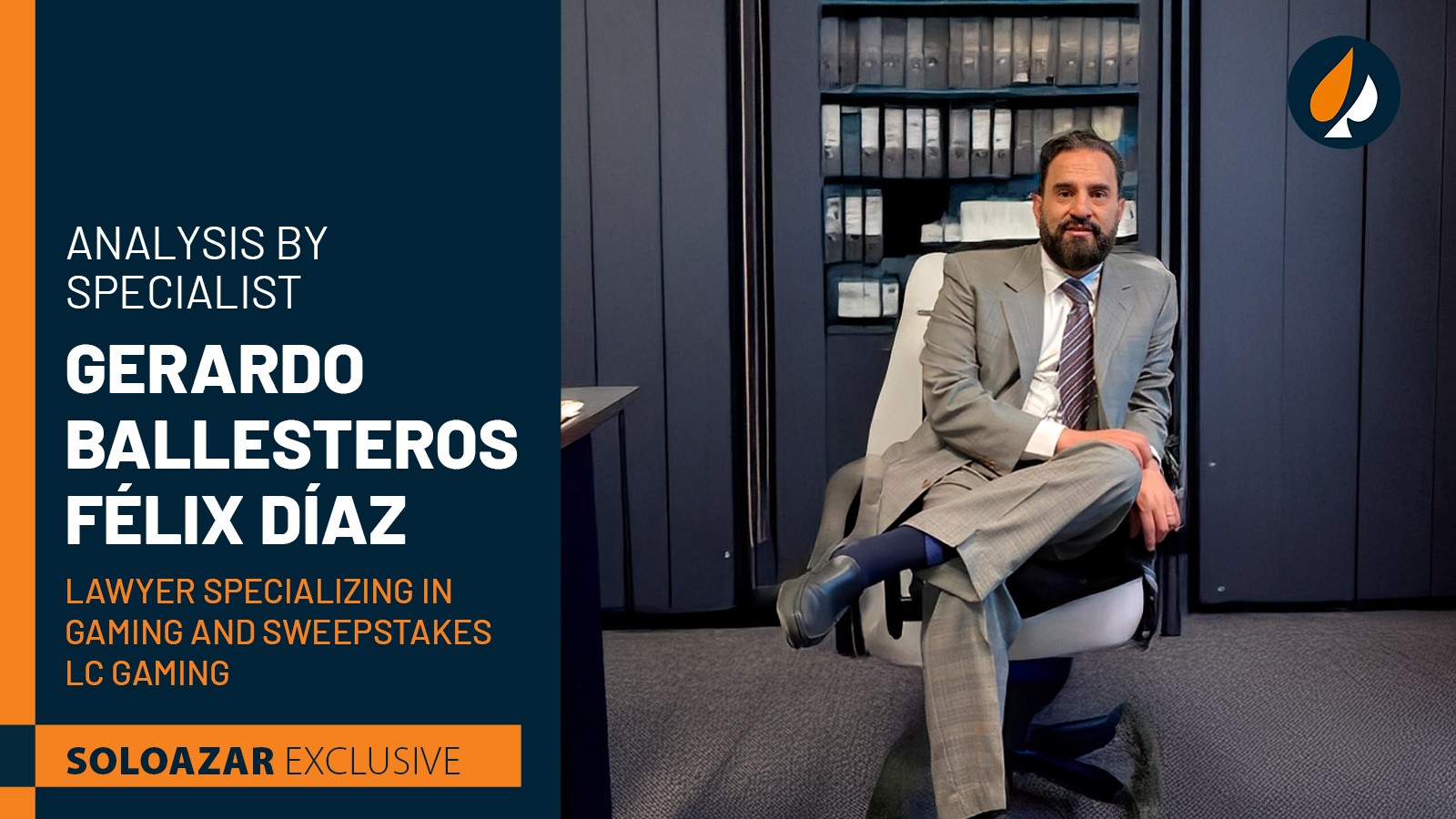
Gerardo Ballesteros Félix Díaz is a Legal and Corporate Consultant specializing in Gaming and Lottery Law at LC GAMING. In this exclusive column for SoloAzar, he examines the evolution of Mexico's regulatory framework. In this installment, he focuses on the obligations established under the Federal Law for the Prevention and Identification of Transactions with Illicit Proceeds (LFPIORPI), the SAT's audit procedures, and the sanctions regime currently in force in Mexico.
Technical Summary on the Application of the LFPIORPI (Section I of Article 17), the Risk-Based Approach, 2026 Operational Thresholds and the SAT Verification Procedure.
Executive summary
The reforms to the Federal Law for the Prevention and Identification of Operations with Resources of Illicit Origin (LFPIORPI), published in July 2025, as well as the amendments to its Regulations of March 2026, reinforced compliance obligations for gambling and sweepstakes operators in Mexico.
The new scheme is based on a Risk-Based Approach (RBA), supervised by the Tax Administration Service (SAT), which requires greater internal controls, transactional monitoring and money laundering prevention mechanisms.
1. Regulatory framework and operational thresholds for 2026 in Mexico
The practice of gambling, contests and raffles – face-to-face or online – is considered a Vulnerable Activity according to Section I of Article 17 of the LFPIORPI.
The legal obligations depend on the amount of the operation, calculated based on the Unit of Measurement and Update (UMA).
Value of the UMA 2026: $117.31 MXN
| Concept | Limit (UMA) | Equivalent 2026 | Obligation |
|---|---|---|---|
| Identification threshold | 325 UMA | $38,125.75 MXN | Integrate the Customer Identification Record (KYC) when selling tickets, tokens, or paying prizes. |
| Warning threshold | 645 UMA | $75,664.95 MXN | Submit the individualized XML Notice to the SAT/UIF. |
| Limit for cash transactions | 3,210 UMA | $376,565.10 MXN | Prohibition of receiving or paying cash in excess of the limit established for chips, tickets or prizes. |
Accumulation rule
When a user makes several trades within a 24-hour period, and the sum reaches or exceeds 325 UMA, the trader shall accumulate such transactions and fully identify the customer, even if each individual trade does not exceed the threshold.
2. Obligations of the Compliance Representative
Legal entities dedicated to the operation of games with bets and sweepstakes must appoint a Compliance Representative before the Ministry of Finance and Public Credit (SHCP).
Her main responsibilities include:
- Implement a Risk-Based Approach (RBA) to identify and mitigate risks associated with the operation, considering geographical location, customer profile and payment methods.
- Prepare, update and implement the Internal Compliance Policies Manual.
- Have automated transactional monitoring systems capable of detecting unusual operations in real time.
- Identify Politically Exposed Persons (PEPs) and obtain the Controlling Beneficiary statement.
- Ensure annual anti-money laundering (AML) training programs.
- Coordinate the performance of the mandatory annual audit and attend to the observations derived from it.
3. SAT audit and inspection procedure
The verification visits carried out by the SAT to casinos and lottery operators follow a methodology composed of five stages.
Phase 1. Start of verification
The inspectors appear at the registered address or notify the procedure through the Tax Mailbox. The presence of the Compliance Representative and the accreditation of the corresponding registry are requested.
Phase 2. Document review (KYC)
A sampling of customer files with operations equal to or greater than 325 UMA is carried out, verifying:
- Valid official identification.
- Proof of address.
- Proof of Tax Situation.
- Controlling Beneficiary Statement.
Phase 3. Cross-referencing and reconciling information
The SAT compares information from:
- Cash reports.
- Betting systems (slots or sportsbook).
- Bank statements.
- XML notices sent to the SAT.
Phase 4. Cash Review & Monitoring
The verifiers check:
- Compliance with the limit of 3,210 UMA for cash transactions.
- The operation of the monitoring software.
- The generation of alerts and reports of accumulated operations in 24 hours.
Phase 5. Final Act
The irregularities detected are documented and the company has a period of 5 to 20 working days to present evidence and refute the observations before the sanctions are determined.
Financial sanctions framework
The LFPIORPI contemplates various economic sanctions for non-compliance.
Failure to identify the customer
- Fine of 200 to 2,000 UMA.
- Equivalent to $23,462 to $234,620 MXN per file.
Failure or Late Filing of Notices
- Fine of 10,000 to 65,000 UMA.
- Equivalent to $1,173,100 to $7,625,150 MXN for each omitted notice.
Cash transactions above the legal limit
- Fine equivalent to 10% to 100% of the value of the operation, with a minimum of 10,000 UMA.
Risk control and mitigation measures
To reduce legal contingencies during a SAT verification, it is recommended that operators maintain a permanent compliance program that includes:
- Automated logs generated by the monitoring software.
- Complete and permanently updated KYC files.
- Formal analysis of the Controlling Beneficiary.
- Identification and monitoring of Politically Exposed Persons (PEPs).
- Execution of annual AML audits.
- Implementation and monitoring of remediation plans derived from audits.
- Periodic review of compliance with the operational thresholds and the Notices filed with the SAT.
In this way, companies can strengthen their money laundering prevention system, reduce regulatory risks and respond more efficiently to any inspection procedure by the tax authority.
*Gerardo Ballesteros Félix Díaz, is a Lawyer Specializing in Games and Sweepstakes and senior partner of the law firm LC Gaming.
Categoría:Analysis
Tags: Sin tags
País: Mexico
Región: North America




Event


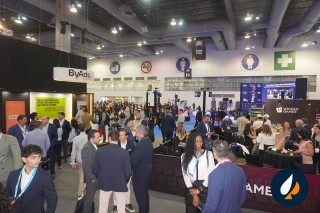

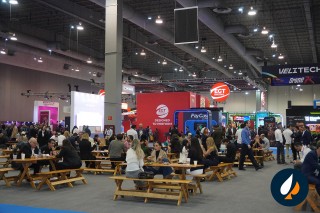

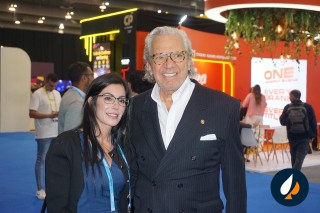
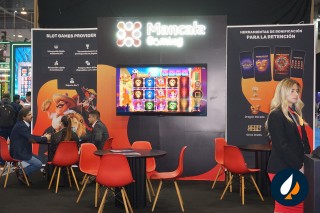
SiGMA North America 2026
01 de September 2026
Evert Montero Analyzed Colombia's Gaming Regulation at SiGMA
(Mexico City) — Speaking at SiGMA North America 2026, FECOLJUEGOS President Evert Montero Cárdenas offered a deep dive into the regulatory shifts shaping the Latin American and North American markets. He highlighted the sustainability challenges ahead for Colombia's industry and the ongoing impact of technological innovation. A major highlight of the September 1-3 summit at Mexico City’s Centro Banamex was Montero's induction into the Hall of Game 2026.
Friday 11 Sep 2026 / 12:00
Sportradar highlights LATAM growth at SiGMA North America
(Mexico City, SoloAzar Exclusive).- Rodrigo Cambiaghi, Sales Executive Lead, Digital Advertising at Sportradar, highlighted the strategic importance of Mexico and the broader Latin American market during SiGMA North America 2026. Held from September 1–3 at Centro Banamex in Mexico City, the event brought together nearly 2,250 delegates and focused on artificial intelligence, innovation, public-private collaboration and the adaptation of global strategies to local market dynamics.
Friday 11 Sep 2026 / 12:00
AIEJA Highlights Success of SiGMA North America in Mexico
(Mexico City, SoloAzar Exclusive).- Dr. Miguel Ángel Ochoa Sánchez, Executive President of AIEJA, underscored the success of the inaugural SiGMA North America in Mexico, noting its crucial role in elevating the local gaming industry on the global stage. Speaking at the event—held September 1-3 at Mexico City's Centro Banamex—he also broke down key regulatory hurdles, strategies to combat illegal gambling, and emerging opportunities within the sector.
Wednesday 09 Sep 2026 / 12:00
SUSCRIBIRSE
Para suscribirse a nuestro newsletter, complete sus datos
Reciba todo el contenido más reciente en su correo electrónico varias veces al mes.