Dr. Daniel Sahl on Gamification and the Future of Casino Gaming
Friday 21 de August 2026 / 12:00
⏱ 7 min read
(Malta).- Soft2bet made an exclusive interview to Dr Daniel Sahl, Director of the Center for Gaming Innovation at UNLV’s International Gaming Institute, who shares his insights into the evolution of casino game design, exploring the growing role of gamification, data and emerging technologies, and what they mean for the future of player engagement.

Evolution in Casino Gaming
Innovation in casino gaming used to be measured by bigger jackpots, new themes, sharper graphics and more sophisticated bonus mechanics. But both the attention and expectations of players are changing. As iGaming increasingly competes with video games and the broader digital entertainment ecosystem, the question is what keeps players engaged with the experience itself?
The Shift in Player Expectations
Few people are better placed to access this shift than Dr Daniel Sahl, one of the leading voices in casino innovation. As Director of the Center for Gaming Innovation at UNLV’s International Gaming Institute, Sahl has dedicated his career studying the convergence of gambling and video game design, and what works, what fails and why.
A Candid Assessment on Gamification
In this exclusive interview, he offers a candid assessment of where gamification has succeeded, where the industry has got it wrong, and how data and new forms of player interaction could reshape the next generation of casino gaming.
Q: Five years ago, gamification was often viewed as a marketing feature. Today, it is seen as a core commercial strategy. What has changed in the industry's thinking?
Dr Daniel Sahl: I think for over 10 years the industry has shown an interest in better understanding how other gamification design elements could be used to improve the appeal of casino gaming products. But fundamental gameplay changes in this industry can be slow and it has taken time and lots of trial and error to better understand what integrations work best. Around 2015, the North American gaming manufacturers and operators showed a lot of interest in startup studios that were integrating video game play with slot play, often called skill slots.
Millions of dollars were put into designing these games that blended video game play with a gambling element, and in the end those games did not perform well on the floor. Players, including younger players, were not drawn to them at all.
In my opinion, a big part of that failure was that the video game elements interfered with the casino game elements. That experience helped shift the industry's focus toward integrating gamification in ways that enhance, rather than outright disrupt, the core gambling experience.
Q: There is a tendency to equate gamification with badges, missions and leaderboards. From a research perspective, what actually defines effective gamification?
Dr Daniel Sahl: Casino games are traditionally anchored in very well known gameplay structures and also themes and designs. For example: card games, dice, wheels, traditional slot reels.
When I think about the convergence of other game designs with casino game design, I think any small incorporation of non-traditional structures can have a big impact. A recent trend we have seen in mobile gaming is the rise of crash games, where players have a level of control over when to cash out on an ongoing wagering event.
There is a small social element to these games, and they introduced a new element of player control over risk. These elements share some relationship with other game designs, but they are applied in a way that complements a casino gaming experience.
Q: What lessons in your opinion has the gambling industry borrowed from video game design?
Dr Daniel Sahl: I think the strongest influences in casino game design from video game design come from art and graphics. There is so much convergence in terms of graphic quality and intensity (especially in new land-based game cabinets), integrated sound design, and also themes and general art style. And certainly, we see more complexity and variety in terms of bonus rounds and how substantial wins are generated. There are more pathways to explore in contemporary slot design, and that does parallel the video game experience. But if we’re talking structurally, about the rules and flow of the games themselves, I actually think it is the video game world over the past two decades that has shown itself to be influenced by casino game rules, gameplay flow, and aesthetic feel.
Q: Which psychological drivers create sustainable engagement without encouraging excessive play?
Dr Daniel Sahl: With a few exceptions, casino games tend to be resolved very quickly, from a few minutes after the wager is made to a few seconds. As I teach my students in game design, that period between the commitment of a wager and the final resolution of the wager is about telling a story. Successful games, one way or another, communicate information to the player about the direction of the outcome as the wager is in progress:…win, loss, push, jackpot.
Sometimes, that information points to big potential wins that ultimately don’t complete. My preference, as a designer, is to be transparent about how the odds of winning and losing are presented in any game so that players have a reasonable understanding of the winning and losing dynamics. I think that can help players make informed decisions.
Q: How can operators design experiences that are highly engaging while remaining consistent with responsible gambling principles?
Dr Daniel Sahl: I think the key to sustainable gaming with strong responsible gaming principles is driven by offering players useful tools and information. Examples include: win/loss summaries, interventions informing about total spend during a session (or some other reasonable time period), and providing access to responsible gaming tools designed to help players understand how these games are designed, how to manage risk, and how to seek professional help if there is a problem.
In addition to information and intervention, I would also highlight that mobile operators in the US have effective self-exclusion tools that enable players to prevent access to the sites (as well as stop the flow of promotions) for a temporary period of time or permanently.
Q: Data driven intelligence is making personalised player journeys far more sophisticated. Does it fundamentally change what gamification can achieve?
Dr Daniel Sahl: I think when we talk about creating more personalized journeys that are driven by data and player actions and engagement, we are talking about gamification... this is something video games have been doing for a long time. Operators can use data to more effectively present players with reward offers or what games to highlight. That said, it is important to distinguish between personalizing the player experience and personalizing the outcome of the gambling experience.
Ultimately, the outcome of every play made is independently determined by a random system, whether a random number generator or physical devices like cards, dice, or wheels. That is not going to change.
Q: We are seeing operators build entire entertainment ecosystems rather than standalone casino or sportsbook products. Is this the future of digital gambling?
Dr Daniel Sahl: Are you discussing the integration of video games, streaming, and casino gaming as well as other forms of digital entertainment? I’m not sure if that is likely in the near future. Regulations, age prohibitions, and KYC requirements might make that type of model difficult to implement that could actually be counter productive. Could I see more collaboration between these digital entertainment experiences, possibly. But gaming will likely remain on a very separate platform.
Q: Which sectors outside gambling are currently leading innovation in engagement that casino operators should be studying?
Dr Daniel Sahl: Right now, I think we are seeing some stagnation in terms of how video games (and other digital products like streaming or social media) are engaging users. Games are suffering from repetition, too much complexity and bloat, while many online multiplayer experiences can be frustrating rather than rewarding.
AI will dramatically change this. Already we are seeing companies like Amazon offering tools to build games where players can talk to AI-generated characters in game, and those characters will respond appropriately. But this is just the beginning. The use of AI immersion and interaction in media is only starting to lay the foundation of new products and experiences (think Pong in the 70s). We are going to see more immersive elements in game design, and this will possibly cross over into streaming experiences as well, with AI hosts and characters in shows that interact directly with viewers.
Q: What aspect of gamification do you think the industry still misunderstands?
Dr Daniel Sahl: I don’t think it’s a question of misunderstanding. It’s a process of trial and error in new product design to figure out how gamification elements can fit with traditional casino game design elements.
Q: What in your opinion does the future hold (a) better odds and bonuses, or (b) more compelling player experiences or (c.) a balance of both?
Dr Daniel Sahl: Ultimately, it’s not quite that simple. Games have multiple factors that go into the experience they deliver to the player. But it’s also important to recognize that players also differ in terms of what speaks to them in game design. These interacting nuances are what we work to understand in my gaming innovation class at UNLV.
Dr Daniel Sahl serves as the director for the Center for Gaming Innovation, part of the International Gaming Institute. In this role, Dr. Sahl works with undergraduate and graduate students, faculty, and industry leaders to drive, develop, and commercialize new casino gaming technologies. Since its inception in 2013, the Center for Gaming Innovation has produced 18 issued US patents and successfully commercialized 10 gaming products.
Dr. Sahl has shared his expertise in casino game design and innovation at government and industry conferences across the US and internationally. He holds a Ph.D. in Sociology from the University of Nevada, Las Vegas. His doctoral work looked at the convergence of video game design with present-day slot machines and how these new games impact the player’s experience.
Categoría:Analysis
Tags: Soft2Bet,
País: Malta
Región: EMEA




Event







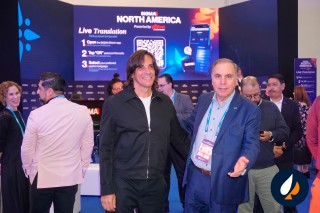


SiGMA North America 2026
01 de September 2026
LatAm Regulators Discussed Illegal Gambling and Innovation at SiGMA North America
(Mexico City, SoloAzar Exclusive).- The panel "The Red Pen Forum: Regulators Respond to the Industry," held during SiGMA North America 2026, brought together representatives from Uruguay, Argentina, Puerto Rico, and Honduras to analyze regulatory challenges, digital transformation, illegal gambling, and the need to adapt lotteries for new generations. The conference was moderated by Rodrigo Cigliutti, Executive Director of CIBELAE (Ibero-American Corporation of State Lotteries and Betting), and featured the participation of Marcelo Visconti, National Director of Lotteries and Quinielas of Uruguay; Carlos Moyano, President of IAFAS Entre Ríos, Argentina; Heidi Hernández Olivo, Deputy Secretary of the Puerto Rico Lottery; and Lissa Mencía, General Director of Lottery Operations and Games at Loto Honduras.
Monday 28 Sep 2026 / 12:00
SiGMA North America Addressed Crisis Management in iGaming
(Mexico, SoloAzar Exclusive).- During SiGMA North America 2026, Rosa Ochoa, founder of the Blue Global Gaming platform and strategic advisor for gaming operators; Iliana María Pineda Echeverri, Chief Legal & Compliance Officer at Wplay.co; Iraid Rosales, Country Manager Mexico at Amusnet; and Elizabeth Maya Cano, Executive President of CORNAZAR, analyzed the key factors in managing crisis situations within the iGaming industry, with a special focus on transparency, communication, technology, and preparation.
Friday 25 Sep 2026 / 12:00
Affiliates and Acquisition: Keys to Regulated Markets in North America
(Mexico City, SoloAzar Exclusive).- During SiGMA North America 2026, Cristopher Guzmán Reyes, Head of Affiliates at Logrand Entertainment Group; Guga Júnior, influencer and slots expert at Scalar Partners; Andrés Gómez, Head of Latin America Go-to-Market Strategy at Admattic; Yambot Aguilera, Gaming and Finance Sales Director at Google; and Paula Gabriel Jiménez, Advertising Client Growth Director for Microsoft at Aleph, analyzed the state and provincial affiliate ecosystem in North America, as well as the acquisition challenges in regulated markets.
Thursday 24 Sep 2026 / 12:00
SUSCRIBIRSE
Para suscribirse a nuestro newsletter, complete sus datos
Reciba todo el contenido más reciente en su correo electrónico varias veces al mes.