Expanding Sports Prediction Markets Outpace CFTC Oversight, Warns Senator Schiff
Wednesday 13 de May 2026 / 12:00
⏱ 4 min read
(Washington, D.C.).- Democratic Senator Adam Schiff introduces bipartisan plan to block sports‑based prediction markets while protecting legitimate financial contracts.
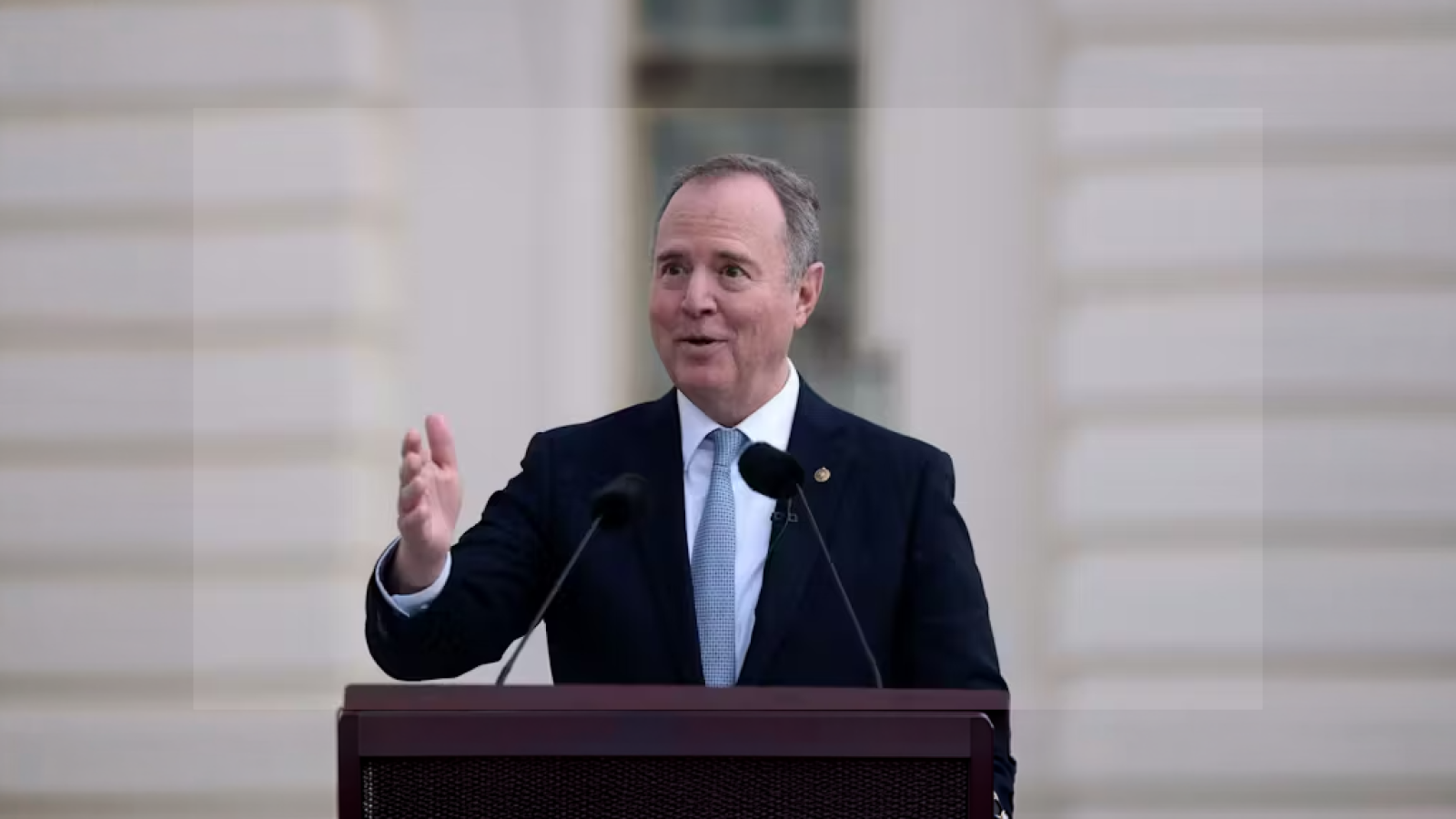
Democratic Sen. Adam Schiff warned Tuesday that federally regulated prediction markets are rapidly blurring into unregulated sports gambling, arguing the current system threatens state sovereignty, overwhelms federal regulators, and exposes retail traders to sophisticated insiders and algorithmic firms.
Key Takeaways
- Sen. Adam Schiff warned prediction markets are increasingly functioning like unregulated sports gambling and threatening state authority.
- Schiff said the CFTC lacks the staffing and infrastructure to oversee rapidly expanding event-contract markets.
- Kalshi defended federally regulated prediction markets as transparent financial tools while rejecting comparisons to casino-style gambling.
Debate Heats Up as Schiff Criticizes Prediction Markets, Kalshi Defends Transparency
Speaking at a Brookings Institution event in Washington, Schiff said his concerns escalated after congressional hearings on sports betting and prediction markets convinced him the distinction between the two had become increasingly artificial.
“If I bet on the (Buffalo) Bills game using a prediction market, is that a sports bet?” Schiff recalled asking during an earlier Senate hearing. “It doesn’t seem very complicated to me.”
Schiff, who sits on the Senate Agriculture Committee, which oversees the Commodity Futures Trading Commission (CFTC), said the organization lacks the staffing and infrastructure to oversee what has become an exploding market for event-based contracts. The CFTC only has one member of the historically five-person panel and has slashed enforcement staff over the past 18 months.
The California Democrat also framed the issue as a federalism dispute, particularly for states such as California and Texas that have not legalized statewide sports betting.
His bipartisan legislation with Republican Utah Sen. John Curtis would prohibit sports-related prediction markets and casino-style event contracts while preserving other forms of prediction markets tied to commodities and risk management. Schiff said Tuesday the proposal would return authority over sports betting-style contracts to states and tribal governments.
Referencing a recent analysis of prediction market activity, Schiff said a tiny fraction of users account for the overwhelming majority of winnings, while most retail participants lose money. He also warned about the ease of access compared to traditional casinos, noting federally regulated event contracts are generally available to users as young as 18 rather than the 21-plus standard used by most state gaming regulators. “Who’s guarding against that and who’s looking into what’s happening with gambling addiction?” Schiff said.
Stakeholders defend prediction markets
Kalshi chief regulatory officer Rick Heaslip argued Tuesday that national markets governed by the CFTC provide more transparency and fairness than the existing patchwork of state gaming systems. Speaking on a panel immediately following Schiff’s comments, he rejected comparisons between Kalshi and traditional casinos, and he reaffirmed Kalshi has no plans to offer event contracts on casino-style games.
“We actually agree with Sen. Schiff that casino-style games like those are not markets,” Heaslip said.
Heaslip also pushed back on criticisms that certain novelty-style markets lack economic utility, arguing outsiders often underestimate the downstream commercial value attached to information markets and event outcomes.
Heaslip further said prediction markets allow users to hedge real-world risks that traditional insurance products do not cover. He cited his own use of Kalshi weather contracts prior to joining the company to hedge against poor viewing conditions during the 2024 solar eclipse in Vermont.
He argued many criticisms now directed at prediction markets resemble attacks once aimed at commodity futures exchanges a century ago.
Broader context
The discussion comes as legal battles nationwide continue to shape prediction market news.
Kalshi, a federally regulated exchange overseen by the CFTC, has sued multiple states attempting to block its sports event contracts. At the same time, offshore platform Polymarket continues to draw scrutiny from regulators and lawmakers over election and geopolitical contracts as it looks to re-enter the U.S. market.
Those disputes increasingly appear headed toward futher federal appellate courts and potentially the Supreme Court, where the central question is whether sports-related event contracts fall under federal commodities law or state gaming authority.
Meanwhile, prediction market sites increasingly intersect with crypto infrastructure, artificial intelligence trading tools, and political forecasting. Schiff warned that the combination could create “a perfect crime,” particularly if anonymous crypto transactions are paired with inside information on geopolitical events.
Despite his criticism, Schiff stopped short of calling for a blanket ban on prediction markets, instead distinguishing between contracts tied to legitimate hedging activity and what he repeatedly described as casino-style speculation.
“One has a utility,” Schiff said. “The other seems to have a utility only for those who are driving money from making that service available.”
Categoría:Analysis
Tags: Sin tags
País: United States
Región: North America




Event


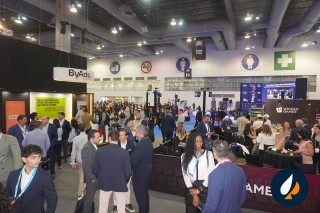


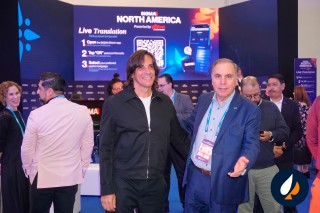


SiGMA North America 2026
01 de September 2026
LatAm Regulators Discussed Illegal Gambling and Innovation at SiGMA North America
(Mexico City, SoloAzar Exclusive).- The panel "The Red Pen Forum: Regulators Respond to the Industry," held during SiGMA North America 2026, brought together representatives from Uruguay, Argentina, Puerto Rico, and Honduras to analyze regulatory challenges, digital transformation, illegal gambling, and the need to adapt lotteries for new generations. The conference was moderated by Rodrigo Cigliutti, Executive Director of CIBELAE (Ibero-American Corporation of State Lotteries and Betting), and featured the participation of Marcelo Visconti, National Director of Lotteries and Quinielas of Uruguay; Carlos Moyano, President of IAFAS Entre Ríos, Argentina; Heidi Hernández Olivo, Deputy Secretary of the Puerto Rico Lottery; and Lissa Mencía, General Director of Lottery Operations and Games at Loto Honduras.
Monday 28 Sep 2026 / 12:00
SiGMA North America Addressed Crisis Management in iGaming
(Mexico, SoloAzar Exclusive).- During SiGMA North America 2026, Rosa Ochoa, founder of the Blue Global Gaming platform and strategic advisor for gaming operators; Iliana María Pineda Echeverri, Chief Legal & Compliance Officer at Wplay.co; Iraid Rosales, Country Manager Mexico at Amusnet; and Elizabeth Maya Cano, Executive President of CORNAZAR, analyzed the key factors in managing crisis situations within the iGaming industry, with a special focus on transparency, communication, technology, and preparation.
Friday 25 Sep 2026 / 12:00
Affiliates and Acquisition: Keys to Regulated Markets in North America
(Mexico City, SoloAzar Exclusive).- During SiGMA North America 2026, Cristopher Guzmán Reyes, Head of Affiliates at Logrand Entertainment Group; Guga Júnior, influencer and slots expert at Scalar Partners; Andrés Gómez, Head of Latin America Go-to-Market Strategy at Admattic; Yambot Aguilera, Gaming and Finance Sales Director at Google; and Paula Gabriel Jiménez, Advertising Client Growth Director for Microsoft at Aleph, analyzed the state and provincial affiliate ecosystem in North America, as well as the acquisition challenges in regulated markets.
Thursday 24 Sep 2026 / 12:00
SUSCRIBIRSE
Para suscribirse a nuestro newsletter, complete sus datos
Reciba todo el contenido más reciente en su correo electrónico varias veces al mes.