Habanero's Strategic Blueprint for Success in Latin America
Thursday 09 de July 2026 / 12:00
⏱ 5 min read
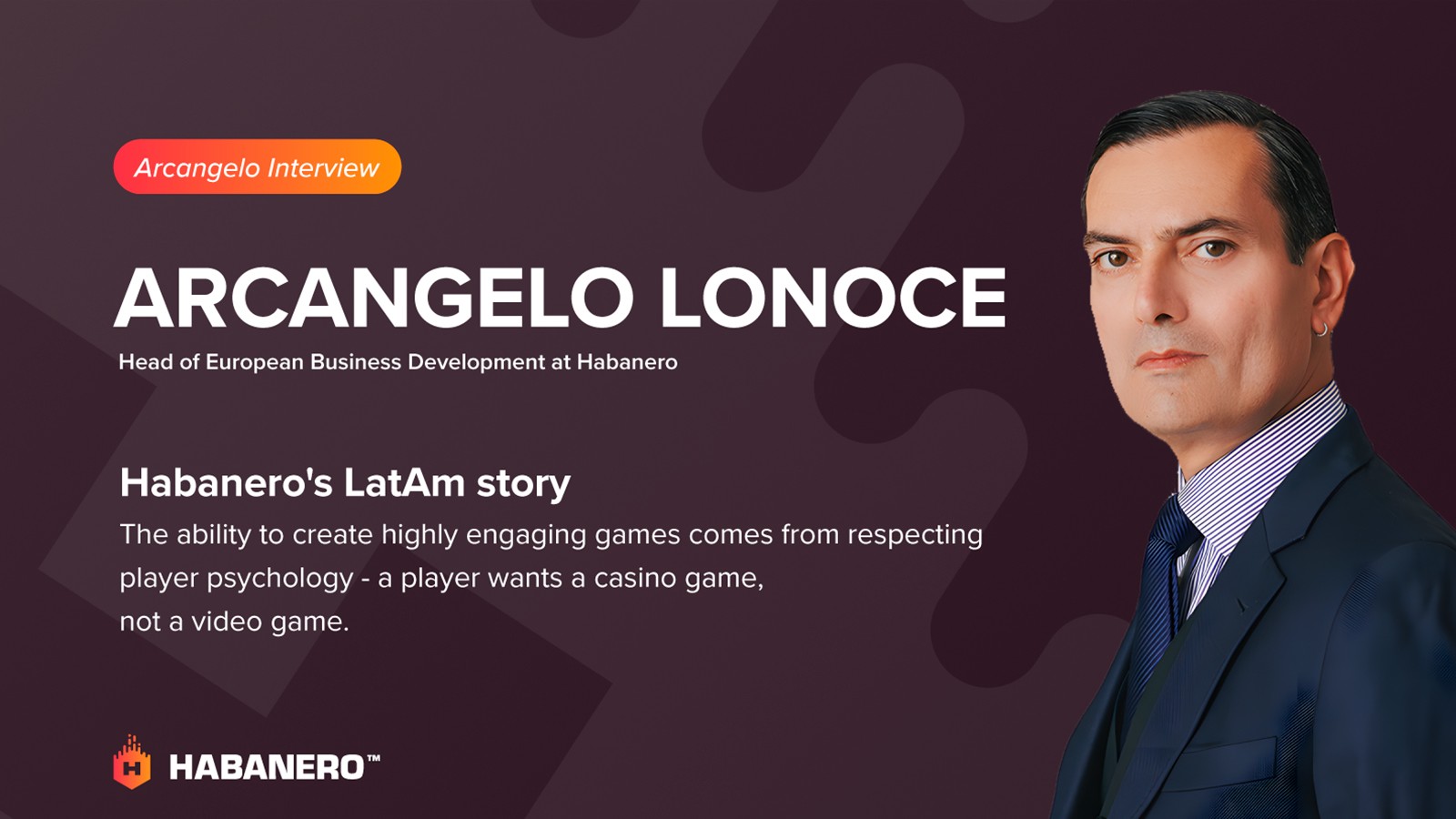
(Malta).- Arcangelo Lonoce, Head of Business Development at Habanero, reflects on the studio’s decade-long journey in Latin America, breaking down the strategic milestones, the evolution of local regulations, and the unique localized approach required to conquer one of iGaming's most diverse regions.
Mapping the LatAm Frontier
When did you realize LatAm was special, and what did competitors miss early on?
Habanero has been in LatAm since around 2018, which makes it close to a decade now. It started through two particular relationships that came about almost simultaneously. Caliente in Mexico approached us because they were genuinely interested in our games. Around the same time, Codere, with whom we had an existing relationship, also launched us in the region. These two partnerships were the catalyst for Habanero’s trajectory in LatAm.
At the time, our main strategic focus was Europe and specifically Italy. The thinking was that if we could establish ourselves with the right stakeholders there, it would open up routes all over the world. LatAm was not really part of the plan at that point, but Caliente and Codere changed that because they are both so deeply embedded in the region and they gave us our first real understanding of what the market was about.
The turning point came when Colombia regulated in 2018. We quickly understood that there was a significant opportunity to enter a regulated market immediately and we moved fast. We went to Bogota in August 2019 and it kickstarted everything. We signed important deals with Rush Street Interactive and BetPlay, met operators from across the market and even found time for dinner with the legendary René Higuita.
One of the things we understood very early, which I think a lot of people still get wrong, is that you cannot look at a continent and expect it to behave as one market. Colombian players are not the same as Argentinian players and Brazilian players are not the same as Chilean players. The cultural differences between markets were immediately obvious to us and that shaped everything about how we approached the region from that point forward.
What early milestones proved Habanero would make a real impact in the region?
The interest of important stakeholders was the real signal. When Caliente and Codere came to our stand at ICE 2018 and told us they loved the content and wanted to work with us, that was the beginning. Caliente is by far the biggest operator in Mexico and an incredibly culturally resonant brand, so their interest meant something. Through this relationship, we integrated with Playtech which opened up a wide range of further opportunities.
Our trajectory in Colombia reinforced the potential we saw in the region. We went there, signed deals quickly and the response from local operators was extraordinary, they were genuinely excited about the content. The same thing happened in Buenos Aires and then in Peru, where we did a landmark deal with Apuesta Total.
What really made us understand that we had a future in LatAm was that the interest was coming from local operators, not just international operators targeting the region. When the people who know a market better than anyone else want your content, that tells you something important.
The Secret to Player Engagement
What makes Habanero’s games resonate so strongly with LatAm players?
Most Latin American markets have a very strong retail and land-based legacy and I think that is central to understanding why our games work so well there. Habanero has never been a retail supplier but the core of what we do is quite traditional. We build games starting from a strong mathematical foundation and develop the gameplay and user experience on top of that. We have never tried to completely reinvent what a slot is. We always believed in tapping into traditional player psychology and evolving it, which is one of the biggest reasons players in the region love our games so much.
That makes us a natural bridge between retail and online, which is exactly what a lot of LatAm markets needed as they developed. Players who are accustomed to land-based experiences can move to our games online and find something that is familiar and not alienating.
The other element is true localisation rather than just translation. Our technical scalability means we can adapt seamlessly and organically to different markets, so our games feel native rather than imported. That matters enormously in markets where culture and familiarity are central to how players choose what to play.
Overcoming Market Fragmentation
Which personal milestone stands out, and how did you navigate the region's challenges?
Habanero becoming embedded in the local industry rather than observing it from the outside is what stands out most. We made friends, built trust and became part of the conversation at a very early stage in markets that were just opening up, which went an incredibly long way.
The real tests came from the fragmentation of the region itself. In LatAm, you are dealing with different regulations, different economies, some of them quite volatile, and significant logistical challenges when operating without a local entity on the ground. Those costs and complexities have a direct impact on your commercial relationships, and they force you to be extremely strategic about where you go, when you go and what your business case looks like before you commit.
That discipline has always been part of how Habanero operates. We do not jump into markets without a clear model and a clear sense of return on investment. It is not always the most exciting approach but it is the one that has allowed us to build something sustainable in a region that has humbled plenty of suppliers who entered the market without truly understanding it.
The Future of LatAm iGaming
How has the region evolved over the past five years, and what has exceeded your expectations?
Regulation and online penetration are the two things that have changed most dramatically. COVID accelerated online adoption in a way that nobody could have predicted and Latin America was no exception. Playing online is now completely normal across the region, it is not an alternative to retail, it is just how people play.
The quality of regulation that has emerged across the region has also been remarkable. Starting with Colombia, which remains one of the most mature and workable regulatory environments in LatAm, through to markets like Peru and now Brazil, the approach from regulators has generally been thoughtful and well-executed. That has allowed advertising to develop properly, which in turn has transformed the public perception of online gaming in many of these markets.
Brazil is perhaps the most extraordinary development of all. It had been discussed for so many years without materialising that when it actually happened and happened largely on schedule, it felt genuinely historic. There are still things that can be improved, particularly around game certification for suppliers, which is currently an operator-by-operator process that creates high cost and complexity. That said, what has been achieved in Brazil in a short period of time is commendable. When you compare where it is now to where it was five years ago, it genuinely feels like twenty years of progress rather than five.
In terms of whether the region has lived up to expectations, my honest answer is that it has exceeded them. Argentina still holds enormous potential as it moves towards a more consistent national regulatory framework and Peru is continuing to develop nicely. The broader trajectory across the continent is one of genuine maturity and long-term opportunity. We are incredibly proud of what we have built in LatAm and we are only getting started.
Categoría:Analysis
Tags: Habanero,
País: Malta
Región: EMEA




Event










SBC Summit 2026
29 de September 2026
Uplatform Brought "Your Dreams. Our Platform" to Life at SBC Summit Lisbon 2026
Friday 09 Oct 2026 / 12:00
Kambi Highlights Network and LatAm Growth at SBC Summit
Friday 09 Oct 2026 / 12:00
GR8_TECH Highlights Speed and Growth at SBC Summit 2026
Friday 09 Oct 2026 / 12:00
SUSCRIBIRSE
Para suscribirse a nuestro newsletter, complete sus datos
Reciba todo el contenido más reciente en su correo electrónico varias veces al mes.