How Chile’s High Taxation Could Hand the Market Over to Illegal Gambling
Friday 31 de July 2026 / 12:00
⏱ 2 min read
(Santiago).- Chile is looking to formalize online betting, but its proposed bill includes taxes that nearly double those of Brazil and Peru. This scenario, coupled with retroactive payment demands, threatens to drive up the cost of the legal market and push players toward unregulated platforms.
A Tax Burden Double the Regional Average
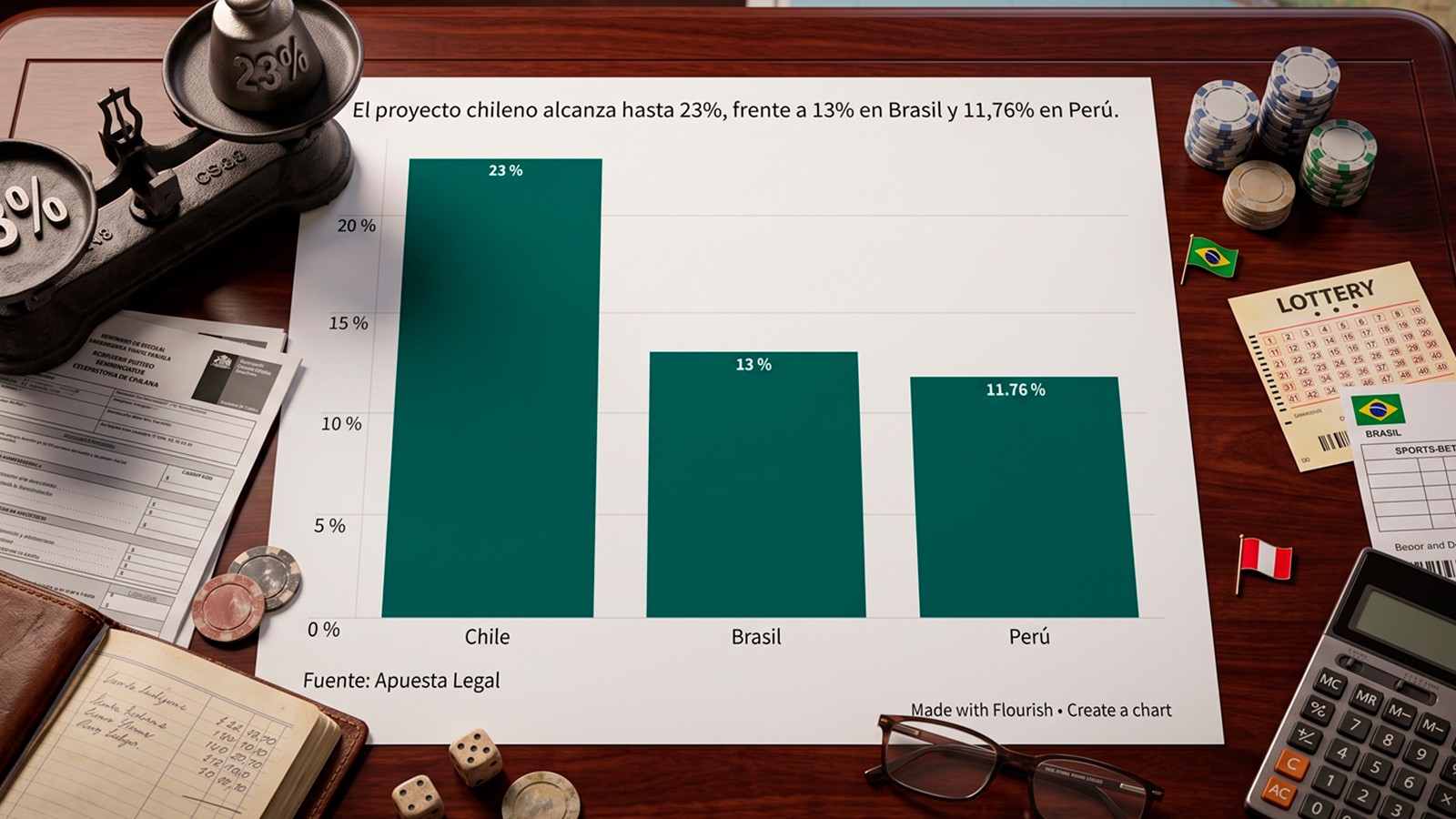
The bill currently under discussion in the Chilean Senate includes a specific 20% tax on GGR (Gross Gaming Revenue, deducting winnings). Added to this would be a 2% contribution to sports and up to 1% for responsible gaming policies. In total, the nominal sector tax burden would reach 23%.
This figure contrasts sharply with the regional landscape: Peru applies an 11.76% tax on GGR, while Brazil set its rate at 13% for 2026. By launching its market with such high costs, Chile risks creating a massive barrier to entry—driven by its heavy taxation—for the very sector it seeks to regulate.
The Direct Impact on the Player: Odds, Bonuses, and Channelization
Authorized platforms do not merely compete against each other; they also face off against illegal sites that dodge regulatory and tax costs. The higher the taxation burden for the legal operator, the lower their margin to offer competitive odds, attractive bonuses, and better promotions.
If the legal offering loses its economic appeal, unregulated sites will seize that advantage to attract customers, directly impacting channelization (the volume of bets placed in regulated environments). Low channelization translates to serious issues for the country: lower state revenue, zero control over money laundering, underage access, and a complete lack of consumer protection.
Taxing Before Legalizing: The Paradox of the Chilean Market
Chile has created an unusual situation: it has begun collecting taxes before granting formal licenses or legal certainty. Since June 2026, the Internal Revenue Service (SII) has required foreign platforms to register and pay a 19% digital VAT, applicable even to operations from the previous 36 months.
The enforcement structure has moved much faster than the licensing system. Following the SII's threat that payment processors would directly withhold 19% from unregistered sites, dozens of platforms opted into the regime. However, paying this tax does not grant an operating license or legalize the company, leaving them operating in a state of limbo.
The Double Retroactive Bill and the Senate's Challenge
The process to acquire a definitive license could add a second retroactive tax burden. The bill proposes that companies already operating in the country pay a one-time substitute tax of 31% on their GGR from the last 36 months, along with a fee of 0.07 UTM for each active user account. It remains unclear how this new tax will be reconciled with the previously demanded retroactive VAT.
The bill continues its legislative process in the Senate's Economy and Finance committees. Lawmakers face a crucial challenge: balancing tax collection with commercial viability. If the regulation imposes fixed costs of 23% coupled with massive retroactive charges, Chile will end up financially punishing those attempting to operate legally, leaving the market wide open for illegal operators.
Categoría:Analysis
Tags: Sin tags
País: Chile
Región: South America




Event










SiGMA North America 2026
01 de September 2026
Beyond the Games: EGT Digital’s Vision for Sustainable Growth in the Americas
(Mexico City, SoloAzar Exclusive).- At SiGMA North America, EGT Digital proved it is far more than just a premium content provider. Andres Troelsen, Regional Sales Director LATAM, discusses the industry's shift towards comprehensive tech ecosystems, the importance of tailoring strategies for the diverse Latin American market, and the company's latest innovations. Discover what’s next for EGT Digital’s expansion across the Americas.
Thursday 17 Sep 2026 / 12:00
SiGMA North America celebrates Football, LATAM growth and brings the iGaming community together in Mexico City
(Mexico City).- For its first edition, SiGMA North America marked a successful debut in Mexico City, bringing together the international and regional iGaming community while highlighting the continued growth and strategic importance of the Latin American market.
Thursday 17 Sep 2026 / 12:00
Eman Pulis Assesses Success of SiGMA North America in Mexico
(Mexico City, SoloAzar Exclusive).- SiGMA Group founder Eman Pulis assesses the success of SiGMA North America in Mexico following its September 1–3 edition at Centro Banamex, where around 2,250 delegates gathered to connect the North and Latin American gaming markets and explore opportunities across the region.
Wednesday 16 Sep 2026 / 12:00
SUSCRIBIRSE
Para suscribirse a nuestro newsletter, complete sus datos
Reciba todo el contenido más reciente en su correo electrónico varias veces al mes.