How Licensing Makes a Difference for Players, Partners, and the Market
Monday 22 de June 2026 / 12:00
⏱ 3 min read
(Cyprus).- The impact of licensing extends far beyond the operator. It shapes the relationships between platforms, players, partners and the wider market. In a regulated environment, betting ceases to be merely a product and becomes part of a broader legal, financial and sporting ecosystem.
For players, licensing does not necessarily make the betting experience more convenient. Sometimes it’s the opposite: more verification, more procedures, more restrictions. However, these requirements create a clearer and more transparent framework for the relationship between the player and the operator. The operator is subject to regulatory oversight and can be held accountable for violations of the rules. The player interacts not only with a brand that promises safety, but with a company subject to external oversight.
It changes the nature of trust. In an unregulated environment, it largely depends on the operator’s reputation. In a regulated environment, it is supported by procedures, including identification, age verification, financial monitoring, responsible gambling requirements, local legislation, and the ability to appeal to regulatory authorities. These do not guarantee a perfect user experience, but they do provide a more transparent framework for interaction.
For partners, the license has even greater practical significance. A sports club, federation, advertising platform, payment provider, or affiliate evaluates both the commercial offer and the associated risk. Is it safe to work with this operator publicly? Will there be any complaints from the regulator? Won't the cooperation damage our reputation? Can we build a long-term relationship without worrying that the brand's market position might become unstable?
A license does not eliminate all risks, but it does provide a basic level of predictability. It demonstrates that the operator has met regulatory requirements, operates within the framework of local laws, and can be part of a legitimate business ecosystem. It is particularly significant for sports partnerships because betting deals are under the scrutiny of fans, the media, regulators, and commercial departments.
Brazil demonstrates how quickly a license ceases to be an internal company matter and becomes a prerequisite for market access. Since the introduction of regulation, the country has seen 79 licensed operators, approximately 25.2 million players on licensed platforms, 37 billion BRL in GGR, 10 billion BRL in tax revenue, and 2.5 billion BRL in licensing fees. At the same time, authorities blocked more than 25,000 illegal betting sites. These are no longer just statistics, but a picture of the market’s transition from a gray area to a regulated economy.
Spain demonstrates another aspect of a mature system: the market is expanding and eliminating illegal operators. The DGOJ has imposed significant penalties on companies operating without a license, including fines ranging from €5 million to €10 million and a two-year suspension. Ireland, on the other hand, is undergoing a restructuring phase: the new Gambling Regulation Act 2024 has established a modern regulatory framework, and the GRAI has been granted authority over licensing, supervision, and enforcement.
All three examples point to a single trend: the betting industry can no longer operate outside of regulatory frameworks. Regulation is becoming not merely an additional layer of oversight, but a central component of the market’s infrastructure.
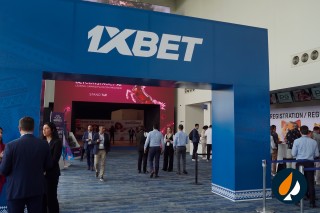
Against this backdrop, 1xBet can be seen as an example of a global operator that combines international growth with a long-term commitment to regulated markets. Operating across multiple licensed jurisdictions requires continuous adaptation to local regulations, compliance requirements and market conditions. It is a complex and resource-intensive approach, but one that supports sustainable growth and long-term market presence.
For players, this means clearer rules for interaction. For partners, it creates a more predictable environment for cooperation and long-term planning. For the market as a whole, it means greater participation in the legal economy, stronger regulatory oversight and a more sustainable industry framework. In this sense, licensing is no longer simply a legal requirement. Increasingly, it serves as a foundation for trust, accountability and long-term stability across the wider betting ecosystem.
Categoría:Analysis
Tags: 1XBet,
País: Cyprus
Región: EMEA




Event
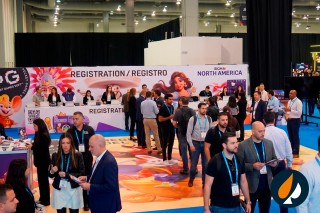



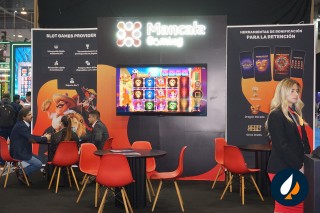
SiGMA North America 2026
01 de September 2026
LatAm Regulators Discussed Illegal Gambling and Innovation at SiGMA North America
(Mexico City, SoloAzar Exclusive).- The panel "The Red Pen Forum: Regulators Respond to the Industry," held during SiGMA North America 2026, brought together representatives from Uruguay, Argentina, Puerto Rico, and Honduras to analyze regulatory challenges, digital transformation, illegal gambling, and the need to adapt lotteries for new generations. The conference was moderated by Rodrigo Cigliutti, Executive Director of CIBELAE (Ibero-American Corporation of State Lotteries and Betting), and featured the participation of Marcelo Visconti, National Director of Lotteries and Quinielas of Uruguay; Carlos Moyano, President of IAFAS Entre Ríos, Argentina; Heidi Hernández Olivo, Deputy Secretary of the Puerto Rico Lottery; and Lissa Mencía, General Director of Lottery Operations and Games at Loto Honduras.
Monday 28 Sep 2026 / 12:00
SiGMA North America Addressed Crisis Management in iGaming
(Mexico, SoloAzar Exclusive).- During SiGMA North America 2026, Rosa Ochoa, founder of the Blue Global Gaming platform and strategic advisor for gaming operators; Iliana María Pineda Echeverri, Chief Legal & Compliance Officer at Wplay.co; Iraid Rosales, Country Manager Mexico at Amusnet; and Elizabeth Maya Cano, Executive President of CORNAZAR, analyzed the key factors in managing crisis situations within the iGaming industry, with a special focus on transparency, communication, technology, and preparation.
Friday 25 Sep 2026 / 12:00
Affiliates and Acquisition: Keys to Regulated Markets in North America
(Mexico City, SoloAzar Exclusive).- During SiGMA North America 2026, Cristopher Guzmán Reyes, Head of Affiliates at Logrand Entertainment Group; Guga Júnior, influencer and slots expert at Scalar Partners; Andrés Gómez, Head of Latin America Go-to-Market Strategy at Admattic; Yambot Aguilera, Gaming and Finance Sales Director at Google; and Paula Gabriel Jiménez, Advertising Client Growth Director for Microsoft at Aleph, analyzed the state and provincial affiliate ecosystem in North America, as well as the acquisition challenges in regulated markets.
Thursday 24 Sep 2026 / 12:00
SUSCRIBIRSE
Para suscribirse a nuestro newsletter, complete sus datos
Reciba todo el contenido más reciente en su correo electrónico varias veces al mes.