Key Strategies for Streamlining Identity Verification in iGaming
Friday 14 de August 2026 / 12:00
⏱ 2 min read
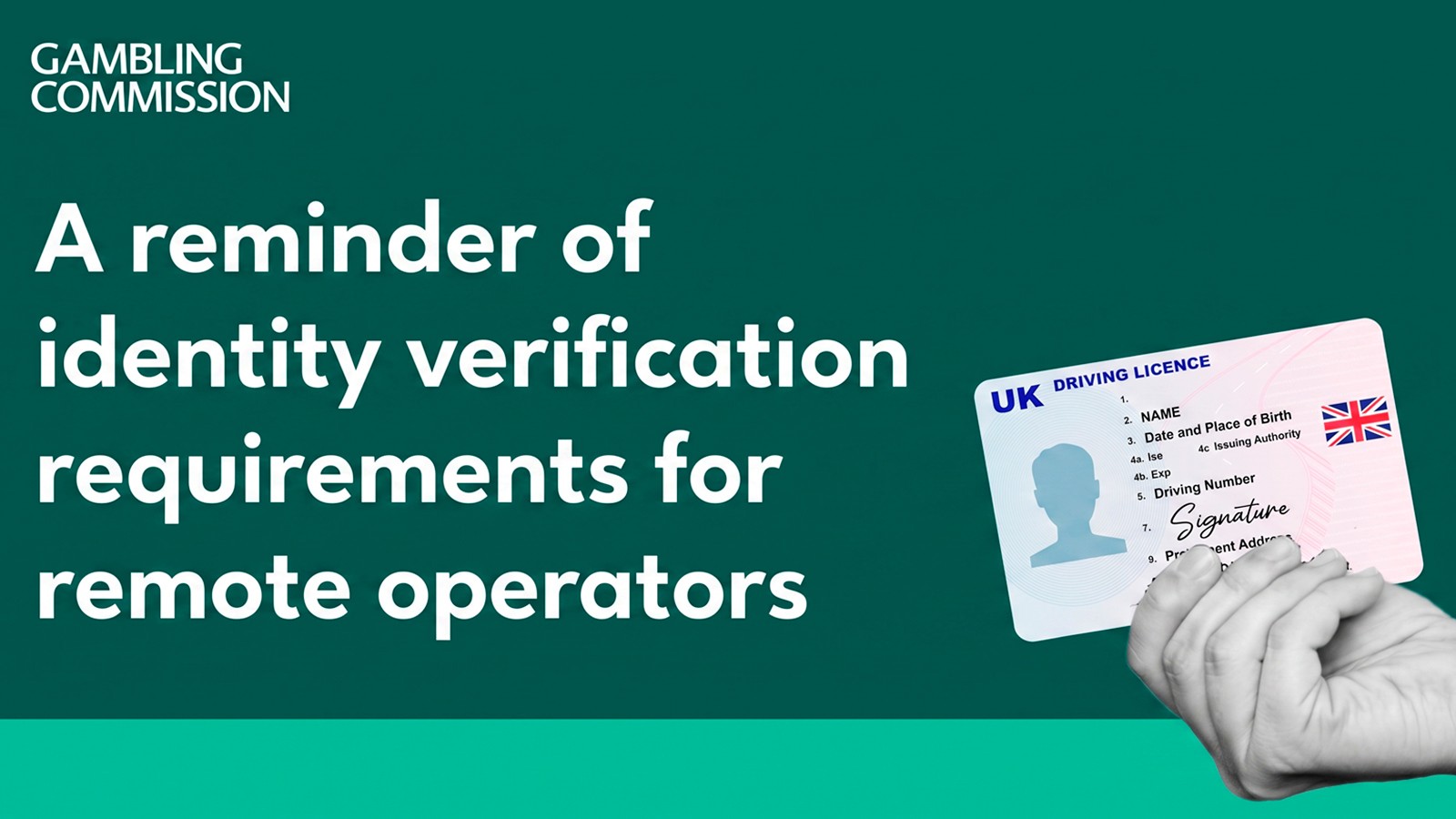
(London).- The Commission reminds remote operators of the critical need to conduct thorough identity checks during registration. Strengthening upfront processes not only ensures compliance with Licence Condition 17 but also prevents unnecessary delays and frustration when customers attempt to withdraw their funds.
The Importance of Early Verification and Regulatory Compliance
Effective identity verification is vital for streamlining compliance with multiple legislative and regulatory requirements, such as preventing underage gambling, identifying self-excluded customers, and supporting anti-money laundering controls. Importantly, it also has a significant direct impact on the consumer experience.
Currently, over a quarter of complaints received by the Commission's Contact Centre stem from consumers expressing frustration at being asked to provide identity information only when attempting to withdraw funds. To avoid this unnecessary friction and improve the overall experience, streamlining verification checks should be undertaken as early as practicable in the customer journey.
Licence Condition 17 has long established the rules for verifying customer identity. These processes must provide assurance that a customer exists and that their name, address, and date of birth all match the same individual before they are permitted to gamble. Requesting additional information as a condition of withdrawal—when it could have been reasonably requested earlier—undermines these basic standards, creates disruption, and damages consumer trust.
Findings: Common Errors and Unmatched Data
Data from the financial risk assessment pilot helped clarify why a small proportion of customers could not receive a frictionless assessment (referred to as "unmatched" accounts). Analysis indicated that flawed identity verification is a key factor contributing to this issue.
When reviewing these unmatched cases, it was discovered that previous customer identification was sometimes based on incomplete or inaccurate information collected during registration. These process gaps reduce the likelihood of successfully matching data with third-party sources. Common examples included:
- Recording only an initial instead of a full name.
- Using a nickname rather than the legal name.
- Providing a commercial address instead of a residential one.
- Onboarding a customer using a middle name instead of a forename (which weakens self-exclusion tools like GAMSTOP).
- Despite previous warnings, there are still cases where risk flags or uncertainties regarding a customer's identity are only investigated at the point of withdrawal, ignoring ample opportunities to address them earlier.
Call to Action: Strengthening the Process from Registration
The pilot findings make it clear that unmatched records often originate from weaknesses in the information collected at registration. While many operators rely on third-party providers, the varying levels of data sensitivity and differing operator tolerances often result in the use of 'fuzzy matching'. Onboarding customers based on partial or equivocal verification introduces significant regulatory risk.
Therefore, accepting initials, nicknames, or commercial addresses is not sufficient to meet existing identity verification requirements. Operators must ensure they are capturing complete and accurate customer information right from the start.
While the equivalent of Enhanced Due Diligence (EDD) is not expected for all new customers at onboarding, operators should be as robust as possible at registration to verify a unique individual. Addressing unresolved identity concerns promptly, rather than deferring them until a withdrawal request, is the most effective way to reduce customer friction and strengthen compliance with wider regulatory obligations.
Categoría:Analysis
Tags: Sin tags
País: United Kingdom
Región: EMEA




Event










SiGMA North America 2026
01 de September 2026
LatAm Regulators Discussed Illegal Gambling and Innovation at SiGMA North America
(Mexico City, SoloAzar Exclusive).- The panel "The Red Pen Forum: Regulators Respond to the Industry," held during SiGMA North America 2026, brought together representatives from Uruguay, Argentina, Puerto Rico, and Honduras to analyze regulatory challenges, digital transformation, illegal gambling, and the need to adapt lotteries for new generations. The conference was moderated by Rodrigo Cigliutti, Executive Director of CIBELAE (Ibero-American Corporation of State Lotteries and Betting), and featured the participation of Marcelo Visconti, National Director of Lotteries and Quinielas of Uruguay; Carlos Moyano, President of IAFAS Entre Ríos, Argentina; Heidi Hernández Olivo, Deputy Secretary of the Puerto Rico Lottery; and Lissa Mencía, General Director of Lottery Operations and Games at Loto Honduras.
Monday 28 Sep 2026 / 12:00
SiGMA North America Addressed Crisis Management in iGaming
(Mexico, SoloAzar Exclusive).- During SiGMA North America 2026, Rosa Ochoa, founder of the Blue Global Gaming platform and strategic advisor for gaming operators; Iliana María Pineda Echeverri, Chief Legal & Compliance Officer at Wplay.co; Iraid Rosales, Country Manager Mexico at Amusnet; and Elizabeth Maya Cano, Executive President of CORNAZAR, analyzed the key factors in managing crisis situations within the iGaming industry, with a special focus on transparency, communication, technology, and preparation.
Friday 25 Sep 2026 / 12:00
Affiliates and Acquisition: Keys to Regulated Markets in North America
(Mexico City, SoloAzar Exclusive).- During SiGMA North America 2026, Cristopher Guzmán Reyes, Head of Affiliates at Logrand Entertainment Group; Guga Júnior, influencer and slots expert at Scalar Partners; Andrés Gómez, Head of Latin America Go-to-Market Strategy at Admattic; Yambot Aguilera, Gaming and Finance Sales Director at Google; and Paula Gabriel Jiménez, Advertising Client Growth Director for Microsoft at Aleph, analyzed the state and provincial affiliate ecosystem in North America, as well as the acquisition challenges in regulated markets.
Thursday 24 Sep 2026 / 12:00
SUSCRIBIRSE
Para suscribirse a nuestro newsletter, complete sus datos
Reciba todo el contenido más reciente en su correo electrónico varias veces al mes.