Omnichannel: the experience is built by people
Monday 05 de October 2026 / 12:00
⏱ 4 min read
Omnichannel is transforming the way gaming organizations connect their in-person and digital channels. However, technology alone does not guarantee a consistent customer experience: it is also necessary for teams to understand their role within this strategy. In this column, Julio César Uliassi analyzes the role of people in building a true omnichannel experience.

Omnichannel is already part of the agenda of gaming organizations. Platforms are integrated, systems are connected, and digital and face-to-face channels begin to work as part of the same proposal. The conversation usually stays on that plane: what technology to choose, how to integrate it, how much to invest.
There is a question that appears much less and that, in practice, defines whether all this works or not: do the people who serve the customer understand how their work fits into that strategy?
My view is that an omnichannel strategy is defined in driving and is enabled with technology, but it is resolved in the behavior of each team. That's where you gain or lose the experience.
"Omnichannel is not implemented with technology, it is implemented with people who understand the role they have within it."
One customer, one brand
For the customer, "the room" and "the platform" do not exist as two different companies. There is a brand. And he hopes that the brand recognizes him, knows what he offered and responds in the same way on any channel.
Let's think about a fairly everyday scene. A customer comes to the room with a promotion they received that morning in the app and asks how to redeem it. The person who attends to it does not know it, because the campaign was communicated to the digital area but did not reach the operation. He politely replies that he is going to find out, and the customer waits a few minutes, gets a half-hearted answer and concludes that the company is not coordinated.
No one failed out of ill will. Internal communication failed. The technology worked and the strategy was well designed, but the last link, the one in front of the customer, was left without information. That's the point where omnichannel breaks down most often.
Communicating in room language
Strategies are usually formulated in a technical vocabulary: unified experience, customer journey, channel integration. That's right, but if it stays at that level, it doesn't change anything in the operation.
To communicate well is to translate. A customer service person who knows that the customer accumulates profits in the app and can guide them without referring them elsewhere. Responsible gaming staff who know how to coordinate a self-exclusion between the face-to-face and online channels, without the customer having to repeat the procedure. A manager who receives a news item before his team and can explain it, instead of finding out about it through a customer query. When someone sees their task within the strategy, the strategy ceases to be a concept and becomes work.
This also requires an order of information. Digital news has to reach middle managers in advance, so that they can explain them to their teams with criteria. A supervisor who finds out at the same time that the customer cannot lead the change, only react.
That digital does not compete with the position
When the online channel grows, it is natural that in face-to-face teams the question of their place appears. If no one responds to it, it is filled with rumours, and a team that looks at the change with distrust half-heartedly accompanies it.
The answer is not to reassure with speeches, but to show with facts: what role the classroom plays within the ecosystem, what skills are going to gain value, what training is offered to develop them. Personalized attention, dealing with the customer who arrives with doubts or accompaniment in responsible gaming are skills that the digital channel does not replace and that the venue can offer better than anyone else. When the worker understands where his place in growth lies, he stops looking at change from a distance and becomes an ally.
Train on how channels are connected
It is often assumed that the dining room staff knows the digital ecosystem of their own company. In practice, they often know it less than the customer.
Useful training in this area does not need to be extensive. It is enough for each team to be able to answer three things: what the customer can do in each channel, how that is articulated with the room and what to do when the customer brings a query that crosses both worlds. It is also advisable to verify that it was incorporated. A simulated consultation, a brief chat at the beginning of the shift or a space for teams to tell what questions they receive from the customer are more useful than a manual that no one reads.
It is one of the best return and lowest cost investments that an organization can make in this process, because it has a direct impact on something that the customer perceives immediately: consistency.
What Connects
Platforms are updated, and technology becomes accessible to everyone. What sets an organization apart is that its people understand what each thing is done for and what their part is.
Technology connects channels. People connect the experience.
* Julio César Uliassi is a Consultant in labor relations and human capital. Gaming Industry (NEA). consultoraju.com.ar
Categoría:Analysis
Tags: Sin tags
País: Argentina
Región: South America




Event





SiGMA North America 2026
01 de September 2026
LatAm Regulators Discussed Illegal Gambling and Innovation at SiGMA North America
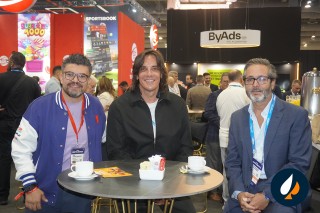
(Mexico City, SoloAzar Exclusive).- The panel "The Red Pen Forum: Regulators Respond to the Industry," held during SiGMA North America 2026, brought together representatives from Uruguay, Argentina, Puerto Rico, and Honduras to analyze regulatory challenges, digital transformation, illegal gambling, and the need to adapt lotteries for new generations. The conference was moderated by Rodrigo Cigliutti, Executive Director of CIBELAE (Ibero-American Corporation of State Lotteries and Betting), and featured the participation of Marcelo Visconti, National Director of Lotteries and Quinielas of Uruguay; Carlos Moyano, President of IAFAS Entre Ríos, Argentina; Heidi Hernández Olivo, Deputy Secretary of the Puerto Rico Lottery; and Lissa Mencía, General Director of Lottery Operations and Games at Loto Honduras.
Monday 28 Sep 2026 / 12:00
SiGMA North America Addressed Crisis Management in iGaming
(Mexico, SoloAzar Exclusive).- During SiGMA North America 2026, Rosa Ochoa, founder of the Blue Global Gaming platform and strategic advisor for gaming operators; Iliana María Pineda Echeverri, Chief Legal & Compliance Officer at Wplay.co; Iraid Rosales, Country Manager Mexico at Amusnet; and Elizabeth Maya Cano, Executive President of CORNAZAR, analyzed the key factors in managing crisis situations within the iGaming industry, with a special focus on transparency, communication, technology, and preparation.
Friday 25 Sep 2026 / 12:00
Affiliates and Acquisition: Keys to Regulated Markets in North America
(Mexico City, SoloAzar Exclusive).- During SiGMA North America 2026, Cristopher Guzmán Reyes, Head of Affiliates at Logrand Entertainment Group; Guga Júnior, influencer and slots expert at Scalar Partners; Andrés Gómez, Head of Latin America Go-to-Market Strategy at Admattic; Yambot Aguilera, Gaming and Finance Sales Director at Google; and Paula Gabriel Jiménez, Advertising Client Growth Director for Microsoft at Aleph, analyzed the state and provincial affiliate ecosystem in North America, as well as the acquisition challenges in regulated markets.
Thursday 24 Sep 2026 / 12:00
SUSCRIBIRSE
Para suscribirse a nuestro newsletter, complete sus datos
Reciba todo el contenido más reciente en su correo electrónico varias veces al mes.