Player Protection as Part of Business Model
Monday 15 de June 2026 / 12:00
⏱ 4 min read
(Cyprus).- In the betting industry, player protection can no longer exist as a separate compliance unit. It cannot be reduced to a few caveats, a terms-and-conditions page, or a set of mandatory tools that an operator adds after launching a product. In mature markets, the industry is shifting toward models where player protection progressively influences registration, payments, and operational planning.

It changes the very logic of the product. A betting platform must be fast, intuitive, and competitive, but it cannot be built solely around maximizing the simplicity of the user experience. At certain points, the product must implement additional controls: verify age, confirm identity, monitor risky behavior, suggest limits, restrict communication, or intervene before a situation becomes problematic.
For businesses, this is a delicate balance. The less friction there is, the easier it is to attract and retain players. However, the less control there is, the weaker the protection system becomes. Therefore, adapting to regulated-market environments involves striking a balance between two objectives: maintaining a consumer-friendly entertainment product while ensuring that speed, bonuses, or aggressive marketing do not work against the player’s best interests.
Player protection begins even before the first deposit is made. KYC, age verification, and data verification form the first level of control. Next come payment rules, limits, activity monitoring, risk alerts, self-exclusion, reality checks, personalized warnings, and customer support. Each element may seem like a technical detail, but together they form a system that determines how the operator manages risk within the product. While the availability of specific tools and implementation milestones may differ according to local regulations and legal entities, these elements outline the industry's general direction toward systematic risk management.
Players may not like some of these measures. ID verification can be annoying. Limits are seen as intrusive. Financial requirements may seem excessive. Restrictions on marketing communications reduce engagement. But if these inconvenient elements are removed, player protection becomes a mere formality. Implementing effective player-protection frameworks often involves introducing necessary operational friction.
Research from the International Player Safety Index shows that there is no single model for player protection. The International Player Safety Index is a research initiative produced with SBC Media and supported by 1xBet. It examines approaches to regulation and player protection in different markets. It is not a regulatory assessment or certification of 1xBet.
Regulation in Western Europe is already well-established, but even there, operators face inconsistent requirements and guidelines that are not always clear. About 60% of respondents rated the effectiveness of regulation in their primary market at 7 out of 10 or higher, yet 43% of operators were dissatisfied with the quality of guidance on player protection, and another 26% were unsure whether these guidelines were sufficient.
That's an important point: even a well-developed regulatory framework does not remove the need for operators to build effective player protection systems of their own. The rules set the framework, but the real work happens within the product itself: how quickly the operator identifies risks, what data it analyzes, when it intervenes, how it communicates with players, and how precisely it tailors its tools to a specific market.
Latin America is at a different stage of development. The region is transitioning toward market-specific protection frameworks. According to the study, 84% of operators surveyed use KYC checks, 69% employ real-time activity monitoring, and 34% use AI to identify potential gambling harm. These figures show that player protection is increasingly becoming a data-led practice, rather than merely a legal requirement.
Nevertheless, technology alone cannot fully solve the issue. If a player does not understand the purpose of limits, verification processes, self-assessments, or reality checks, they will perceive them as obstacles. Therefore, 1xBet believes that effective protection benefits from clear communication and educational initiatives that help players better understand the purpose of safety tools. Operators need to explain that betting is entertainment, not a financial strategy; that limits help maintain control; that verification protects not only the company but also the user; and that warnings exist not as a mere formality but to enable early intervention.
Africa presents a different challenge. The study describes the region as a market with varying rates of development. Some countries are transitioning more quickly to modern frameworks, while others are only beginning to establish basic compliance mechanisms. Additional challenges arise from retail betting, cash payments, mobile networks, and the perception of betting as a potential path to economic improvement. In such an environment, player protection cannot be solely a digital tool. It must take into account player behavior, local payment habits, levels of financial literacy, and the availability of simple explanations.
For the operator, this means ongoing investment. Building such a model requires resources across multiple areas — from analytics and player monitoring to compliance teams, customer support, and responsible gambling tools. These measures do not always deliver immediate commercial returns. Sometimes protective measures slow down the registration process, limit promo activity, or tone down the aggressiveness of communications. Nevertheless, such decisions reflect the company’s long-term approach to adapting its operations to regulated-market development.
One example of this direction is 1xBet, a company that is adapting its international strategy to the changing licensing environment and focusing on long-term operational stability. As part of its commitment to supporting informed industry discussion, the company has contributed to the regulatory debate by supporting a series of regional research projects, including the International Player Safety Index.
This research initiative, produced with SBC Media and supported by 1xBet, examines approaches to regulation and player protection in Western Europe, Latin America, and Africa; it is intended to inform industry discussion and is not a regulatory assessment or certification of 1xBet. The findings across these regions show that player protection cannot be managed using a single template. Each market has different rules, player expectations, technological maturity, and operational challenges — confirming that while international experience can inform a brand's strategy, each regulated market requires its own specific implementation.
Player protection is no longer just a matter of reputation. It’s an operational discipline that requires data, structured processes, and clear communication around industry risks. For international operators focusing on long-term sustainability, player protection is not simply something added on top of the product; it is an element that must be progressively integrated into the very strategy of market-specific growth.
Categoría:Analysis
Tags: 1XBet,
País: Cyprus
Región: EMEA




Event






SiGMA North America 2026
01 de September 2026
Evert Montero Analyzed Colombia's Gaming Regulation at SiGMA
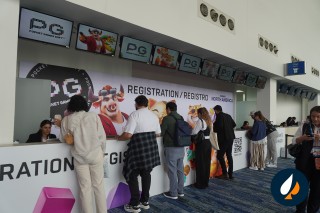
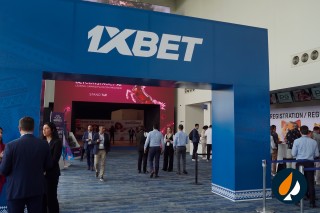
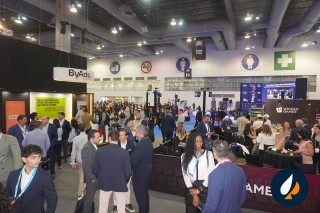
(Mexico City) — Speaking at SiGMA North America 2026, FECOLJUEGOS President Evert Montero Cárdenas offered a deep dive into the regulatory shifts shaping the Latin American and North American markets. He highlighted the sustainability challenges ahead for Colombia's industry and the ongoing impact of technological innovation. A major highlight of the September 1-3 summit at Mexico City’s Centro Banamex was Montero's induction into the Hall of Game 2026.
Friday 11 Sep 2026 / 12:00
Sportradar highlights LATAM growth at SiGMA North America
(Mexico City, SoloAzar Exclusive).- Rodrigo Cambiaghi, Sales Executive Lead, Digital Advertising at Sportradar, highlighted the strategic importance of Mexico and the broader Latin American market during SiGMA North America 2026. Held from September 1–3 at Centro Banamex in Mexico City, the event brought together nearly 2,250 delegates and focused on artificial intelligence, innovation, public-private collaboration and the adaptation of global strategies to local market dynamics.
Friday 11 Sep 2026 / 12:00
AIEJA Highlights Success of SiGMA North America in Mexico
(Mexico City, SoloAzar Exclusive).- Dr. Miguel Ángel Ochoa Sánchez, Executive President of AIEJA, underscored the success of the inaugural SiGMA North America in Mexico, noting its crucial role in elevating the local gaming industry on the global stage. Speaking at the event—held September 1-3 at Mexico City's Centro Banamex—he also broke down key regulatory hurdles, strategies to combat illegal gambling, and emerging opportunities within the sector.
Wednesday 09 Sep 2026 / 12:00
SUSCRIBIRSE
Para suscribirse a nuestro newsletter, complete sus datos
Reciba todo el contenido más reciente en su correo electrónico varias veces al mes.