Prediction Markets Break Into iGaming, Raising New Regulatory Challenges in Latin America
Wednesday 08 de April 2026 / 12:00
⏱ 4 min read
(Mexico City).- In a special opinion piece shared on her social media, Rosa Ochoa, Gaming and Technology Consultant at Blue Global Gaming, examines the rise of prediction markets and their growing impact on the global gaming industry. From her perspective, this new dynamic not only redefines how users engage with betting but also raises key regulatory questions for the region.
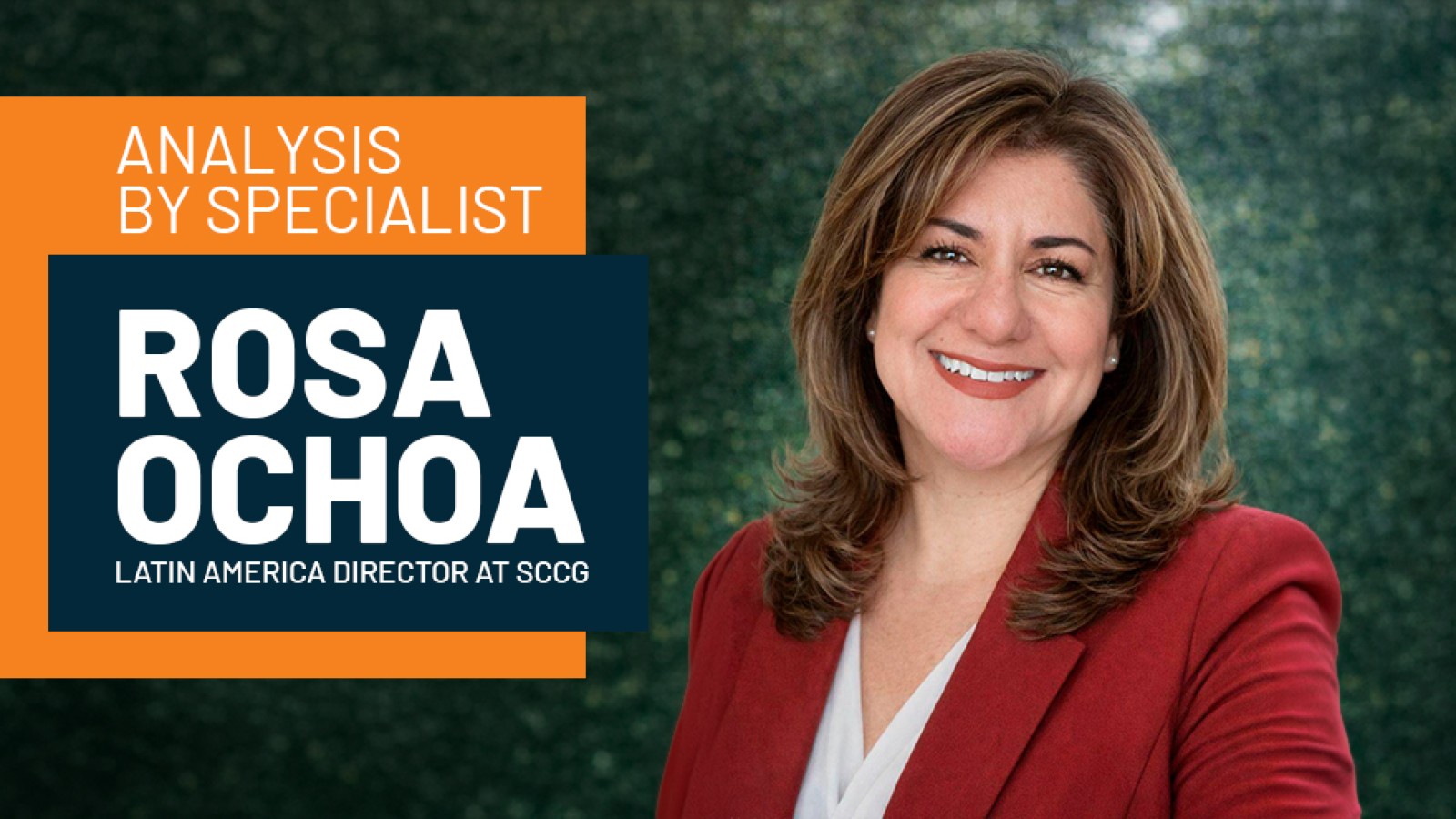
The gaming industry is beginning to witness a transformation driven by prediction markets, a model that introduces dynamics closer to trading than to traditional betting. In her column, Rosa Ochoa warns that this phenomenon should not be understood as a mere extension of iGaming, but rather as an evolution that incorporates new forms of user participation and value allocation.
The development of specialized platforms and the entry of financial players highlight a growing convergence between entertainment and finance. However, in Latin America, the regulatory debate remains focused on traditional structures, leaving this new category in a regulatory gray area.
Ochoa also points out that the most significant change may lie in user behavior, with a shift toward more analytical and participatory models. In this scenario, both regulators and operators will need to define their stance on a trend that is already showing signs of consolidation globally.
Traditional Betting vs. Prediction Markets By Rosa Ochoa
In recent months, a concept has begun to take shape—one that is still under-discussed in Latin America but is already generating real changes in the global industry: the prediction economy. This is not just another trend or buzzword. It is a different way of understanding how people interact with the future and, above all, how they assign value to it.
To understand why this matters, it is worth recalling what happened in 2018 with Murphy v. NCAA. That ruling removed the federal ban on sports betting in the United States and allowed each state to define its own regulatory framework. From there, the market grew rapidly and laid the foundations for modern iGaming as we know it today. However, what we are seeing now is not an extension of that model, but an evolution toward something more complex.
The prediction economy is based on a simple yet powerful idea: any future event can become something to trade on.
It is not just about betting on an outcome, but about taking a position based on information, context, and perception. That position can change in value before the event occurs, introducing a logic much closer to trading than to traditional gaming. In this sense, prediction stops being just an opinion and begins to behave like an asset.
Platforms such as Polymarket have shown that there is real demand for these products, operating at scale on decentralized infrastructures. At the same time, regulated entities like Kalshi demonstrate that these markets can also exist within formal financial frameworks. Even mass platforms like Robinhood have started integrating event contracts into their offerings, bringing these instruments closer to users who may not come from the gaming world.
Together, these developments point to a clear convergence between entertainment and finance. And this is precisely the point that Latin America has yet to fully process. The debate in the region remains centered on licenses, taxes, and online casino operations, while user behavior is shifting toward models where participation is more active and information interpretation plays a central role.
Some countries, such as Colombia and Argentina, have already begun to react to this phenomenon, partly because these models do not fit into existing regulatory categories. They are not traditional bets, but neither are they strictly financial instruments. This ambiguity is creating tensions and shows that the current framework is insufficient to describe what is happening.
Beyond regulation, the most interesting aspect is the change in behavior. For years, iGaming growth relied on immediacy and simplicity—clear markets, quick results, and straightforward entertainment. What is emerging now is a different layer, where certain users seek to better understand context, anticipate scenarios, and make informed decisions. This is not a replacement of the previous model, but an evolution that coexists with it.
Looking ahead, there are several signals worth watching closely:
-How regulators position themselves regarding this hybrid category, whether from a gaming or financial perspective.
-How traditional operators react—whether they integrate these dynamics into their platforms or see them only as external competition.
-How users, especially younger ones familiar with trading and digital assets, adopt this category.
The prediction economy does not replace iGaming, but it does introduce a layer that forces us to rethink it. It is a sign of where part of the market is heading, and as has happened before, users are likely to move faster than regulation and even the industry itself.
What is at stake is not just a new product, but the way participation in these markets will be defined in the near future. Should it be regulated as gaming or as a financial instrument in Mexico and Latin America?
Rosa Ochoa is Gaming and Technology Consultant at Blue Global Gaming. She has extensive experience in business development, regulation, and sector expansion in emerging markets. Her professional profile is available on LinkedIn.
Categoría:Analysis
Tags: Sin tags
País: Mexico
Región: North America




Event








SBC Summit 2026
29 de September 2026
Habanero eyes LatAm growth after key takeaways from SBC Summit
Wednesday 07 Oct 2026 / 12:00
Evenbeter Unveils Growth Paths Strategy at SBC Summit
Wednesday 07 Oct 2026 / 12:00
Vladimir Dokov recognised as Leader of the Year at SBC Awards 2026
Tuesday 06 Oct 2026 / 12:00
SUSCRIBIRSE
Para suscribirse a nuestro newsletter, complete sus datos
Reciba todo el contenido más reciente en su correo electrónico varias veces al mes.