Prediction Markets: The Regulatory Challenge Facing a New Gambling Vertical
Friday 24 de July 2026 / 12:00
⏱ 3 min read
(Kyiv).- As prediction markets continue to expand globally, regulators are increasingly confronted with the challenge of determining how these emerging platforms should be governed. In a new analysis published by the Ukrainian Gambling Council (UGC), the organization argues that while certain forms of event-based wagering—particularly those involving armed conflicts or humanitarian crises—should remain prohibited, the broader prediction market sector requires a dedicated legal framework that balances innovation, consumer protection, and market integrity.
Prediction markets emerge as a new gambling vertical
For decades, gambling regulation has focused on well-established verticals such as casinos, slot machines, sports betting, and lotteries. Each of these sectors has developed under specific legislation and regulatory oversight.
However, technological innovation has introduced new gambling products that often grow rapidly before regulators establish clear legal frameworks. According to the Ukrainian Gambling Council, prediction markets have become one of the most significant examples of this trend.
Unlike traditional sports betting or casino games, prediction markets allow participants to wager on the outcome of political, economic, financial, or social events. Users may place bets on election results, central bank decisions, commodity prices, or the completion of major infrastructure projects.
The Council notes that because prediction markets are not legally defined in many jurisdictions, they frequently operate without an appropriate licensing framework, leaving the sector in a regulatory gray area.
A market without a legal definition
According to the UGC, the absence of dedicated legislation means that prediction market operators often have no legal pathway to obtain a license.
As a result, these platforms generally function outside existing gambling regulations, limiting regulatory oversight while reducing consumer protections and compliance requirements.
Ukraine draws a clear line on conflict-related betting
The Ukrainian Gambling Council highlights Ukraine's experience in blocking prediction platforms that accepted wagers related to the ongoing war and territorial issues.
According to the organization, betting on military operations or humanitarian events represents an unacceptable use of gambling products.
The Council states that prediction markets involving questions such as the duration of the war or the liberation of occupied territories effectively transform human suffering into gambling opportunities, creating what it describes as "markets of blood."
The analysis argues that no democratic country should tolerate such practices, making this one of the few areas where strict prohibitions are broadly justified.
Ethical concerns remain central
While advocating for a modern regulatory framework, the Ukrainian Gambling Council emphasizes that ethical considerations must remain at the center of any legislation governing prediction markets.
The organization argues that products involving wars, territorial conflicts, or human tragedies should remain prohibited regardless of broader regulatory reforms.
Different jurisdictions are taking different approaches
Around the world, governments have adopted significantly different regulatory positions regarding prediction markets.
In the United States, platforms such as Kalshi and Polymarket have experienced rapid growth, with reported valuations of approximately US$22 billion and US$15 billion, respectively.
The Commodity Futures Trading Commission (CFTC) currently recognizes these businesses as legitimate, although several U.S. states—including Nevada, Connecticut, and Arizona—have challenged that position. The CFTC is currently involved in litigation with nine states over the issue.
By contrast, France, Belgium, Singapore, Portugal, Argentina, and Italy have opted to block prediction market platforms altogether.
Bans may push users underground
According to the Ukrainian Gambling Council, outright prohibitions rarely eliminate consumer demand.
Instead, the organization argues that banning prediction markets often encourages users to migrate toward unregulated or decentralized platforms, where regulators have little visibility, consumers receive fewer protections, and anti-money laundering controls become significantly more difficult to enforce.
Gibraltar introduces a dedicated licensing model
Among global regulators, Gibraltar has taken a different approach by creating what the Ukrainian Gambling Council describes as the world's first dedicated regulatory framework specifically designed for prediction markets.
Rather than applying traditional sportsbook or casino legislation, Gibraltar introduced a separate licensing regime tailored to this emerging product category.
The first companies to receive licenses under the new framework are ADI Predictstreet and Wire Markets.
Consumer protection and integrity at the core
The Gibraltar model establishes rules covering market integrity, consumer protection, anti-money laundering measures, sanctions compliance, and the use of digital assets such as stablecoins.
The framework also includes safeguards against market manipulation and the misuse of insider information, particularly in prediction markets involving political or financial events.
Importantly, the system does not provide unrestricted authorization. Sensitive categories—including markets related to wars or territorial conflicts—can still be prohibited, while legitimate prediction markets may operate within a transparent regulatory environment.
According to the Ukrainian Gambling Council, this balanced approach could become a model for other jurisdictions seeking to regulate one of the gambling industry's fastest-growing emerging sectors while avoiding the expansion of unregulated gray markets.
Categoría:Analysis
Tags: Sin tags
País: Ukraine
Región: EMEA




Event


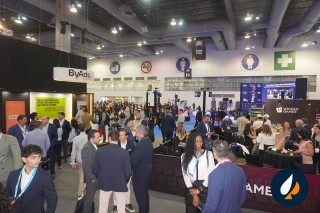




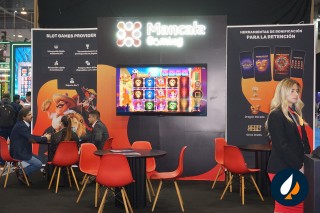
SiGMA North America 2026
01 de September 2026
CP Games at SiGMA North America: Localization, Integration, and Regional Growth
(Mexico City, SoloAzar Exclusive).- Following a successful showcase at SiGMA North America, Caio Ruiz, Head of Growth and Strategic Partnership at CP Games, reflects on the event's key takeaways. He discusses the critical need for localized strategies across the Americas, the importance of flexible technical integrations, and the company's next steps in navigating the diverse gaming landscapes of LatAm and North America.
Tuesday 22 Sep 2026 / 12:00
"Our focus for growth is in Mexico and the rest of LatAm", Alberto Alfieri, Co-Founder of Blokotech
(Mexico City, SoloAzar Exclusive).- Following their success at SiGMA North America—where they secured the Best Casino Platform 2026 award—Blokotech's co-founder discusses growth opportunities in Mexico and the broader region. He also highlights the platform's latest AI-driven innovations and outlines the next phases of the company's expansion strategy.
Tuesday 22 Sep 2026 / 12:00
SiGMA North America Examines the VIP Revenue Paradox
(Mexico City, SoloAzar Exclusive).- At SiGMA North America 2026 in Mexico City, the conference “The VIP Paradox: Emotional Intelligence vs. Revenue Pressure” brought together Beatriz Melges, Regional Director at BetConstruct AI; Rodrigo Ripol, Business Development Officer at AHIS; Erick Sapien, Country Manager at BC.GAME; and Thomas Carvalhaes, Founder and CEO of TC iGaming Advisors LATAM, to examine the balance between VIP management, revenue generation, player protection and emotional intelligence.
Tuesday 22 Sep 2026 / 12:00
SUSCRIBIRSE
Para suscribirse a nuestro newsletter, complete sus datos
Reciba todo el contenido más reciente en su correo electrónico varias veces al mes.