Why AI Is Reshaping iGaming From the Inside Out
Wednesday 05 de August 2026 / 12:00
⏱ 6 min read
Artificial intelligence is no longer a future promise—it has become a defining force in the evolution of iGaming. In this opinion piece, Rui Zamith examines how AI is transforming key areas of the business, from customer support and CRM to player retention and decision-making, and explains why operators that embrace AI strategically will be best positioned to lead the industry's next phase.

Anyone who has spent real time in iGaming has learned to operate on shifting ground – new regulation in a core market, a payment method that disappears overnight, a platform migration, a channel that was working beautifully until it suddenly wasn't. The operators who last (and who succeed) aren't the ones who avoid change, but the ones who have learned that every disruption redistributes the market, and that the redistribution favours whoever adapts first.
AI is simply the current version of that pattern. It happens to be a larger one than we've seen in a while, but the logic is the same. It will feel like a threat to operators who treat it as a cost to be managed, and like an opening to those who treat it as a chance for growth and retention. Over the next 12–18 months, I think we'll see the gap between those two groups widen faster than most people expect.
So rather than another overview of AI in the abstract, what follows is more practical: a set of predictions and shifts I think operators should be watching over the coming months. Some are already underway, some are just beginning – but all of them are worth getting ahead of. Here's what I'd keep an eye on.
AI Support: The Proving Ground, Not the Destination
Player support has become the first serious AI deployment for a lot of operators, and for good reason. The ROI is clear, the risk is contained, and the problem is well defined: high volumes of repetitive, time-sensitive queries that players want resolved instantly and that humans find expensive and draining to handle at scale. It's a natural place to start.
But the more interesting story is what support is teaching the industry. It's proving that AI can operate inside a regulated environment: compliance logic, responsible gaming obligations, working across languages and jurisdictions, and resolving real operational tasks, not just answering questions. Once an operator has seen AI reliably handle a deposit dispute or a KYC check end-to-end, the conversation changes. The question stops being "can we trust this?" and becomes "where else can we use it?".
That shift in confidence is the thing to watch. AI support is stage one. The next twelve months are about operators taking what they've learned there and applying it to the parts of the business where the stakes are much higher.
CX Turns Into a Real Competitive Advantage
For years, the dominant growth model in much of the industry was straightforward: acquire aggressively, incentivise with bonuses, and accept high churn as the cost of doing business. That model is under pressure from several directions at once. Acquisition keeps getting more expensive. Markets are maturing, which means fewer first-time depositors and more competition for the same players. And in a growing number of regulated European markets, the bonus lever itself is being restricted or removed altogether – which, for operators who built their entire retention strategy around it, is less an inconvenience than an existential problem.
Strip away the ability to buy loyalty with bonuses, and you're left with a simple truth that great operators have always understood: you have to earn it through product and player experience. That means player support, CX, payments, and product working as one system rather than separate departments. And this is where AI becomes genuinely transformative rather than merely efficient, because it removes the constraint that always limited experience-led retention.
That constraint was human bandwidth. High-touch, personalised, attentive service was historically rationed to VIPs, because people don't scale and you can only afford to offer attention on the accounts that justify it. Everyone else got a generic experience.
AI solves this. For the first time, it's realistic to give every player something close to VIP-level treatment: instant, personalised, context-aware service that remembers who they are and what they need. That democratisation of the VIP experience is, to me, the single most important shift AI brings to this industry – and the foundation of any retention engine built to replace the bonus machine.
AI That Works Across the Entire Player Lifecycle
If support is where operators are learning, the bigger prize is AI that follows the player through their entire journey – and nowhere is that clearer than in CRM and retention, where it will change the actual economics of the business. A few developments I expect to move quickly.
Segmentation will stop being static. The industry has spent years sorting players into a handful of crude tiers and treating everyone in a tier the same. AI makes it possible to maintain dynamic, behaviour-based micro-segments that update in real time, so a player's experience reflects what they're actually doing right now, not which bucket they were assigned to six months ago.
New metrics and patterns will emerge that no one is currently tracking. This is the part I find most exciting. Most operators today measure what they've always measured – deposits, activity, churn – after the fact. AI can surface the signals that precede those outcomes: the subtle deposit hesitation, the shift in tone in a support conversation, the small clusters of friction that quietly predict a player is about to disengage. Identifying churn risk before it shows up in a dashboard, rather than reporting on it afterwards, is a fundamentally different capability.
Offer attribution will finally get honest. One of the industry's oldest problems is not knowing which intervention actually caused a player to stay. AI's ability to analyse behaviour at scale means operators can start to understand what genuinely drove retention, instead of assuming the last bonus did the job.
Support data will become a CRM asset rather than a closed ticket. Every player conversation is a rich signal about intent, satisfaction, and friction. When that data is structured and fed back into retention decisions instead of being discarded once the ticket closes, support stops being a cost centre and becomes one of the most valuable intelligence sources in the business.
Every Team With Data Becomes an AI Team
None of this stays contained to CRM. Anywhere in an iGaming operation where there's a large volume of data and a shortage of human hours to interpret it, AI will find its way in. Marketing teams will use it to move from broad campaigns to genuinely individualised messaging and timing. Business intelligence will shift from static dashboards to systems that actively interrogate the data. Operations – fraud, payments, compliance, risk – will lean on AI to spot anomalies and patterns far faster than manual review ever could.
The common thread is the same: the bottleneck was never the data, it was the human capacity to make sense of it, and that constraint is lifting.
AI Will Start Asking Its Own Questions
Here's the prediction I'd stake the most on, and the one I think genuinely separates AI as a tool from AI as a transformation.
Right now, even the most advanced AI deployments in iGaming are answering questions that humans defined. We decide which metrics matter, we point the system at them, and it analyses faster and more thoroughly than we could. That's valuable, but it's still fundamentally us setting the agenda.
The real shift is agentic systems that plug into an operator's entire data estate and start defining their own questions. Instead of only examining the patterns we told them to look for, they'll surface the metrics and relationships no one thought to track: the non-obvious correlations, the emerging behaviours, the problems and opportunities hiding in data nobody had the time to read. When AI stops answering our questions and starts finding the questions we should have been asking, that's when it becomes truly transformative – far more than it is today.
We're not there yet. But the operators who are building toward it now, rather than treating AI as an add-on to trim a support budget, are the ones who will define the next cycle of this industry.
The Ground Is Shifting Again
Change has always been the tax and the opportunity of working in iGaming. The bonus era is narrowing, acquisition is getting harder, and the reflex to wait and see how AI settles is understandable. It's also the most expensive position an operator can take right now. The advantage in the next phase of this industry won't go to whoever spends the most to bring players in. It'll go to whoever understands them best – and that is exactly the problem AI was built to solve.
* Rui Zamith: Growth marketer with 15+ years of experience across Crypto, Fintech and iGaming, combining acquisition leadership with deep involvement in product and operations. Develops GTM multi-channel strategies that deliver sustainable growth. SEO, content marketing, and AI enthusiast. 2x founder.
Categoría:Analysis
Tags: Sin tags
País: Portugal
Región: EMEA




Event
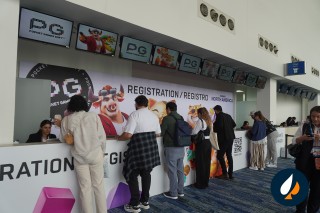


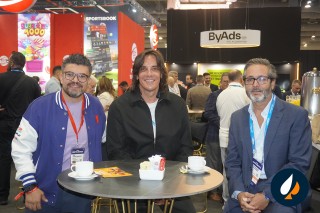
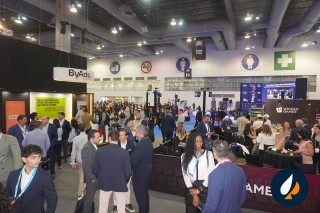


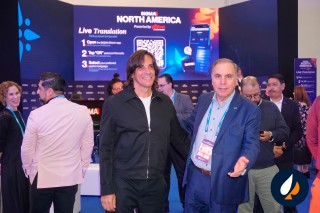


SiGMA North America 2026
01 de September 2026
"Technology can be global, but execution in LATAM must be local": Borut Leban on Timeless Tech's Regional Expansion
(Mexico City, SoloAzar Exclusive).- Following a highly successful showing and a 'Best Aggregator 2026' award at SiGMA North America, Timeless Tech CEO Borut Leban reflects on the company's strategic growth across LatAm. In this interview, Leban discusses the necessity of deep market localization, concrete new business opportunities, and the upcoming launch of their unified retention ecosystem, Timeless Arena.
Friday 18 Sep 2026 / 12:00
BSW Highlights Validation and Growth Opportunities in the LATAM iGaming Market
(Mexico City, SoloAzar Exclusive).- In Q&A with SoloAzar, Betting Software (BSW) Head of Digital Marketing Ilia Chumak discussed the company's standout showcase in SIGMA North America. Highlighting the incredible energy of the region, Chumak noted that the event was a major success for BSW, resulting in active negotiations and verifying multiple deals straight from their booth.
Friday 18 Sep 2026 / 12:00
SiGMA North America Explores Affiliate Marketing After Sports Events
(Mexico City, SoloAzar Exclusive).- At SiGMA North America 2026, Fernanda Figueroa, Affiliate Manager at 1win Partners, examined how affiliates can monetize sports events in LATAM beyond the initial traffic spike. During the conference “Beyond the Spike: How Affiliates Monetize Sports Events in LATAM All Year Round,” she discussed sports betting traffic, player retention, campaign localization and audience segmentation as key elements for extending the value of major sporting events.
Friday 18 Sep 2026 / 12:00
SUSCRIBIRSE
Para suscribirse a nuestro newsletter, complete sus datos
Reciba todo el contenido más reciente en su correo electrónico varias veces al mes.