Why Retention Beats Acquisition in Denmark: Soft2Bet Interview
Wednesday 15 de July 2026 / 12:00
⏱ 6 min read
(Malta).- For over a decade, Denmark has proven that commercial success can coexist with a strict regulatory framework. However, as this mature market becomes increasingly saturated, competition is intensifying. Operators are shifting their focus away from traditional customer acquisition, competing instead for market share and long-term player retention. The firm shares an interview with Harrison Barrett, VP of Business Development at Soft2Bet on this matter.
Insights into Denmark’s success in growth and retention
For more than a decade, Denmark has been viewed as one of Europe’s most mature gambling markets and proof that commercial success can coexist with a strong policy framework.
But as the market matures further, competition is becoming tougher. Operators are no longer competing primarily for new customers. They are competing for market share and retention within an increasingly saturated ecosystem.
Denmark’s latest revenue data offers an early indication of where mature regulated markets are heading next: away from acquisition-led growth and towards retention-led performance.
An interview with Harrison Barrett, VP of Business Development at Soft2Bet
Q: Denmark reported a 15% increase in gambling revenue in Q1. What's your reading of the market?
Harrison Barrett: The headline growth is certainly positive, but I think it only tells part of the story.
Denmark is not an emerging market anymore. When you see double-digit growth at this stage of maturity, the key question is not how many new players are entering the market. It's what is driving existing players to engage more frequently and consistently.
That’s why retention has become increasingly important in mature markets.
Denmark's gross gambling revenue reached DKK 7.27bn in 2024, up 6.9% year-on-year. What is particularly important is that this growth is no longer driven by market expansion, but by deeper engagement within a saturated ecosystem. Online casino revenue rose 14.7%, making it the clear growth engine of Denmark’s market.
Recent monthly reports reinforce this shift, with growth increasingly concentrated in online casino rather than new customer acquisition. This is exactly what you expect in a mature market. Performance becomes behavioural, rather than structural.
Denmark has reached a stage of maturity where traditional growth metrics no longer tell the full story. With a highly regulated environment and one of the strongest channelisation rates in Europe, the market is increasingly defined by the quality of player engagement rather than the quantity of new registrations.
Operators are competing less for new registrations and more for relevance within players' daily entertainment habits.
Q: Denmark achieved a channelisation rate of more than 91%. Why is that significant?
Harrison Barrett: A strong channelisation rate is a remarkable achievement.
Spillemyndigheden reported Denmark’s channelisation rate at around 91.5%, one of the highest in Europe.
In lower-channelised markets, growth often comes from converting players away from unlicensed operators. In Denmark, that opportunity is largely exhausted because most players are already inside the ecosystem.
This shifts competition towards retention, product quality and long-term customer value
Q: Denmark's online casino segment grew faster than the wider market. Why is online casino driving growth?
Harrison Barrett: The sector has become more sophisticated in terms of content, user experience and personalisation.
In Denmark and other mature markets, customer acquisition becomes progressively more expensive while the available pool of new players becomes increasingly limited. That's why retention has emerged as the industry's most important economic lever. Sustainable growth is no longer about acquiring the most customers; it's about creating enough value that players choose to return consistently over time. The operators that understand lifetime value will outperform those that are still focused primarily on acquisition volume.
Today's players expect content to evolve continuously. Online casinos are particularly well positioned to meet those expectations because operators can constantly introduce new content, new mechanics and personalized experiences that keep the product fresh and exciting.
The result is a stronger engagement cycle compared with many traditional acquisition-driven models.
Q: Does that mean acquisition is becoming less important?
Harrison Barrett: Acquisition will always matter, but its relative importance changes as markets mature.
In a market like Denmark, the difference between success and failure is rarely determined by who acquires the most customers. It's determined by who creates the strongest long-term relationship with those customers.
The focus is shifting from acquisition cost to customer lifetime value. That requires a different mindset. It calls for operators to think beyond marketing spend and invest more heavily in product, engagement and customer experience.
Q: What role does gamification play in retention today?
Harrison Barrett: Gamification has evolved beyond rewards and promotions. At its core, it's about creating a more engaging user journey.
Players increasingly expect achievement and personalised experiences across digital entertainment products.
When implemented responsibly, gamification helps operators create more meaningful interactions with players. It encourages engagement through experience rather than simply through promotional incentives.
Q: How important is CRM in a mature market like Denmark?
Harrison Barrett: CRM has become one of the most strategic functions within modern iGaming businesses.
The challenge is no longer communicating with players. It's understanding what each player values in terms of experiences that feel genuinely relevant to them.
Personalisation is increasingly becoming the foundation of retention. The operators that succeed will be those that can leverage data intelligently to create better customer journeys while remaining fully aligned with regulatory expectations and responsible gaming principles.
Q: Soft2Bet operates multiple brands in Denmark. How do you avoid the brands competing?
Harrison Barrett: That's a common misconception. Multiple brands can be a strength when each serves a distinct audience and player preference.
The reality is that mature markets are not homogeneous. Different players engage with products for different reasons. Some prioritise simplicity and convenience. Others value gamification, community features and content variety.
Our objective is not to create four versions of the same product. It's to develop differentiated experiences that appeal to varied player segments while maintaining the same standards of compliance, responsible gaming and product quality.
Quick Casino is a strong example of that approach in practice. As we continue expanding our presence in Denmark, we see clear demand for faster, more streamlined entertainment experiences, particularly among mobile-first users. The product has been designed around efficiency and ease of engagement, while still aligning closely with local player expectations, whether that's payment preferences, sports relevance or seamless mobile functionality.
Betoro reflects a different type of player engagement strategy. In Denmark, we identified an opportunity to build a brand experience centred around resilience, excitement and strong sports engagement, while still tailoring the experience closely to local player behaviour. That includes familiar payment methods, local sporting relevance and a platform experience designed specifically for Danish users.
In Denmark and other mature markets, localisation becomes increasingly important because retention is driven by relevance. Operating under the Spillemyndigheden framework reinforces the importance of transparency and responsible gaming standards. Long-term retention in mature regulated markets is ultimately built on trust as much as product quality.
That's why we view our portfolio strategy not as internal competition, but as the ability to serve multiple engagement profiles within the same highly sophisticated ecosystem.
Q: Can retention and responsible gaming work together?
Harrison Barrett: Absolutely. In fact, I would argue they are becoming increasingly interconnected.
The industry has moved beyond the outdated assumption that retention and responsible gaming are competing objectives. Sustainable retention is built on trust, transparency and positive player experiences.
The operators that focus exclusively on short-term activity metrics often struggle to create long-term customer relationships. Responsible gaming is increasingly becoming a core component of sustainable business performance.
Q: What lessons can other markets learn from Denmark?
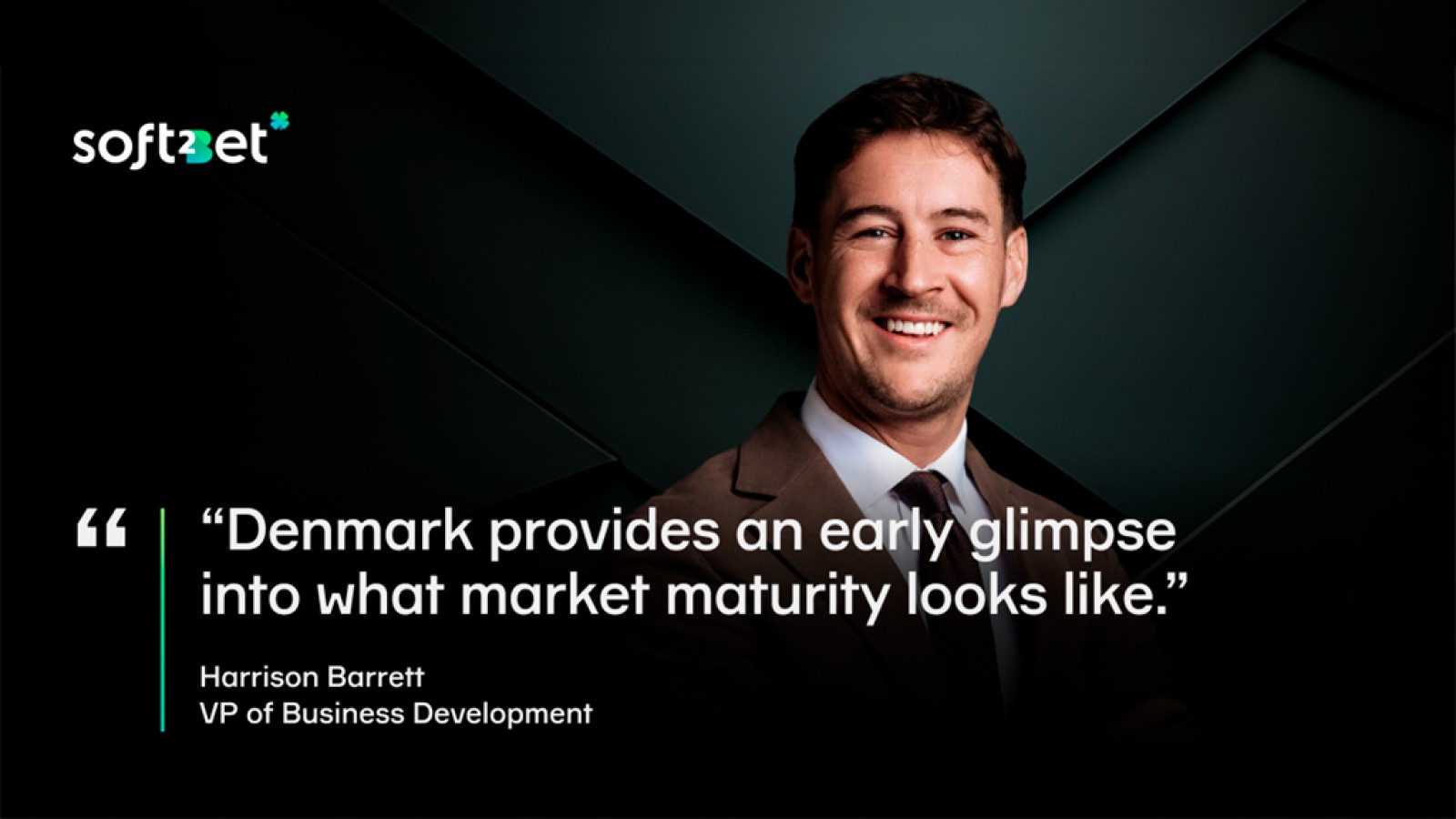
Harrison Barrett: Denmark provides an early glimpse into what market maturity looks like.
Many European markets are still focused on expansion and acquisition. Over time, those markets will inevitably become more saturated and more competitive. When that happens, operators will face the same challenge Denmark faces today: how to remain relevant when acquiring additional players becomes more expensive and less impactful.
The answer will increasingly come down to product differentiation, engagement and more importantly - retention.
Q: Looking ahead, in your opinion, what will define successful operators in mature markets over the next five years?
Harrison Barrett: The winners will be the operators that understand they are competing within the broader entertainment economy rather than solely within gambling.
Consumers have countless options for how they spend their leisure time. Success will depend on delivering experiences that are engaging, personalised and responsible.
For many years, growth in iGaming was primarily about expansion into new markets. The next phase of growth will be about maximising engagement within existing markets. Denmark is showing us what that future looks like, and retention will be at the centre of it.
Denmark offers a glimpse into the future for many jurisdictions. As markets mature, competitive advantage increasingly comes from product differentiation, personalisation and long-term customer relationships. The next generation of market leaders will not necessarily be those with the largest marketing budgets, but those that build the most engaging and sustainable player experiences.
Denmark shows us that in mature markets, growth is about staying relevant and retained in a player’s entertainment choice, where loyalty and preference become part of a player’s routine.
Categoría:Analysis
Tags: Soft2Bet,
País: Malta
Región: EMEA




Event






SBC Summit 2026
29 de September 2026
SBC Summit 2026 Wraps Up Record-Breaking Lisbon Edition
Thursday 15 Oct 2026 / 12:00
Exploring Market Particularities: Insights from ALEA’s Alexandre Tomic
Thursday 15 Oct 2026 / 12:00
CT Interactive Showcases Expanded Content Portfolio at SBC Summit
Thursday 15 Oct 2026 / 12:00
SUSCRIBIRSE
Para suscribirse a nuestro newsletter, complete sus datos
Reciba todo el contenido más reciente en su correo electrónico varias veces al mes.