Your Slot Floor is Invisible to 22-Year-Olds
Tuesday 04 de August 2026 / 12:00
⏱ 10 min read
While the gaming industry seeks to attract new generations, the digital consumption habits of young people are redefining the rules of interactive entertainment. In this column, Fernando Polti, CEO of Wizards and CTO of IAG Play, argues that phenomena like La Velada del Año (The Event of the Year) prove the need to rethink product design, user experience, and retention strategies so as not to be left out of the future of iGaming.

On July 25th, eight million people watched boxing at the same time. Not in Las Vegas: in Seville, and from their phones.
La Velada del Año VI packed La Cartuja stadium with 80,000 people and peaked at 7.67 million concurrent viewers across Twitch, YouTube, and TikTok, according to Streams Charts. Over 44 million hours were watched, with an average audience of nearly five million. In the historical ranking of Spanish-language streaming, it is only surpassed by the previous Velada and the World Cup final. Ten amateur boxing matches between content creators, with an audience overwhelmingly under 30.
Now for the part that should make us uncomfortable. La Velada VI had twelve sponsors: Coca-Cola, McDonald's, Spotify, Revolut, Mahou, CeraVe, Infojobs, G-Shock, among others.
Not a single betting company. Not one.
There were betting markets, of course: Kirolbet, Sportium, Codere, Betway, and Bwin, among others with a DGOJ license, offered odds. What did they offer? Match winner. With some luck, method of victory and total rounds.
A native streaming event—social, collective, commented on live by millions of people across three platforms simultaneously. And our industry's response was a moneyline on the winner, as if it were a 1990s fight card.
If you operate a casino, a sportsbook, or provide the platform others operate on, that night was a free diagnostic. It's worth reading before your balance sheet reads it to you.
This is not a debate about tastes. It is a cohort problem.
Let's start where it matters: your age-based revenue structure.
An analysis by Genting Casino measured slot activity by age group and found a perfect staircase: 35% among players aged 18 to 24; 41.6% between 25 and 34; 45.3% between 35 and 44; and 47.3% for 55 and over.
Read it backward and look at what it’s telling you. Your most profitable product is over-indexed in the oldest cohort. That cohort isn't growing: they retire, get sick, and eventually pass away. The cohort that should replace them consumes your product 26% less.
That is not a generational preference. It is a revenue curve with an expiration date, and today it sits in your five-year projection, not your ten-year one.
And don't give me the "young people don't gamble" line. For the first time in history, Gen Z spends more on gambling than Baby Boomers: nearly 22% of every dollar wagered in the United States now comes out of their pockets, compared to 19% for boomers, and boomer spending is dropping while Gen Z's is growing by double digits.
They gamble. And they gamble increasingly more. They just don't do it with you.
The Silent Black Hole: Paying 2026 CAC to Fill a 2014 Lobby
Here is the loss almost no one accurately accounts for.
Your marketing team does its job well. They bring in young users with welcome bonuses, TikTok campaigns, affiliates, and influencers where regulation allows. You pay a Customer Acquisition Cost (CAC) that goes up every year. The user logs in, looks at the lobby, finds nothing that speaks to them, plays through the bonus, and vanishes.
In the report, that shows up as "low post-bonus conversion" or "bonus abuse." It's a comfortable and completely wrong diagnosis. They didn't abuse your bonus: they rejected your product.
And the worst part of losing like this is that it doesn't make any noise. There are no complaints, no claims, no support tickets. Just burned CAC and a cohort that never takes off. If your 30-day retention in the 18-30 bracket is way below the rest of your base, you don't have a marketing problem. You have a catalog problem, and no bonus will fix it.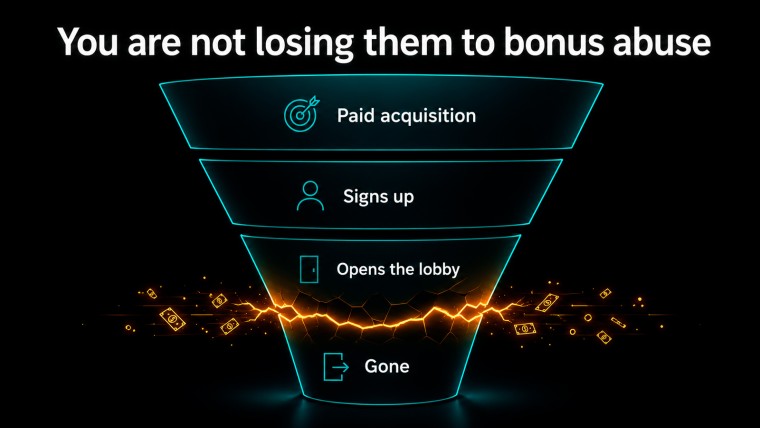
La Velada as a Pricing (and Merchandising) Test
Let's go back to Seville, because this case holds a second lesson, this time technical and directly applicable.
Pricing La Velada is a nightmare, and any honest trader will admit it. There are no fight records, no study film, the participants are amateurs with two or three fights under their belts at best. Your professional boxing models have nothing to feed on.
What moves the odds? A training clip on Instagram. A viral face-off. The narrative between two communities. And above all, emotional money: every follower betting on their creator, inflating or depressing prices without any technical basis. The volatility is brutal, and anyone who doesn't properly size their exposure in such a market takes an ugly liquidation.
But the data point that should matter most to you is a different one. The audience peak of the night wasn't the main event. TheGrefg vs. IlloJuan, the star bout—the one that concentrated all the media hype and the most open markets—gathered about 6.5 million devices. The actual peak, close to eight million, happened during Samy Rivers vs. RoRo.
Stop right there. Sporting hierarchy and attention hierarchy are two different things, and the industry opened markets based on the former.
That is the exact same mistake your lobby makes every single day. You are organizing your shelf using a logic of importance that your young customer stopped using. And unlike La Velada, which happens once a year, your lobby makes this mistake 24/7.
In fact, interface archaeology already exposes those who caught on: open the lobby of any major operator, and you'll see the crash and instant game categories at the top, right next to the classic reels, and often ahead of them. The traditional formats weren't erased: they were moved to the back of the shelf. When an industry rearranges its own shelf, it's confessing where the attention went.
Why Crash Games Win, In Business Terms
The easy explanation is "they are simpler games." That is true, but insufficient. A slot is also simple: you press and wait.
There it all is, in that one word. Wait.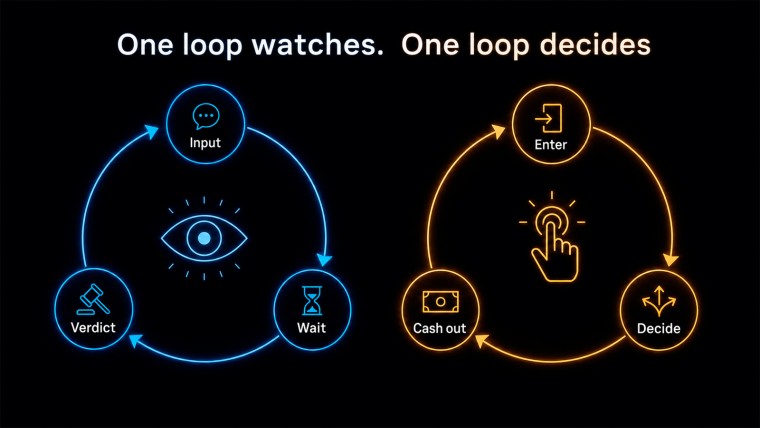
In a slot, the player executes an action and then becomes a spectator of their own outcome. The machine decides and informs them. The loop is input, wait, verdict. I know perfectly well that the result was already determined the instant of the spin; it's my profession to know that. But the math doesn't matter: what matters is what the player feels. And what they feel is passivity.
In a crash game, they press to enter and have to press to exit. That second button changes everything: it's a decision under pressure, with money on the table and the clock ticking. The sense of control is perceived, but it is psychologically real.
Add the layer that the casino never knew how to build: other people. Live presence of what others are betting and when they cash out, chat, leaderboards, streamers replicating plays. Watching a stranger hold on until 14x and cash out is half the entertainment; watching them blow up at 1.2x is the other half. It's the exact same mechanism that made eight million people watch two streamers punch each other.
And now the part that interests you as an operator. A two-second round versus a five-second spin is not an aesthetic difference: it's a difference in rounds per hour, and therefore in bets per hour per player. The format generates more volume per session even with moderate average tickets, and sustains longer sessions because the tension constantly renews. On the supply side, the market has already figured it out: of 378 cataloged crash games, 121 were released in 2025 alone. A third of the entire genre was born in a single year.
A slot, on the other hand, plays itself. It has always played itself. In 1985, that was the point. In 2026, it's a bug.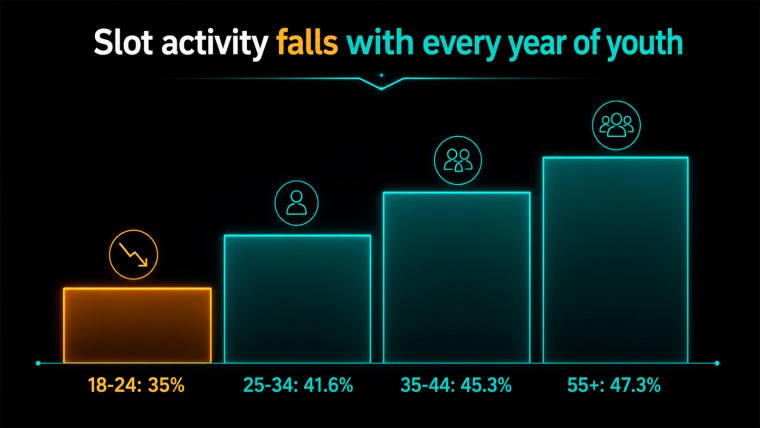
Convergence, and Why Your Current Team Can't Build It
The thesis, straight up: game design and casino design are now the same discipline. They aren't cousins or neighbors. They are the exact same thing, and have been for a while.
Think about who you are talking to. Nine out of ten people in that generation identify as gamers. They come from ranked queues, battle passes, seasons, cosmetic economies, and loot boxes with random rewards. The vast majority have already spent real money inside a game, with a median close to $20 a month, and nobody had to educate them.
Uncomfortable translation: they don't need you to explain how a random number generator works; they grew up experiencing it in every game they played. They understand probability, drop rates, and monetization better than many executives approving catalogs today. What they won't tolerate is an interface that treats them like spectators, a game that takes six seconds to load, and a product where there is no one else on the other side of the screen.
They don't want to gamble. They want to play. The fact that there's money involved is a consequence, not the pitch.
And now for the part that doesn't go over well in meetings, which is what they pay me for: Most teams in this industry are not equipped to build this, and it’s not for lack of talent: it’s due to their background. A traditional casino team is brilliant at what they do. PAR sheets, hold, volatility, prize cycles, certification. It is a hard discipline and I respect it deeply; I come from there.
But it's the toolset of the reel era. Ask that same team about retention loop design, live ops cadence, season progression, cosmetic economies, real-time social presence, or game feel—those 300 milliseconds of tension before something resolves. Silence. That vocabulary belongs to video game development, not casinos.
That is why so many operators license a generic crash game, hang it in the lobby, see it doesn't move the needle, and conclude that "crash is saturated." It isn't saturated: it's poorly built. There are 378 crash games on the market, and the ones that actually retain players can be counted on one hand.
If You Are an Operator: What to Demand from Your Provider Before Signing
I'll stop opining and move to the actionable. These are the questions that separate a content contract from buying window dressing:
Retention data by age cohort, not averages. A game can have great global GGR and zero traction under 30. Ask for the age breakdown. If the provider doesn't have it, they've already told you everything.
Load times measured on mid-range devices, not the CTO's iPhone. Define a realistic reference device for your market and demand it be tested there. In LatAm, this isn't a detail: it's the difference between having a product or not.
Live ops roadmap, not just the game. A title that never changes is dead, even if it's still billing. Ask what they are going to launch on top of the game over the next twelve months and make it part of the contract.
Verifiable social layer. Is the live presence real and shared among players? It's easy to fake and easy to detect.
Verifiability. Provably fair, auditable history, RTP visible to the player. This generation doesn't take your word for it; they believe what they can verify. It is the most underestimated competitive advantage in the business.
Responsible gaming tools inside the mechanics, not as a separate legal screen.
Exclusivity or differentiation. If the same game is on the other twelve operators in your market, you didn't buy an advantage: you bought parity, and you paid for it.
If You Are a Provider: The Uncomfortable Mirror
And if you are on the other side of the counter, the demand is symmetrical.
If your sales pitch still starts with "we have over 400 titles," you are selling inventory, not retention. A massive catalog is no longer an asset: it's shelf cost. The operator who knows what they're doing no longer buys volume; they buy cohorts.
The provider who wins the next decade will have a deliberately mixed team: gaming mathematicians sitting next to product designers who come from gaming, with engineers who understand that a two-second round demands a completely different architecture than a five-second spin. You don't buy that in a license. You build it, and it takes years.
And a warning for both sides: copying the shape isn't enough. There are dozens of crash games on the market that replicated the climbing multiplier but forgot everything else, which is exactly what makes the format work.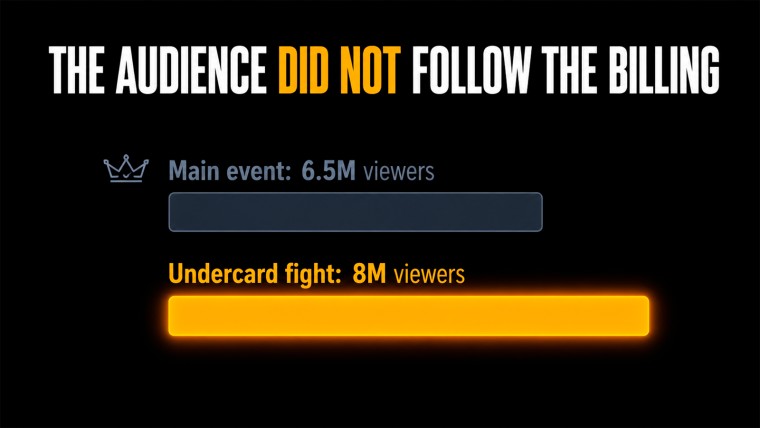
The Retail Channel Plays a Part Too
In our region, there's a variable that is barely discussed in Europe: the terminal and the point of sale.
It's tempting to think that retail is left out of this conversation because its audience is older. That is a mistake. The kid who walks in to load credit at a point of sale in Lima, Bogotá, or Guayaquil is the same kid watching La Velada on TikTok that night. They don't have two sets of expectations: they have just one, and they learned it on their phone.
A terminal with slow response times, imported generic content, and zero local identity comes off just as invisible as a poorly organized lobby. The advantage of the physical channel is real, but it doesn't make up for a product that the replacement generation ignores.
The Part No Trend Article Wants to Write
If you accelerate the loop, you accelerate everything. Including the harm.
A format with seconds-long rounds, constant feedback, and social pressure is, by definition, more intense than one spin every five seconds. That is not an opinion, it's arithmetic. And it means that responsible gaming tools cannot be a legal footnote or a certification checkbox: they must be designed right into the mechanics, with the same seriousness with which you design the math.
Here it's worth looking back at Seville. The fact that no betting company could sponsor the biggest young-audience event in the Spanish-speaking world is not an accident: it is the result of one of the most restrictive advertising frameworks in Europe, written precisely because the sector didn't know how to self-regulate when it was supposed to.
That is the concrete commercial cost of not regulating on time, and it's the most useful warning I can give to a Latin American operator today, as Brazil, Peru, and Colombia redefine their frameworks in real-time. When an industry doesn't draw its own lines, someone else draws them for it—without understanding the product and without giving you access back afterward.
Conclusion
The industry spent a decade waiting for this generation to mature and become its audience. A losing strategy, because it isn't the generation that failed to mature.
On July 25th, there were eight million people together, watching the exact same thing at the exact same time across three different platforms. Everything we claim to want: engagement, community, massive attention, a young audience. It was right there, for free, broadcast live.
And the best we could offer was a moneyline on the winner.
Your slot hall isn't bad. It's invisible. And in this business, invisible is just a slower way of being dead.
*Fernando Polti is the CTO of IAG Play, a developer of lottery, crash, and bingo games with operations in Peru, Colombia, and Ecuador, and the CEO of Wizards, a game development and platform studio based in Las Vegas. He produces documentary content about casino technology on his YouTube Channel, Mr. Polti.
Categoría:Analysis
Tags: Sin tags
País: United States
Región: North America




Event

SiGMA North America 2026
01 de September 2026
"Technology can be global, but execution in LATAM must be local": Borut Leban on Timeless Tech's Regional Expansion
(Mexico City, SoloAzar Exclusive).- Following a highly successful showing and a 'Best Aggregator 2026' award at SiGMA North America, Timeless Tech CEO Borut Leban reflects on the company's strategic growth across LatAm. In this interview, Leban discusses the necessity of deep market localization, concrete new business opportunities, and the upcoming launch of their unified retention ecosystem, Timeless Arena.
Friday 18 Sep 2026 / 12:00
BSW Highlights Validation and Growth Opportunities in the LATAM iGaming Market
(Mexico City, SoloAzar Exclusive).- In Q&A with SoloAzar, Betting Software (BSW) Head of Digital Marketing Ilia Chumak discussed the company's standout showcase in SIGMA North America. Highlighting the incredible energy of the region, Chumak noted that the event was a major success for BSW, resulting in active negotiations and verifying multiple deals straight from their booth.
Friday 18 Sep 2026 / 12:00
SiGMA North America Explores Affiliate Marketing After Sports Events
(Mexico City, SoloAzar Exclusive).- At SiGMA North America 2026, Fernanda Figueroa, Affiliate Manager at 1win Partners, examined how affiliates can monetize sports events in LATAM beyond the initial traffic spike. During the conference “Beyond the Spike: How Affiliates Monetize Sports Events in LATAM All Year Round,” she discussed sports betting traffic, player retention, campaign localization and audience segmentation as key elements for extending the value of major sporting events.
Friday 18 Sep 2026 / 12:00
SUSCRIBIRSE
Para suscribirse a nuestro newsletter, complete sus datos
Reciba todo el contenido más reciente en su correo electrónico varias veces al mes.