Cape Verde´s only casino sees 122 % revenue jump in 2021
Thursday 03 de February 2022 / 07:50
⏱ 3 min read
(Cape Verde).- Gross gaming revenue generated by the only Cape Verdean casino increased by more than 122% in 2021, compared to the previous year, strongly impacted by the covid-19 pandemic, exceeding one million euros, according to data from the African country’s Ministry of Tourism.

The gaming inspection authority (IGJ) had recorded in 2020 a gross revenue from gambling at a casino – the only one in the country operating on the island of Sal – equivalent to 477,758 euros (4.3 million patacas).
This was a 67% drop compared to the record of 1,468,198 euros in 2019, explained by the eight-month stoppage of activity in 2020, due to national and international restrictions to contain the covid-19 pandemic.
In 2021, with the resumption of tourism, the IGJ saw gross revenue increase by 122.6%, compared to the previous year, to 1,063.39 euros, corresponding in turn to a game volume of more than 6.2 million euros.
Of the gross revenue, 10% corresponds to the payment of the special tax on gambling by the concessionaires.
Cabo Verde has granted two concessions until 2021, for the Sal gambling zone and another for the Santiago gaming zone, within the scope of the gaming law, which defines five permanent gaming zones, in Santiago, São Vicente, Sal, Boavista and Maio. .
However, the only casino in operation in Cape Verde is located in Santa Maria, on the island of Sal, the archipelago’s top tourism island.
Tourism minister Carlos Santos, told Lusa in 2020 that the Government defined in the strategy until 2030 the need for “sustainable development of tourism” in Cape Verde, maintaining “anchor products”, such as sun and beach, reinforcing the commitment in cruises and nature tourism, but also in gaming.
“Gaming is a sector in which we want to continue to invest, respecting all international rules and good practices, because it attracts a type of customer that has a very reasonable purchasing power”, assumed the minister.
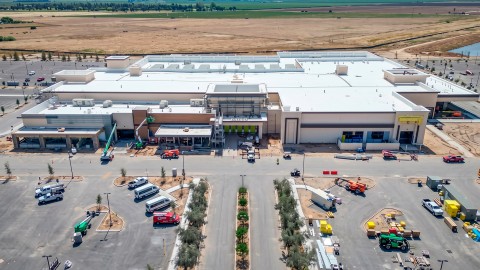
The most emblematic project in this area is the hotel-casino that the Macau Legend group is building in Praia, in a project worth 250 million euros, but with successive delays in completion and little visible progress in the work in recent years.
Carlos Santos guaranteed at the time that large investments such as the Macau businessman David Chow is executing between the islet of Santa Maria and the marginal da Praia, were not jeopardized by the impact of the COVID-19 pandemic.
“I do not think so. And we haven’t even had any signs of that. In fact, I say that the overwhelming majority of investors who are making investments in Cape Verde, before the pandemic, immediately with the carrying out of the repatriation flights asked the Cape Verdean Government for authorization to send their technicians to Cape Verde to continue with the projects,” he said.
In 2015, David Chow signed an agreement with the Cape Verdean Government for the construction of the hotel-casino, with the ground-breaking ceremony taking place in February 2016. It is one of the largest tourist developments in Cape Verde, with an estimated global investment of 250 million euros – around 15% of Cape Verde’s Gross Domestic Product (GDP) – for the construction of a tourist resort on the islet of Santa Maria, which will cover an area of 152,700 square meters.
The work involves the construction of a 250-room ‘casino boutique’ hotel, a large swimming pool and several facilities for restaurants, bars and commercial establishments, as well as a marina.
However, a draft addendum to the agreement between the company and the Cape Verdean Government, dated April 2019, states that, “considering that, given the evolution of the national environment of the project in the last two years, the gaming company suggested, and the Government understood to accept, a proposal to carry out the investment project in phases”. Thus, in this first phase of the project, which should then be concluded within 22 months, 90 million euros will be invested.
David Chow received a 25-year license from the Government of Cape Verde, 15 of which on an exclusive basis on the island of Santiago. This gaming concession cost CV Entertainment Co., a subsidiary of Macau Legend, the equivalent of around 1.2 million euros. The gaming company also received a special license to exclusively explore online gambling throughout the country and the sports betting market for ten years.
Categoría:Casino
Tags: Sin tags
País: Cape Verde




Event
iGaming tech leader Cristina Turbatu commends ICE Barcelona's vision for Hall 7
Tuesday 20 Oct 2026 / 12:00
CGA Showcases Canada’s Competitive Edge at ICE Barcelona
Tuesday 13 Oct 2026 / 12:00
ICE Barcelona Hosts WorldGaming-Backed Nineball Championship in 2027
Tuesday 06 Oct 2026 / 12:00
SUSCRIBIRSE
Para suscribirse a nuestro newsletter, complete sus datos
Reciba todo el contenido más reciente en su correo electrónico varias veces al mes.