Bobby Longhurst Shares His Thoughts on How Operators Should Pick Their Platform Providers With SBC
⏱ 5 min read
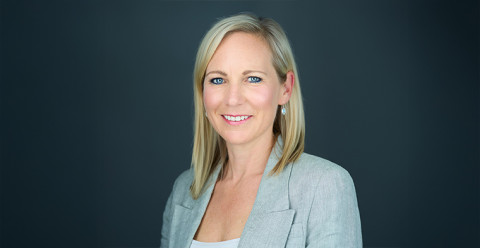
(London).- As regulation is passed for more new markets around the world, are operators still better sticking to the ‘tried and tested’? Bobby Longhurst, Pronet Gaming CCO, shares his thoughts in a roundtable for SBC.

In the early days of iGaming, a handful of platform providers held sway, dominating the market and limiting the choice of operators. A new breed of supplier has now emerged and is offering valid alternatives, particularly in emerging markets. As new jurisdictions regulate around the world, are operators better sticking to the tried and tested, or is it time they adopted a ‘horses for courses’ solution, picking their platform on a case-by-case basis?
Particularly within emerging markets, I’m a big believer in avoiding sticking with the ‘old’, simply because it may have worked before.
Most new jurisdictions necessitate extensive front-end and back-end development to adhere to regulatory requirements in emerging markets, and this can be a step too far for legacy technology to satisfy. Therefore, it is imperative that a blanket approach to multi-jurisdiction market entry be avoided at all cost, especially in a global environment. The need for a dynamic solution that can adapt and scale appropriately with local market knowledge and expertise at its core, geared towards fast optimisation and market entry, has never been greater. Indeed, itis seen as a must-have for the new breed of operators looking to dominate globally.
Our approach and solution is heavily skewed towards these requirements. Built with emerging markets at its core, we are continually finding that our ever-expanding customer base is saving time, money and invaluable development resource which can all be redirected inward to focus on individual marketing activities and growth strategies. It is not by chance that this way of working is becoming the norm.
What are the advantages of a multi-platform solution for betting and gaming brands?
If operators are serious about their player base, acquisition strategy and engagement levels, then theirplatform solution must succeed on a local level. There is a lot of talk of localisation, and while many providers say their services are geared towards this, are they truly able to deliver? When a product is fully configurable down to local taxation, PSPs, languages and currencies, as well as front-end customisations like event optimisation, daily jackpots, etc, which are all bespoke to individual markets, then you can say with some confidence that you are able to offer a solution that fits to the ever-growing needs of operators worldwide.
More often than not, legacy platforms cannot offer this level of detail in a single market, let alone across multi-jurisdictions with the speed needed to gain the competitive edge. Let’s also not forget the multi-channel requirements that are seen as the industry norm now, with ever-growing mobile penetration at the forefront of operator minds in countries where retail has ruled previously – in Africa and LatAm, for example. The need to shift focus quickly is paramount and a full omni-channel solution, optimised to a local level, has never been more relevant.
How is the opening up of more and more markets facilitating or necessitating change?
That’s an interesting, multi-faceted question. Firstly, I’d say it’s a welcome change to open up previously impenetrable markets. It gives operators an opportunity to grow their footprint and implement technical change that supports the masses, forcing providers to further add their technical expertise to new markets that may require extensive development for entry. These are all welcome challenges, something that I believe will drive technical evolution and the forward thinking amongst us to deliver a product that is truly agnostic to market requirements.
When new markets open up, organisations with high speed-of-response will be well placed to capitalise on these opportunities. It would be unreasonable to suggest that the major players wouldn’t be able to respond, but there is a clear advantage for new industry entrants – and those more established providers will inherently have to implement change to facilitate their entry.
For the operator, I can see this as being a fine balancing act. You want a partner who has the flexibility to get you to market quickly, but without sacrificing quality. Get that right and your long-term prospects will be unmatched.
What are the technical considerations of a multi-platform approach for international operators?
At Pronet Gaming, we are committed to tailored solutions that work according to each specific market. We’ve invested heavily in our technology and the systems behind that to ensure that we are positioned to be able to deliver effectively and efficiently every time.
Looking at Africa in particular, USSD betting, which facilitates mobile-based wagering on lower grade devices without the need for Wifi, GPRS or 3G, has taken off in Tanzania, Kenya and Nigeria – where basic phone usage outstrips smartphones. Opera Mini is another game changer, unlocking access to 120 million users of the mobile browser across the continent. Its dominance continues to grow from East to West, allowing operators to strip back a lot of the data heavy features of a mobile sportsbook, making it cheaper, easier, and quicker for punters to place bets.
Enabling USSD and Opera Mini compatibility has been a core focus of Pronet Gaming and, by doing so, we have given our partners a competitive edge. We believe that, with increased investment into online, combined with technological development and regulatory support, Africa’s mobile betting markets will soon be competing on the global stage. For those that want to be a part of the ride, having a local presence will be critical. It’s a critical time – but an exciting journey to be on.
How scalable is such an approach and what are the financial implications of multiple integrations?
I can’t talk for other providers, but for us it’s extremely scalable. That’s a key part of our offer, as our clients don’t just seek scalability. They require it, as they look to grow operations in line with their markets.
In terms of the financial implications of multiple integrations, there are clearly going to be more costs involved with the more integrations you require, but we’re structured to be able to give our customers scalability with clear and effective cost management. Where viable, we can work across our network to implement integrations in such a way that the cost implications can be absorbed across the portfolio – meaning we can reduce the stress of these kinds of concerns for our clients.
We’re dedicated to delivering a premium experience for both our customers and theirs and this runs through everything we do at Pronet Gaming, from the products themselves to our processes. If you’re looking for a trusted partner to deliver seamlessly and cost-effectively, then you should speak to us today.
Categoría:Events
Tags: Sin tags
País: United Kingdom




Event
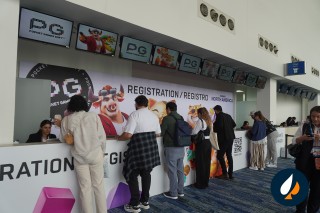
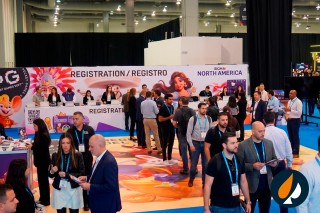
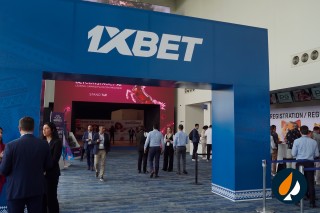
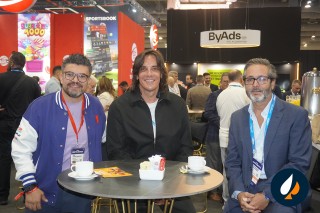
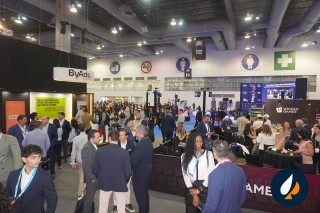


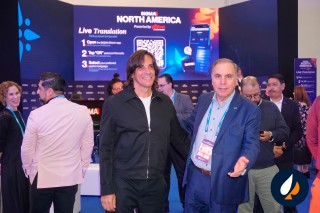

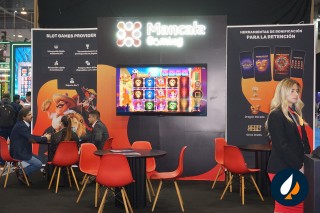
SiGMA North America 2026
01 de September 2026
LatAm Regulators Discussed Illegal Gambling and Innovation at SiGMA North America
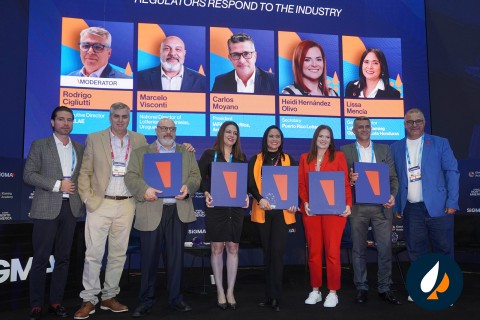
(Mexico City, SoloAzar Exclusive).- The panel "The Red Pen Forum: Regulators Respond to the Industry," held during SiGMA North America 2026, brought together representatives from Uruguay, Argentina, Puerto Rico, and Honduras to analyze regulatory challenges, digital transformation, illegal gambling, and the need to adapt lotteries for new generations. The conference was moderated by Rodrigo Cigliutti, Executive Director of CIBELAE (Ibero-American Corporation of State Lotteries and Betting), and featured the participation of Marcelo Visconti, National Director of Lotteries and Quinielas of Uruguay; Carlos Moyano, President of IAFAS Entre Ríos, Argentina; Heidi Hernández Olivo, Deputy Secretary of the Puerto Rico Lottery; and Lissa Mencía, General Director of Lottery Operations and Games at Loto Honduras.
Monday 28 Sep 2026 / 12:00
SiGMA North America Addressed Crisis Management in iGaming
(Mexico, SoloAzar Exclusive).- During SiGMA North America 2026, Rosa Ochoa, founder of the Blue Global Gaming platform and strategic advisor for gaming operators; Iliana María Pineda Echeverri, Chief Legal & Compliance Officer at Wplay.co; Iraid Rosales, Country Manager Mexico at Amusnet; and Elizabeth Maya Cano, Executive President of CORNAZAR, analyzed the key factors in managing crisis situations within the iGaming industry, with a special focus on transparency, communication, technology, and preparation.
Friday 25 Sep 2026 / 12:00
Affiliates and Acquisition: Keys to Regulated Markets in North America
(Mexico City, SoloAzar Exclusive).- During SiGMA North America 2026, Cristopher Guzmán Reyes, Head of Affiliates at Logrand Entertainment Group; Guga Júnior, influencer and slots expert at Scalar Partners; Andrés Gómez, Head of Latin America Go-to-Market Strategy at Admattic; Yambot Aguilera, Gaming and Finance Sales Director at Google; and Paula Gabriel Jiménez, Advertising Client Growth Director for Microsoft at Aleph, analyzed the state and provincial affiliate ecosystem in North America, as well as the acquisition challenges in regulated markets.
Thursday 24 Sep 2026 / 12:00
SUSCRIBIRSE
Para suscribirse a nuestro newsletter, complete sus datos
Reciba todo el contenido más reciente en su correo electrónico varias veces al mes.