Tax Policy Pressures the Land-Based Gambling Sector
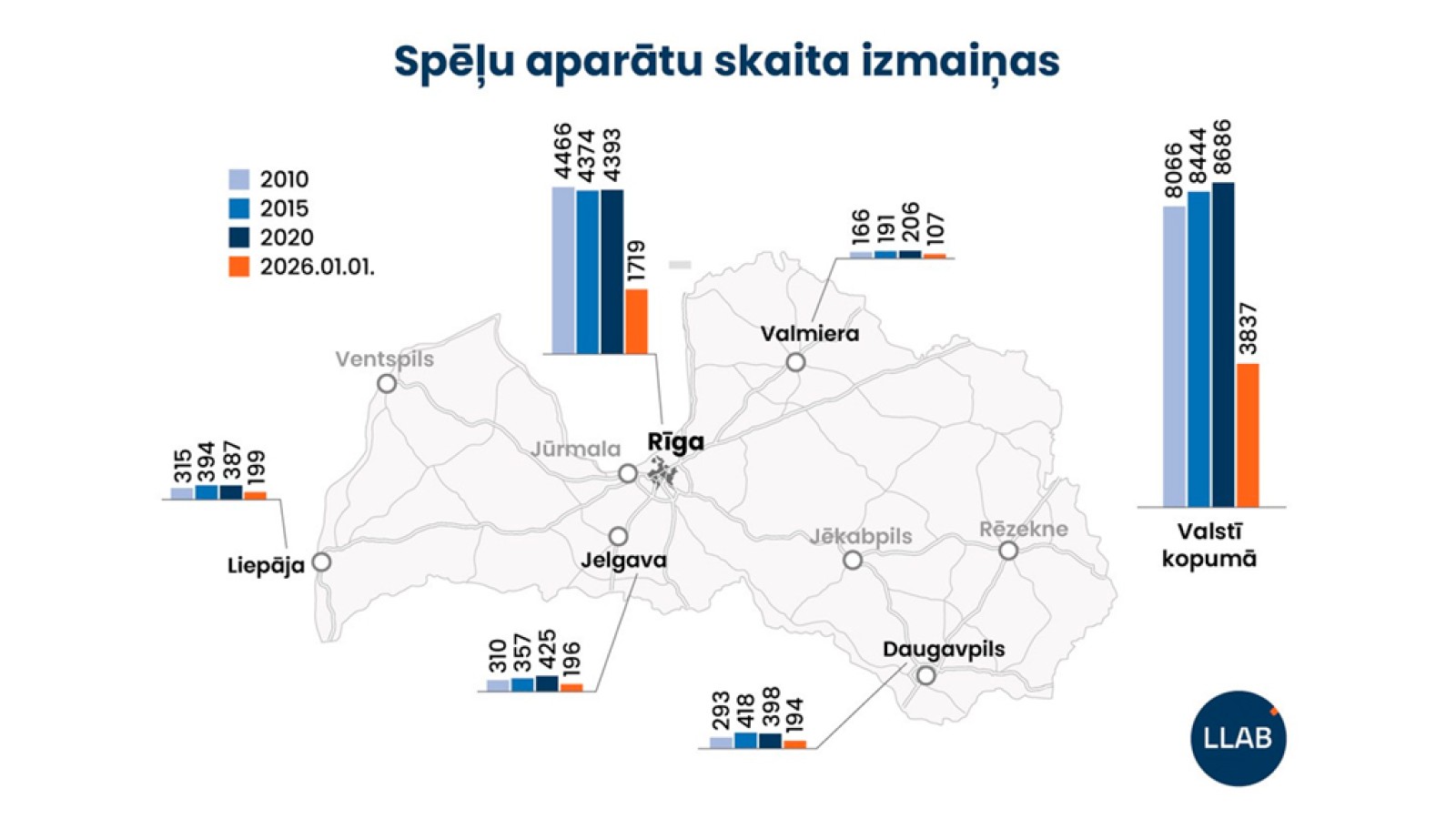
According to LLAB data, Latvia recorded 72 fewer slot machines in January compared to December 2025. The sharpest reduction was seen in Riga, where 33 machines were removed. Other notable decreases occurred in Daugavpils (five machines), Jūrmala and Valmiera (four each), while Jelgava, Liepāja and Talsi each saw three machines taken out of operation. Smaller reductions were reported across several other municipalities, reflecting a nationwide contraction of the land-based gambling footprint.
LLAB Executive Director Līga Līce warned that the early 2026 figures already validate the association’s concerns. “Already last year, under the previous gambling tax rate, state budget revenue forecasts were not met, and it was clear that revenues would continue to decline under an unplanned increase in the rate. This is confirmed by the first data of this year – the number of gaming machines has decreased, and revenues will also fall,” she stated. Līce added that LLAB had previously drawn attention to incorrect tax revenue projections and the fact that expected revenues were not materializing.
Fewer Venues, Lower Revenue Expectations
At the end of 2025, LLAB projected that higher tax rates could lead to the closure of more than 20 gambling halls and 10 card or roulette tables during 2026. As a result, state budget revenues from this segment are expected to fall by approximately €2.5 million rather than increase. While revenue from the slot machine tax was initially projected at €25 million, LLAB estimates that following the rate increase, proceeds will instead decline to around €22.5 million.
The tax on gambling halls and slot machines was increased by 20% at the beginning of 2024. Since then, 24 gambling halls have already closed by the end of 2025. Over a longer horizon, the contraction is even more pronounced: in the past 20 years, the number of gambling halls in Latvia has dropped by more than 70%, from 327 venues in 2005 to just 162 as of January 2026.
Industry Criticism Over Lack of Consultation
LLAB also criticized the implementation of a new tax increase effective January 2026, noting that it was introduced without consultations with the sector or consideration for investors and operators. According to the association, this approach not only violates principles of good governance but has also produced misleading forecasts regarding the impact of tax changes on public finances.
The association argues that the projections failed to account for clear market trends, including declining turnover in the land-based segment and a significant reduction in the number of gambling venues. As a result, LLAB maintains that continued tax pressure risks further shrinking the regulated market while undermining the very revenue goals the increases were intended to achieve.