Macau projects growth in gaming revenue for 2027
The revenue projection is included in the latest budget documentation published on the Legislative Assembly’s website. It comes as Macau continues to demonstrate the significant contribution of the casino industry to government income.
According to figures released by the city’s gaming regulator, casinos generated MOP208.8 billion in GGR during the first 10 months of 2026. The performance provides the basis for the government’s expectations regarding the sector’s contribution in the coming year.
Chief Executive Sam Hou Fai recently addressed the outlook for gaming revenue during a Legislative Assembly session focused on his 2027 policy address. He acknowledged that Macau could achieve its casino revenue target for 2026, while also warning about the need for greater fiscal discipline amid rising public expenditure and subsidy commitments.
The Financial Services Bureau reported that government revenue reached approximately MOP98.2 billion during the first 10 months of 2026. Of that amount, MOP81.5 billion came from games of chance, representing a 5.2% increase compared with the same period of the previous year.
These figures underline the central role of casino taxation in supporting Macau's public finances and maintaining its extensive range of government-funded programmes.
Gaming taxes expected to account for nearly 60% of revenue
The 2027 budget estimates total government revenue at MOP143.64 billion, while public expenditure is projected to reach MOP142.93 billion. This would leave an estimated fiscal surplus of approximately MOP715 million.
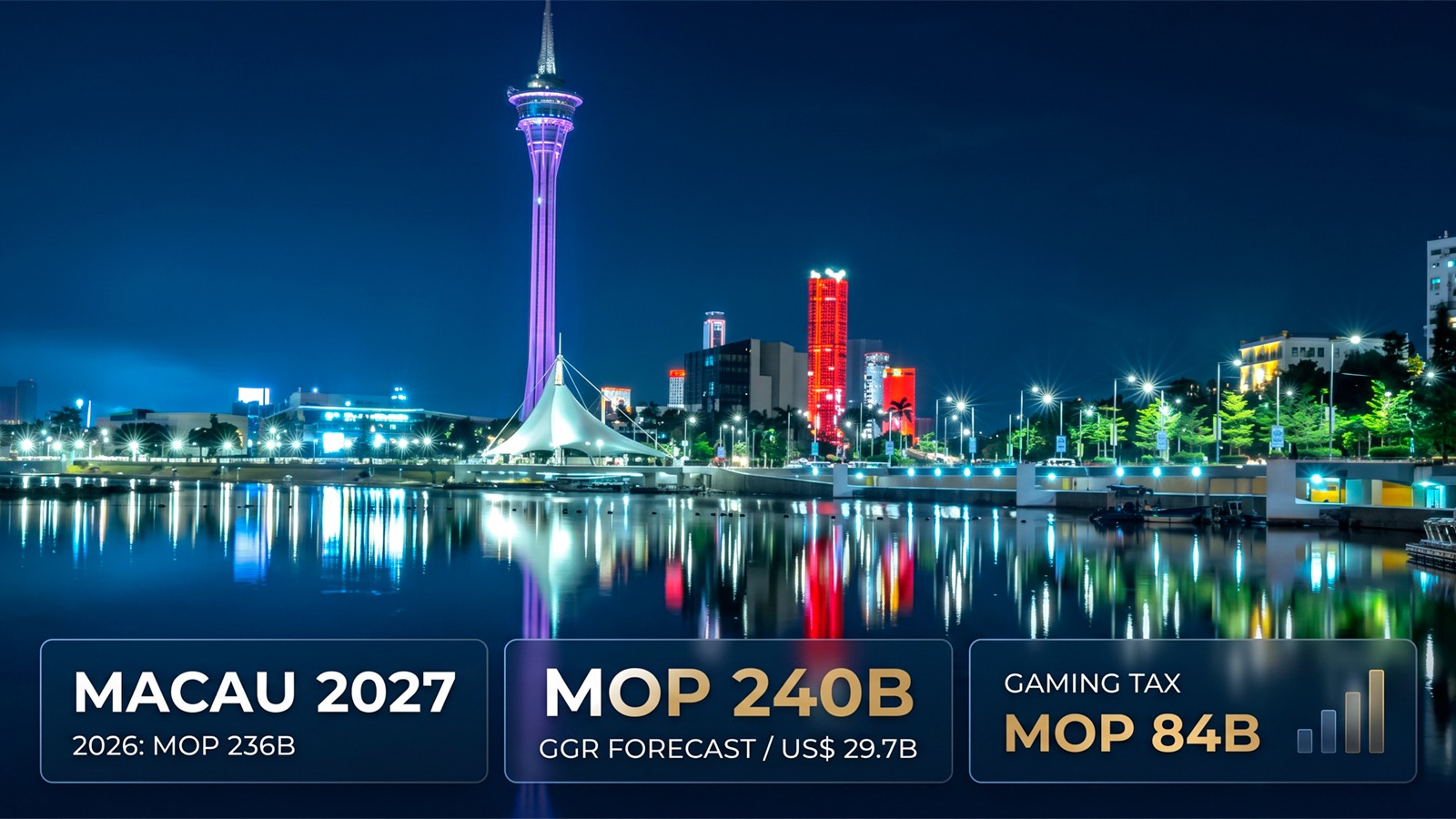
Gaming taxation is expected to remain the largest source of government income. The authorities anticipate collecting MOP84 billion in gaming taxes in 2027, equivalent to approximately 58.48% of projected total revenue.
Overall, government revenue is forecast to increase by 20.9% compared with the previous budget estimates, reinforcing the importance of the casino sector in Macau's economic and fiscal planning.
Another significant component of the proposed expenditure is the PIDDA programme, a government-led investment and spending initiative, which is expected to require MOP18.16 billion.
Sam Hou Fai calls for caution over public spending
Despite the positive revenue outlook, Sam Hou Fai emphasized the need to reassess the sustainability of government spending, particularly in relation to welfare measures, subsidies and tax concessions.
During his address to legislators, the Chief Executive noted that spending on benefits and public assistance had expanded over the years, reaching "tens of billions".
He explained that some of these initiatives had originally been introduced under specific historical circumstances, arguing that their continued implementation should be reviewed in light of changing economic conditions.
Sam also questioned whether certain tax exemptions and other concessions should remain in place "indefinitely".
"Once subsides and allowances are considered to be rights, it would be difficult to withdraw," Sam told lawmakers.
His remarks reflect the government's intention to balance the casino industry's contribution to public revenue with the need to maintain sustainable public finances.
Welfare programmes and tax relief included in the 2027 budget
The proposed budget allocates substantial resources to social support programmes and financial assistance for residents.
Measures classified as beneficial to citizens, including cash handouts, medical allowances, utility subsidies and continuing education support, are expected to cost approximately MOP7.6 billion.
Meanwhile, allocations for education, retirement pensions and support for disadvantaged communities could reach MOP15.81 billion.
The non-mandatory central provident fund scheme is also expected to require MOP3.27 billion.
Combined, these welfare-related commitments are projected to amount to MOP26.87 billion.
In addition, the budget proposal includes MOP5.4 billion in tax relief for individual workers and corporations.
The budget bill is expected to be submitted to the Legislative Assembly for a vote. Its approval will determine the framework for Macau's public revenue and expenditure in 2027, with gaming taxation continuing to play a decisive role in financing government programmes and maintaining the region's fiscal balance.