Brazil: the president of the country's Central Bank affirms that they have no relevance in gambling regulation
Wednesday 09 de April 2025 / 12:00
⏱ 4 min read
(Brasilia).- On 8 April, the Parliamentary Commission of Inquiry on Gambling (CPI in the original Portuguese) held a meeting between senators and the president of the Central Bank of the Republic of Brazil, Gabriel Galípolo, where they disagreed on the role of the Central Bank in the financial institutions that handle payments to illegal virtual gambling companies.
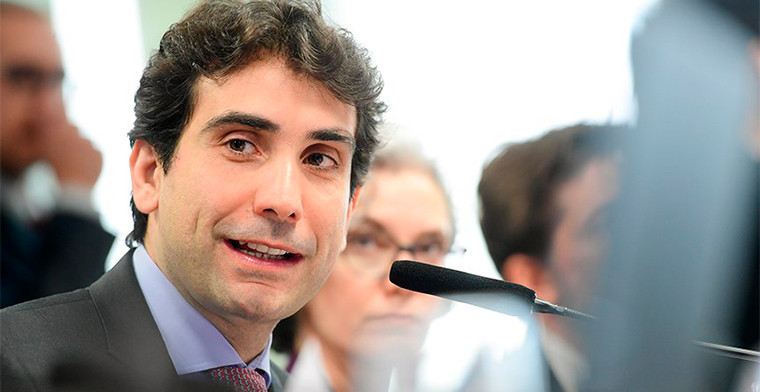
According to the Central Bank, between 20 and 30 billion reais are spent on gambling in Brazil every month. The collegiate body is investigating the impact of online gambling on the financial health of families.
Gabriel Galípolo, president of the Central Bank, clarified that oversight and sanctions related to the regulation of the sector are the exclusive competence of the Ministry of Finance, including in relation to payment institutions that provide gambling services. According to him, it would be necessary to change the legislation to allow the Central Bank to impose fines or prevent activities that violate the rules.
‘The Gambling Secretariat (SPA, of the Ministry of Finance) is the one that defines which bets are authorised or not. The Central Bank, once informed by the SPA, will say to the financial institution: ‘you have companies to observe in your procedures and, from now on, do not authorise any more’. It is not the Central Bank that stops a transaction. From that moment on, it is the financial institution itself that stops it’.
Senator Izalci Lucas (PL-DF) questioned the notification made by the SPA to the Central Bank in March about 22 payment entities managing illegal virtual gambling - currently, 81 companies are authorised by the SPA. He said he had the impression that the agencies involved were shying away from the problem.
‘As far as I can see, there are still no procedures in place to stop this. It is very clear to us that there is a lot of irregularity, a lot of irregular operations.’
Galípolo pointed out that the nuisance stems from the five-year period in which the gambling sector operated without regulation. From 2023, Law 14.790 introduced rules for the sector, which went through an adaptation period in the second half of 2024. Since January, the sector has been fully regulated, including sports betting and online gambling games - similar to casinos - such as the so-called Jogo do Tigrinho.
Legal vacuum
Senators Jaques Wagner (PT-BA) and Dr Hiran (PP-RR), chairman of the IPC, also asked about the responsibility of the Central Bank in punishing these financial institutions. Hiran noted that the collegiate body could present a legislative proposal to combat financial transactions through illegal gambling.
‘We have a feeling that there is a legal vacuum. We need to put in place better legislation to curb this type of activity, which is very damaging to our country's economy,’ Dr Hiran said.
Senator Damares Alves (Republican-DF) also questioned the central bank's rules that make it more flexible for ‘low-volume’ financial institutions to operate. At the first meeting of the CPI, a delegate of the Federal District Civil Police (PCDF) said that the Central Bank's resolution to encourage digital companies in the financial market, the so-called fintechs, ended up opening loopholes that are exploited by criminals.
Senator Soraya Thronicke (Podemos-MS), rapporteur of the CPI, asked Galípolo for suggestions on legal improvements. According to her, investigations by the collegiate body show that several payment institutions are open only to handle illegal gambling.
Money laundering
Galípolo pointed out that a betting company that operates without authorisation from the Ministry of Finance has no reason to commit crimes such as money laundering or illegal remittance of money abroad, crimes which, according to Soraya, are usually related to illegal activities. When such a relationship exists, the Central Bank acts differently with the financial institution that provides them with services, Galípolo explained.
‘Financial institutions are responsible for identifying any kind of indication that money laundering may be taking place. It is up to us to monitor and make sure that the institutions we authorise have procedures in place so that all their employees know exactly what they have to do. And often it doesn't even go through us, it goes directly to the Coaf [Financial Activities Control Board], to the Public Prosecutor's Office, to the Federal Police.
Financial education in favour of the Central Bank
In August 2024, the Central Bank conducted a study that revealed that about R$3 billion paid by Bolsa Família was spent by beneficiaries on gambling through Pix. Galípolo said the initial aim of the study was to understand why, even with an increase in income, Brazilians did not save or consume more.
Galípolo also argued that it is not the central bank's job to manage or implement ways to prevent recipients of government aid from using the money to gamble. Intervening in such transactions, he said, could violate the right to bank secrecy, for example.
The head of the Central Bank's Conduct Supervision Department, Juliana Mozachi Sandri, pointed out what the Central Bank does for the financial education of Brazilians, for example by informing them that gambling is not a form of investment.
The agency works in schools through the Aprender Valor programme and an agreement with the Brazilian Federation of Banks (Febraban) to promote education through schools. In addition, the Central Bank uses social networks to guide citizens.
‘The Central Bank is using various media, such as Instagram and [other] social networks, to raise financial education issues and clarify the role of the Central Bank, how we operate and what precautions citizens should be aware of, in a simpler way and with uncomplicated language,’ Sandri said.
Source: Agência Senado
Categoría:Legislation
Tags: Sin tags
País: Brazil
Región: South America




Event










SBC Summit 2026
29 de September 2026
The Future of Sports Engagement Beyond the Court
Friday 16 Oct 2026 / 12:00
Ninja Gaming Focuses on Innovation and Global Growth After SBC Summit
Friday 16 Oct 2026 / 12:00
SBC Summit 2026 Wraps Up Record-Breaking Lisbon Edition
Thursday 15 Oct 2026 / 12:00
SUSCRIBIRSE
Para suscribirse a nuestro newsletter, complete sus datos
Reciba todo el contenido más reciente en su correo electrónico varias veces al mes.