California: Judge Directs Federal Government to Remove Koi Nation Land from Trust, Halting Casino Plans
Tuesday 30 de September 2025 / 12:00
⏱ 4 min read
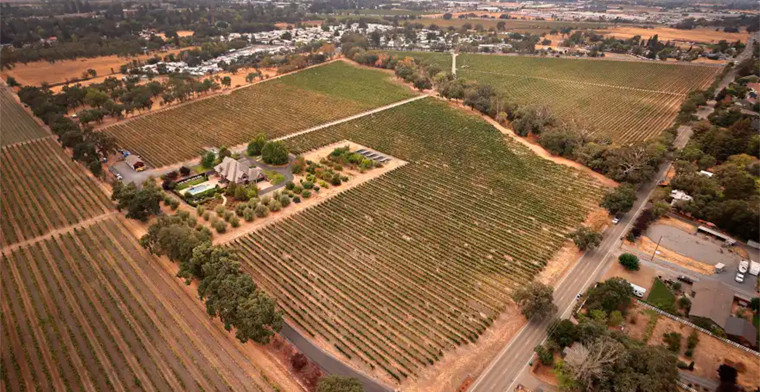
(California).- A federal judge has ruled that a 68-acre site designated for the Koi Nation of Northern California must lose its trust status, effectively ending the tribe’s four-year effort to build a large-scale casino near Windsor in Sonoma County.
The Sept. 22 ruling, which finalizes a determination made by the same judge earlier in the month, was a significant legal victory for the Federated Indians of Graton Rancheria, whose fight against a potential rival for in the gaming business — roughly 11 miles north of their own Graton Resort & Casino near Rohnert Park, the Bay Area’s largest gaming complex — had escalated in the past year.
And it was a huge setback for the Koi, who have represented the project as the clearest path of financial viability for their small band of Pomo Indians.
“The Koi Nation has fought for generations for a land base upon which to secure a future for the Koi people,” the tribe said in a written statement to The Press Democrat. The “order removing our restored homeland from trust status is deeply disappointing, though our resolve is unwavering: we will continue to fight for justice through our appeal to the Ninth Circuit.
The Koi filed that motion Sept. 11, following Judge Rita F. Lin’s preliminary determination in favor of Graton Rancheria, which found that U.S. Department of Interior had “railroaded the (Graton) tribe at every turn” in its approval of the Koi land-to-trust request.
“In the end, we are confident that justice will prevail through our appeal,” the Koi wrote.
The tribe called the federal government’s original decision to place the 68-acre parcel into trust “thorough, meticulous, and lawful in every respect.”
“The record includes volumes of technical, scientific, and historical data supporting that decision,” the tribe added.
A land-into-trust agreement is a crucial step on the way to any tribal casino opening.
Graton Rancheria first sued to halt the project last November, arguing in the U.S. District Court for the Northern District of California that the Interior Department had not provided them and other local tribes an adequate opportunity to consult on the site’s inventory of cultural resources. Graton sued again in February, a month after then-Interior Secretary Deb Haaland, in the final hours of the Biden administration, approved the Koi’s land-to-trust agreement.
By the time Graton Rancheria’s second lawsuit was filed, Doug Burgum was the new interior secretary under President Donald Trump. Burgum’s agency swiftly overturned a fee-to-trust agreement Haaland had granted to the Scotts Valley Band of Pomo Indians for a chunk of land in Vallejo, in a case that involved many of the same core issues. But he didn’t budge on Haaland’s approval of the Koi project.
Lin did that in court, siding with Graton Rancheria, a powerful player in California’s gaming industry that this summer hit the latest phase of a $1 billion expansion of its casino-resort near Rohnert Park.
After her initial decision this month, the judge directed the two sides in the case to meet, and to jointly propose a final judgment reflecting her order.
True to form in the contentious saga, they were unable to come to an agreement. So Lin examined proposed orders submitted by each side and sided with Graton.
The ruling emphasized several Graton claims granted by Lin, including assertions that Interior violated federal law by failing to consult with the tribe on the Shiloh parcel, which is within its ancestral territory; improperly concluded the Koi have significant historical connections to that land; and had a Bureau of Indian Education official consent to the land-to-trust agreement without the authority to do so. The judge had sided with the government on other points of law.
But the Koi also lost on another, major front. The proposed order written by Burgum’s acting assistant attorney general, Adam Gustafson, argued that the judge’s determination didn’t mean the land had to be taken out of trust. Gustafson noted that the Koi had promised in writing not to “undertake any casino development” during their appeal.
The Koi Nation purchased the Shiloh neighborhood parcel in September 2021, for $12.3 million. The property remains theirs. But the ability to build a casino at the site is gone, at least for now.
Graton Rancheria won’t have to celebrate the decision alone. A large majority of Shiloh residents have flooded public comment periods with their concerns about traffic, noise, crime, light pollution, water usage and, most of all, the increased danger they say a big casino would pose during wildfire evacuations, in an area with few routes of egress.
Those unhappy residents were joined by a wide range of elected officials opposing the project, from the Windsor Town Council to the Sonoma County Board of Supervisors, state and federal office holders, and Gov. Gavin Newsom.
The Koi are seeking to build a 400-room hotel and a 530,000-square-foot gambling floor in Shiloh, with 2,750 gaming devices and more than 100 table games.
Lin rejected that argument.
“FIGR has met its burden for the requested injunctive relief reversing the land-into-trust transaction,” the approved order reads.
Categoría:Legislation
Tags: Sin tags
País: United States
Región: North America




Event










SiGMA North America 2026
01 de September 2026
LatAm Regulators Discussed Illegal Gambling and Innovation at SiGMA North America
(Mexico City, SoloAzar Exclusive).- The panel "The Red Pen Forum: Regulators Respond to the Industry," held during SiGMA North America 2026, brought together representatives from Uruguay, Argentina, Puerto Rico, and Honduras to analyze regulatory challenges, digital transformation, illegal gambling, and the need to adapt lotteries for new generations. The conference was moderated by Rodrigo Cigliutti, Executive Director of CIBELAE (Ibero-American Corporation of State Lotteries and Betting), and featured the participation of Marcelo Visconti, National Director of Lotteries and Quinielas of Uruguay; Carlos Moyano, President of IAFAS Entre Ríos, Argentina; Heidi Hernández Olivo, Deputy Secretary of the Puerto Rico Lottery; and Lissa Mencía, General Director of Lottery Operations and Games at Loto Honduras.
Monday 28 Sep 2026 / 12:00
SiGMA North America Addressed Crisis Management in iGaming
(Mexico, SoloAzar Exclusive).- During SiGMA North America 2026, Rosa Ochoa, founder of the Blue Global Gaming platform and strategic advisor for gaming operators; Iliana María Pineda Echeverri, Chief Legal & Compliance Officer at Wplay.co; Iraid Rosales, Country Manager Mexico at Amusnet; and Elizabeth Maya Cano, Executive President of CORNAZAR, analyzed the key factors in managing crisis situations within the iGaming industry, with a special focus on transparency, communication, technology, and preparation.
Friday 25 Sep 2026 / 12:00
Affiliates and Acquisition: Keys to Regulated Markets in North America
(Mexico City, SoloAzar Exclusive).- During SiGMA North America 2026, Cristopher Guzmán Reyes, Head of Affiliates at Logrand Entertainment Group; Guga Júnior, influencer and slots expert at Scalar Partners; Andrés Gómez, Head of Latin America Go-to-Market Strategy at Admattic; Yambot Aguilera, Gaming and Finance Sales Director at Google; and Paula Gabriel Jiménez, Advertising Client Growth Director for Microsoft at Aleph, analyzed the state and provincial affiliate ecosystem in North America, as well as the acquisition challenges in regulated markets.
Thursday 24 Sep 2026 / 12:00
SUSCRIBIRSE
Para suscribirse a nuestro newsletter, complete sus datos
Reciba todo el contenido más reciente en su correo electrónico varias veces al mes.