D.C. online casino legislation clears committee
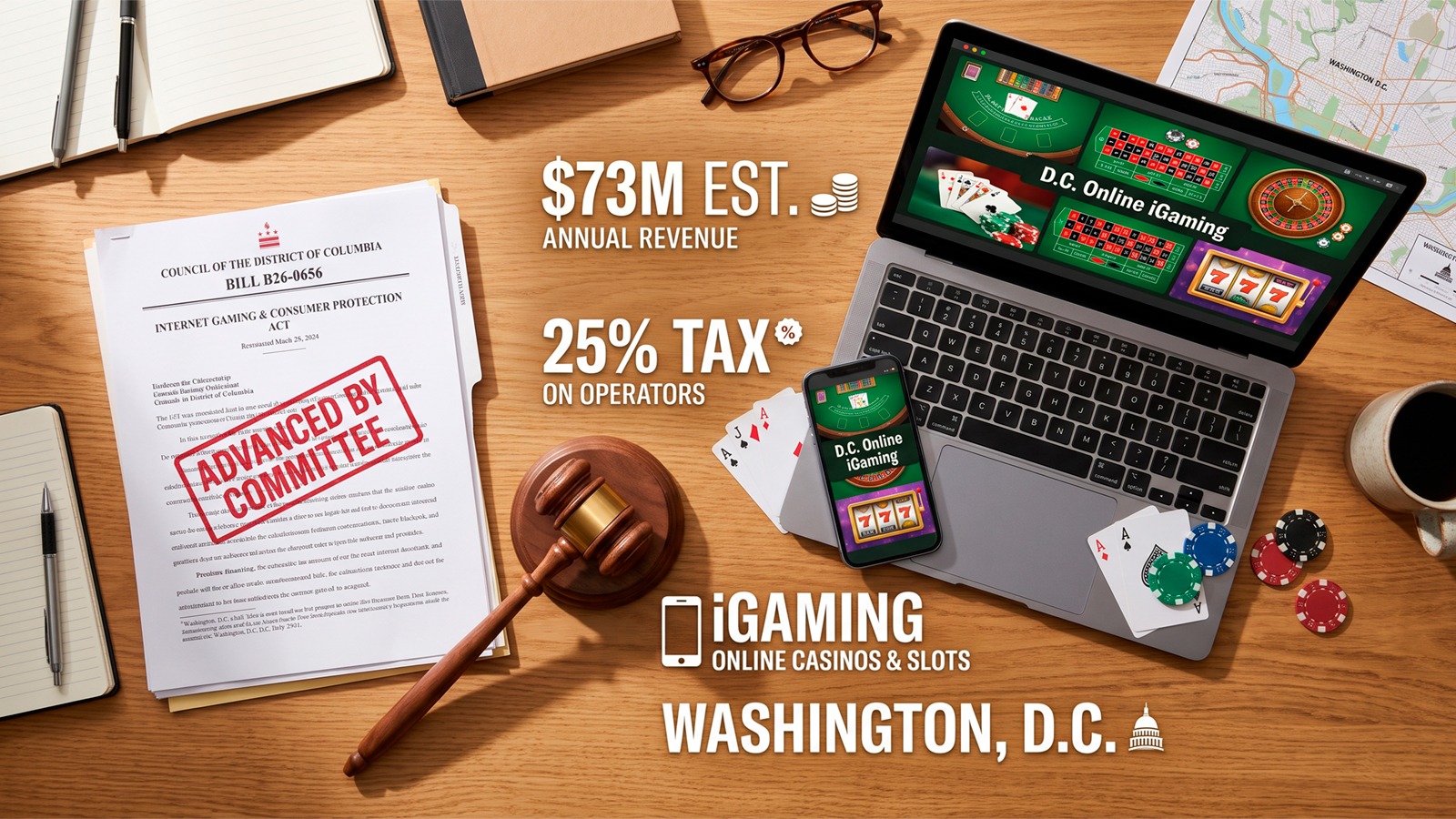
The committee approved Bill B26-0656 on November 18, marking the first major legislative progress for the proposal since its public hearing in May. Councilmember Christina Henderson cast the only dissenting vote, raising concerns about the potential financial and social consequences of expanding online gambling.
The legislation seeks to establish a legal framework for internet gaming under the supervision of the District's Office of Lottery and Gaming (OLG). The proposed market would include online slots, poker, blackjack, roulette and live-dealer games, allowing licensed operators to offer real-money gaming to eligible customers.
Committee Chair Matthew Frumin defended the initiative, arguing that regulation would help redirect existing gambling activity into the legal market.
“This legislation will bring revenue to the district, simply because the market is already there, not because we’re inviting it in,” Frumin said.
Henderson, meanwhile, expressed reservations about relying on gambling-related income to support public finances. Her opposition reflects the broader debate surrounding the expansion of iGaming in the United States, particularly regarding consumer protection and problem gambling.
Licensing fees and taxation for iGaming operators
Under the committee-approved proposal, online casino operators would face a $2 million licensing application fee and a $1 million renewal fee every five years.
The taxation structure includes a 25% tax on adjusted gross internet gaming revenue, alongside two additional assessments: a 2% regulatory contribution to support the Office of Lottery and Gaming and a 2% community impact assessment.
The committee estimates that the proposed framework could generate more than $73 million in revenue over the four-year financial plan.
The legislation also increases the annual allocation for problem gambling prevention and treatment services from the initially proposed $500,000 to $750,000, with funding directed to the Department of Behavioral Health.
Sweepstakes gaming included in the regulatory framework
One of the significant changes introduced during the committee review concerns the treatment of dual-currency sweepstakes casinos.
Unlike the original version, which proposed an outright ban on these products, the amended legislation would allow qualifying social sweepstakes gaming platforms to operate under the same licensing, taxation and consumer protection requirements as other online gambling operators.
Unlicensed dual-currency gaming products would remain prohibited, giving the OLG enforcement powers that include issuing cease-and-desist orders against unauthorized operators.
The proposal also establishes additional operational requirements for licensed platforms. Each operator would be limited to two brands and prohibited from accepting credit card deposits. Players would also have to provide their consent before receiving push marketing notifications.
Another provision requires operators to offer live-dealer games streamed from studios located within the District within one year of obtaining their licenses. These facilities would employ licensed human dealers under labor peace agreements, while the use of artificial intelligence dealers would be prohibited.
Minimum gambling age and responsible gaming measures
The amended bill also proposes raising the minimum legal gambling age from 18 to 21 for most forms of gambling in Washington D.C., including sports betting. The lottery would remain exempt from this change, which is scheduled to take effect on October 1, 2027.
The additional consumer protection provisions are intended to establish stricter operating standards as the District considers opening its online casino market.
Full Council approval remains the next hurdle
Despite the committee's approval, the legislation has several stages to complete before it can become law.
The bill will move to the Committee of the Whole before being considered by the full Council. It must secure approval in two separate readings by December 15, the final legislative meeting of the current Council period.
According to a spokesperson for Felder, the proposal is expected to receive its first Council vote on December 1.
If approved by the full Council, the legislation will be sent to Mayor Muriel Bowser, who will have 10 days to sign or veto it. Congressional review would follow before the measure could take effect.
The bill's progress comes amid growing attention to the scale of unregulated online gambling in the District. The committee's report estimates that residents wagered more than $1 billion on illegal iGaming platforms during 2025.
For the industry, the proposal represents a potential new regulated market in the U.S. capital, with opportunities for licensed operators and suppliers, alongside a framework that places taxation, compliance and responsible gambling requirements at the centre of its development.