Ukraine Blocks 475 Illegal Gambling Websites as Mirror Networks Expand
Thursday 13 de August 2026 / 12:00
⏱ 3 min read
(Kyiv).- Ukraine has once again stepped up its fight against illegal online gambling, with internet service providers ordered to restrict access to 475 websites. The scale of the latest action highlights a growing challenge for regulators: illegal operators are no longer relying on single domains, but on extensive networks of mirror sites designed to survive blocking measures.

Hundreds of domains linked to a handful of brands
The National Commission for the State Regulation of Electronic Communications, Radio Frequency Spectrum and the Provision of Postal Services (NCEC) has instructed internet service providers to block access to the identified websites following a decision by the state agency PlayCity.
However, the list of 475 domains is significant not simply because of its size, but because of its structure.
A total of 268 domains are associated with the GetX brand, using numerous variations of the name combined with terms such as “casino,” “vip,” “game” and “zerkalo.” The network also includes hyphenated versions and different combinations of letters.
Another 37 domains are linked to the Vavada network, which follows a similar strategy of maintaining multiple addresses for the same gambling operation.
Overall, the domains make it possible to identify at least 14 different brands. More than 150 additional addresses use seemingly random combinations of letters and numbers, making their affiliation difficult to establish from the domain name alone.
A deliberate strategy to evade regulators
The large number of variations suggests that mirror websites have become an integral part of the operating model of illegal gambling businesses.
Once a main domain is blocked, operators can quickly launch another address, sometimes changing only a letter, adding a word or switching to a different domain extension.
The extensive use of the .life top-level domain among the identified websites also points to a systematic approach to registering new addresses rather than isolated cases of illegal activity.
For players, the change can be almost invisible. A familiar gambling brand remains accessible through a new URL, while the blocked website simply becomes another address that no longer works.
How Ukraine's blocking mechanism works
The process involves several state institutions.
PlayCity makes the decision to restrict access to websites identified as illegal gambling services. The NCEC then communicates the relevant list to internet service providers, which are responsible for implementing the technical blocking measures.
This creates an administrative chain that allows authorities to act against large groups of domains rather than addressing websites individually.
The latest action demonstrates why the fight against illegal gambling increasingly requires regulators to look beyond individual URLs and identify the broader infrastructure supporting them.
From website blocking to network-level enforcement
Blocking a single domain rarely means that an illegal operator has disappeared.
In many cases, a replacement address can appear within hours or days. As a result, conventional domain-by-domain enforcement can become a continuous game of catch-up between regulators and operators.
A more effective approach requires continuous monitoring of mirror websites, analysis of domain-name patterns and identification of the infrastructure used to create new addresses.
Speed is also critical. The shorter the period between identifying an illegal website, making the regulatory decision and implementing the block, the less opportunity operators have to establish a new address and redirect users.
The shadow market adapts quickly
The experience of Ukraine and other regulated markets shows that illegal gambling operations can respond rapidly to regulatory pressure.
New mirrors may emerge almost immediately after existing domains are blocked, meaning that even large-scale blocking campaigns are unlikely to eliminate illegal gambling through a single intervention.
Instead, enforcement increasingly resembles a continuous cycle involving regulators, government agencies, internet service providers and legitimate industry stakeholders.
Each successive blocking action can reduce the operational and financial flexibility available to illegal operators, particularly when authorities are able to identify connections between apparently separate domains.
Strengthening the legal alternative
The long-term effectiveness of the strategy will therefore depend not only on the number of websites blocked, but also on the ability to maintain a consistent and recurring enforcement process.
At the same time, a regulated gambling market can strengthen its position by offering players a visible and transparent alternative, based on licensed operators, verified platforms and clearly defined rules.
In this environment, the fight against illegal gambling is no longer simply about taking down one website. It is increasingly a battle against an entire digital infrastructure designed to keep illegal operators online.
Categoría:Legislation
Tags: Sin tags
País: Ukraine
Región: EMEA




Event



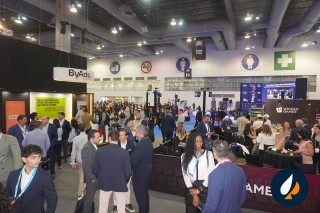




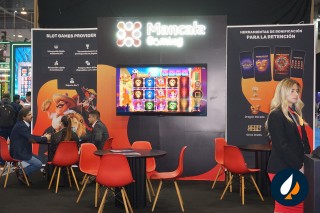
SiGMA North America 2026
01 de September 2026
LatAm Regulators Discussed Illegal Gambling and Innovation at SiGMA North America
(Mexico City, SoloAzar Exclusive).- The panel "The Red Pen Forum: Regulators Respond to the Industry," held during SiGMA North America 2026, brought together representatives from Uruguay, Argentina, Puerto Rico, and Honduras to analyze regulatory challenges, digital transformation, illegal gambling, and the need to adapt lotteries for new generations. The conference was moderated by Rodrigo Cigliutti, Executive Director of CIBELAE (Ibero-American Corporation of State Lotteries and Betting), and featured the participation of Marcelo Visconti, National Director of Lotteries and Quinielas of Uruguay; Carlos Moyano, President of IAFAS Entre Ríos, Argentina; Heidi Hernández Olivo, Deputy Secretary of the Puerto Rico Lottery; and Lissa Mencía, General Director of Lottery Operations and Games at Loto Honduras.
Monday 28 Sep 2026 / 12:00
SiGMA North America Addressed Crisis Management in iGaming
(Mexico, SoloAzar Exclusive).- During SiGMA North America 2026, Rosa Ochoa, founder of the Blue Global Gaming platform and strategic advisor for gaming operators; Iliana María Pineda Echeverri, Chief Legal & Compliance Officer at Wplay.co; Iraid Rosales, Country Manager Mexico at Amusnet; and Elizabeth Maya Cano, Executive President of CORNAZAR, analyzed the key factors in managing crisis situations within the iGaming industry, with a special focus on transparency, communication, technology, and preparation.
Friday 25 Sep 2026 / 12:00
Affiliates and Acquisition: Keys to Regulated Markets in North America
(Mexico City, SoloAzar Exclusive).- During SiGMA North America 2026, Cristopher Guzmán Reyes, Head of Affiliates at Logrand Entertainment Group; Guga Júnior, influencer and slots expert at Scalar Partners; Andrés Gómez, Head of Latin America Go-to-Market Strategy at Admattic; Yambot Aguilera, Gaming and Finance Sales Director at Google; and Paula Gabriel Jiménez, Advertising Client Growth Director for Microsoft at Aleph, analyzed the state and provincial affiliate ecosystem in North America, as well as the acquisition challenges in regulated markets.
Thursday 24 Sep 2026 / 12:00
SUSCRIBIRSE
Para suscribirse a nuestro newsletter, complete sus datos
Reciba todo el contenido más reciente en su correo electrónico varias veces al mes.