Online gaming in India: Karnataka aims to ban the activity
Tuesday 15 de July 2025 / 12:00
⏱ 4 min read
(Karnataka).- The gaming industry in India is undergoing rapid growth, fueled by a young demographic, widespread internet access, and affordable smartphones. Despite multiple regulatory efforts, the sector still lacks a comprehensive legal framework. In response, the Karnataka government is preparing a draft bill aimed at banning all forms of online betting, gambling, or wagering based on games of chance—whether involving cash, tokens, virtual assets, or digital transactions.

India’s gaming industry is growing at a rapid pace, propelled by a young demographic, affordable smartphones, and widespread internet access. In FY24 alone, 23 million new users joined the sector, cementing India’s position as the second-largest market globally by downloads. Of the 591 million gamers in the country, two-thirds now hail from tier-2 and tier-3 cities—a demographic shift that underlines the scale and spread of the sector.
The industry’s revenue tells a compelling story. In FY24, India’s gaming sector posted $3.8 billion in revenues, up from $3.1 billion the previous year—a 22.6% jump, according to a report by venture fund Lumikai. Real-money gaming accounted for $2.4 billion of that total. By FY29, industry revenue is projected to reach ₹66,250 crore (about $9.2 billion), growing at a compound annual rate of 14.9%, nearly double the global average.
The regulatory tightrope
Yet the sector’s explosive growth has brought a complex policy dilemma. On the one hand, governments see gaming as a source of innovation, employment, and export potential. On the other, the rise in online betting, addiction risks, and the proliferation of illegal gaming platforms have prompted calls for tighter oversight.
The Union government has made several attempts at regulation. In April 2023, the ministry of electronics and information technology (MeitY) introduced amendments to the IT Act, proposing self-regulatory organisations (SROs) to vet real-money games. But the plan was shelved, leaving the sector adrift amid a patchwork of state-level laws and inconsistent judicial interpretations.
Karnataka leads the way
In this policy vacuum, Karnataka has taken a decisive step. The state government plans to establish a four-member Karnataka Online Gaming and Betting Regulatory Authority under a new bill amending the Karnataka Police Act, 1963. The draft law, expected to be tabled in the upcoming legislative session, seeks to outlaw all forms of online betting, wagering, or gambling involving games of chance—including those using money, tokens, virtual currency, or digital payments.
At the same time, the bill proposes to exempt games of skill from this ban. Licences will be issued to skill-based operators, with regulatory oversight to ensure transparency and consumer safety. Crucially, the authority will rely on judicial precedent and industry benchmarks to distinguish between skill and chance—an essential first step towards rational and enforceable regulation.
The Karnataka authority will be chaired by an expert in law, public administration, or technology, supported by three members with expertise in information technology, finance, and social welfare. Tamil Nadu has already established a similar five-member body, the Tamil Nadu Online Gaming Authority (TNOGA), in August 2023. If these state-level efforts succeed, they could provide a blueprint for a national framework.
Challenges on multiple fronts
The sector, however, continues to face daunting obstacles. Chief among them is the regulatory chaos stemming from the absence of uniform national rules. State-level restrictions often vary widely, hampering the scalability of domestic companies and deterring global investment. The industry has long lobbied for central legislation that distinguishes clearly between games of skill and games of chance—a distinction that carries implications not just for licensing but also for taxation.
Then there’s the matter of illicit offshore gaming networks, which now account for deposits of over ₹8.3 lakh crore ($100 billion) annually, according to the Centre for Knowledge Sovereignty. These platforms operate outside India’s legal and financial systems, undercutting legitimate businesses and exposing users to fraud and data theft. The government has so far struggled to clamp down on these networks, especially when they are hosted beyond Indian jurisdiction.
The GST dilemma
The introduction of a 28% Goods and Services Tax (GST) on the face value of online bets in October 2023 has further clouded the outlook. By aligning online gaming with casinos and horse racing, the tax structure has placed significant financial strain on gaming firms—many of which now face shrinking margins and the prospect of offshoring operations to lower-tax jurisdictions.
India’s contribution to the global gaming market remains under 2%, far below China and the United States, which each account for around 25%. The average revenue per user in India is also among the lowest globally. A punitive tax regime risks stunting the sector’s growth just as it is gaining global traction. Companies like Krafton Inc., the South Korean firm behind PUBG and BGMI, continue to see promise in India’s e-gaming market, but sustainability will depend on more balanced tax and regulatory policies.
Towards a national framework
The sector’s stakeholders are not averse to regulation. In fact, many want it—provided it is fair, technology-neutral, and aligned with global standards. What the industry needs is a coherent national framework that can provide legal clarity, promote responsible gaming, safeguard user interests, and encourage innovation.
Such a framework must begin with a clear distinction between skill and chance, not just for purposes of legality but also for taxation. It should impose stringent safeguards on advertising and gameplay to prevent addiction, while also cracking down on illegal offshore operators through cooperation with global platforms and financial intelligence units.
India’s e-gaming sector is at a turning point. The market potential is vast, the demographic tailwinds are strong, and global investors are watching closely. Karnataka’s initiative to create a regulatory authority could offer a way forward—balancing economic opportunity with social safeguards.
The next step is for the Union government to build on these state-level models and craft a national policy that does justice to a sunrise sector. The risks of inaction are clear: lost revenues, capital flight, and an unregulated space rife with social harm. But so are the rewards—if done right, India could well become a global hub for responsible gaming.
Categoría:Online Games
Tags: Sin tags
País: India
Región: Asia




Event


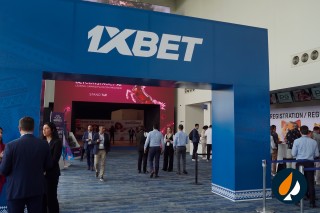







SiGMA North America 2026
01 de September 2026
LatAm Regulators Discussed Illegal Gambling and Innovation at SiGMA North America
(Mexico City, SoloAzar Exclusive).- The panel "The Red Pen Forum: Regulators Respond to the Industry," held during SiGMA North America 2026, brought together representatives from Uruguay, Argentina, Puerto Rico, and Honduras to analyze regulatory challenges, digital transformation, illegal gambling, and the need to adapt lotteries for new generations. The conference was moderated by Rodrigo Cigliutti, Executive Director of CIBELAE (Ibero-American Corporation of State Lotteries and Betting), and featured the participation of Marcelo Visconti, National Director of Lotteries and Quinielas of Uruguay; Carlos Moyano, President of IAFAS Entre Ríos, Argentina; Heidi Hernández Olivo, Deputy Secretary of the Puerto Rico Lottery; and Lissa Mencía, General Director of Lottery Operations and Games at Loto Honduras.
Monday 28 Sep 2026 / 12:00
SiGMA North America Addressed Crisis Management in iGaming
(Mexico, SoloAzar Exclusive).- During SiGMA North America 2026, Rosa Ochoa, founder of the Blue Global Gaming platform and strategic advisor for gaming operators; Iliana María Pineda Echeverri, Chief Legal & Compliance Officer at Wplay.co; Iraid Rosales, Country Manager Mexico at Amusnet; and Elizabeth Maya Cano, Executive President of CORNAZAR, analyzed the key factors in managing crisis situations within the iGaming industry, with a special focus on transparency, communication, technology, and preparation.
Friday 25 Sep 2026 / 12:00
Affiliates and Acquisition: Keys to Regulated Markets in North America
(Mexico City, SoloAzar Exclusive).- During SiGMA North America 2026, Cristopher Guzmán Reyes, Head of Affiliates at Logrand Entertainment Group; Guga Júnior, influencer and slots expert at Scalar Partners; Andrés Gómez, Head of Latin America Go-to-Market Strategy at Admattic; Yambot Aguilera, Gaming and Finance Sales Director at Google; and Paula Gabriel Jiménez, Advertising Client Growth Director for Microsoft at Aleph, analyzed the state and provincial affiliate ecosystem in North America, as well as the acquisition challenges in regulated markets.
Thursday 24 Sep 2026 / 12:00
SUSCRIBIRSE
Para suscribirse a nuestro newsletter, complete sus datos
Reciba todo el contenido más reciente en su correo electrónico varias veces al mes.