The Economic Impact of Poker Tournaments in Tallinn
Tuesday 29 de September 2026 / 12:00
⏱ 4 min read
(Riga).- While Latvia's tourism sector struggles and strict regulations stifle international events, neighboring Estonia is reaping millions from major poker tournaments. It's time for Riga to rethink its outdated gambling laws.
Tourism Slump and the Need for an "Event Economy"
Data from the Central Statistical Bureau shows a 2.9% drop in foreign tourists staying at Latvian accommodations during the first half of this year. Compared to the pre-pandemic levels of 2019, the drop is a staggering 19.1%, with overnight stays down by 26.3%. The decline is severe; tourists clearly lack a compelling motivation to visit Latvia.
Almost daily, we read news and speculations about how much taxpayer money from the general budget will be required to keep the national airline, airBaltic, afloat. If tourist numbers were closer to pre-pandemic levels, its financial situation wouldn't be so dramatic, as a large portion of these guests would rely on airBaltic's services.
Marketing and tourism experts agree: to attract travelers, you must create experiences. One of the primary ways to achieve this is by hosting large-scale events—a global trend that has even earned its own term: the "event economy."
Europe's Thriving Poker Scene
Every year, Europe hosts dozens of major poker tournaments in cities like Prague, Barcelona, Tallinn, Paris, and London. The largest poker room in Europe is actually located in the small Czech town of Rozvadov. Major poker festivals—such as the European Poker Tour (EPT), World Series of Poker Europe (WSOPE), and Battle of Malta—take place every month or two, drawing thousands of participants, while local weekly casino tournaments run daily. The modern poker tournament tradition began in Las Vegas in 1970 with the first WSOP, while Europe's massive tournament boom kicked off in the early 2000s, fueled by the popularity of online poker and television broadcasts.
In February of this year, Tallinn hosted a massive poker tournament that attracted over 1,500 players and roughly the same number of companions—family members, friends, and supporters. Estimates indicate that the average tournament participant spent six nights in a hotel. Daily spending in Tallinn averaged €300 per person, including hotel services. The tournament lasted 10 days, and simple math shows that this single event injected around €3-4 million into Estonia's tourism sector. This does not even include the hundreds of thousands of euros collected in taxes from the tournament's overall financial turnover.
Latvia's Restrictive Laws Stifle Growth
Meanwhile, hosting poker tournaments outside licensed casino premises is strictly banned in Latvia. There are only two operating casinos here, and neither can accommodate even half the number of players required for a major event. Consequently, Latvia is limited to hosting small, local city tournaments for residents, but is legally barred from organizing international events that would attract wealthy tourists and generate state revenue. This regulatory framework is not only backward; it could even be called actively harmful. The restrictions fail to hold up to scrutiny from either an economic or a public health perspective.
Undeniably, excessive gambling can cause severe harm. That is why legal, licensed gambling operators in Latvia are strictly supervised by the state, provide robust responsible gaming tools, and enforce a registry for self-excluded individuals.
Most people have heard of tournaments for zolīte (a traditional Latvian card game). Whether played with or without cash stakes, the driving force is the thrill of competition. Sports inherently revolve around excitement, which is why the betting industry developed alongside athletic competitions. Furthermore, Latvia appears to be the only country where zolīte is recognized as part of its cultural heritage. Yet, while we pretend that poker tournaments are somehow fundamentally different from zolīte events, the rest of Europe continues to host them and attract affluent travelers.
The Path to a Competitive Market
Latvian regulations dictate that a live poker tournament can only take place within casino premises. In other countries, alternative legal models exist for hosting tournaments outside traditional casinos. Many nations have established frameworks for gaming and card clubs, allowing poker tournaments to take place in those venues. In the UK, for example, "pub poker" is highly popular. While every country's legal framework has its own nuances, they all provide a legal pathway to host these events.
For Latvia to be able to host international poker tournaments alongside zolīte, two steps are necessary: amendments to the Law on Gambling and Lotteries, and a special tax framework for these events. Currently, Latvia has a uniquely unfair regulation regarding Personal Income Tax (PIT) on gambling turnover and winnings. We are the only country where PIT is calculated on total turnover rather than net winnings, meaning a player can be heavily taxed even if they actually lost money overall. Clearly, with this kind of regulation, Latvia has zero chance of attracting players to an international tournament.
Latvia has a genuine opportunity to attract wealthy Scandinavian tourists. It simply requires sensible regulation and the desire to compete with other European countries and cities. If you wonder whether our economy actually needs this, just ask the management team at airBaltic, for whom all upcoming decisions seem bound to be painful. Or ask the local chefs and hoteliers who are desperately short on guests looking to have a great time and willing to pay well for the experience.
/Juris Celmārs. Latvian Licensed Gambling Association, Chairman of the Board of SIA “Olympic Casino Latvia”/
Categoría:Poker
Tags: Sin tags
País: Latvia
Región: EMEA




Event

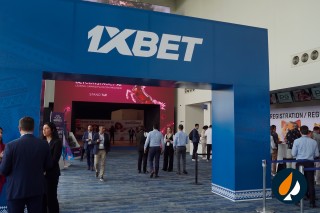

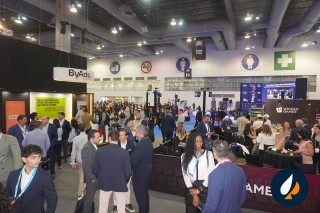

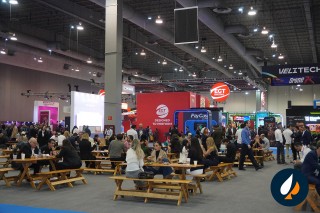


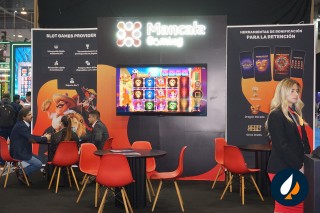
SiGMA North America 2026
01 de September 2026
LatAm Regulators Discussed Illegal Gambling and Innovation at SiGMA North America
(Mexico City, SoloAzar Exclusive).- The panel "The Red Pen Forum: Regulators Respond to the Industry," held during SiGMA North America 2026, brought together representatives from Uruguay, Argentina, Puerto Rico, and Honduras to analyze regulatory challenges, digital transformation, illegal gambling, and the need to adapt lotteries for new generations. The conference was moderated by Rodrigo Cigliutti, Executive Director of CIBELAE (Ibero-American Corporation of State Lotteries and Betting), and featured the participation of Marcelo Visconti, National Director of Lotteries and Quinielas of Uruguay; Carlos Moyano, President of IAFAS Entre Ríos, Argentina; Heidi Hernández Olivo, Deputy Secretary of the Puerto Rico Lottery; and Lissa Mencía, General Director of Lottery Operations and Games at Loto Honduras.
Monday 28 Sep 2026 / 12:00
SiGMA North America Addressed Crisis Management in iGaming
(Mexico, SoloAzar Exclusive).- During SiGMA North America 2026, Rosa Ochoa, founder of the Blue Global Gaming platform and strategic advisor for gaming operators; Iliana María Pineda Echeverri, Chief Legal & Compliance Officer at Wplay.co; Iraid Rosales, Country Manager Mexico at Amusnet; and Elizabeth Maya Cano, Executive President of CORNAZAR, analyzed the key factors in managing crisis situations within the iGaming industry, with a special focus on transparency, communication, technology, and preparation.
Friday 25 Sep 2026 / 12:00
Affiliates and Acquisition: Keys to Regulated Markets in North America
(Mexico City, SoloAzar Exclusive).- During SiGMA North America 2026, Cristopher Guzmán Reyes, Head of Affiliates at Logrand Entertainment Group; Guga Júnior, influencer and slots expert at Scalar Partners; Andrés Gómez, Head of Latin America Go-to-Market Strategy at Admattic; Yambot Aguilera, Gaming and Finance Sales Director at Google; and Paula Gabriel Jiménez, Advertising Client Growth Director for Microsoft at Aleph, analyzed the state and provincial affiliate ecosystem in North America, as well as the acquisition challenges in regulated markets.
Thursday 24 Sep 2026 / 12:00
SUSCRIBIRSE
Para suscribirse a nuestro newsletter, complete sus datos
Reciba todo el contenido más reciente en su correo electrónico varias veces al mes.