Betting tax: now it’s before the court of justice
⏱ 3 min read
(Liverpool).- The Parma Provincial Tax Commission, in accepting the request of the defence team acting for Stanley and a Data Transmission Centre (DTC) affiliated to it, represented in court by the lawyers Daniela Agnello and Vittoria Varzi, ordered the case to be referred to the European Court of Justice, raising serious and well-grounded doubts over the compatibility with European Law of the Italian legislation introducing the betting tax for DTCs.
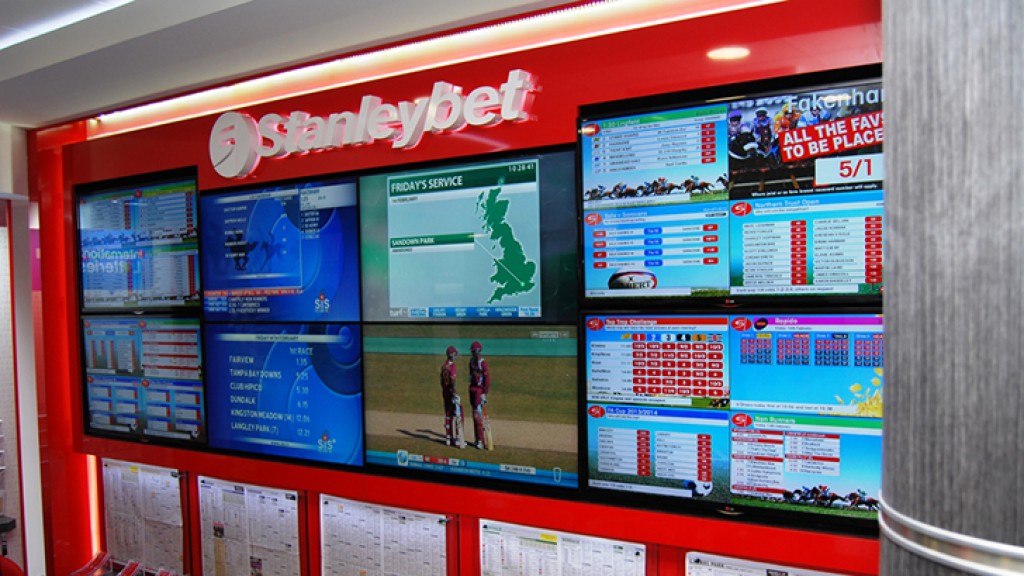
The affair is widely known and can be summarised as follows: in 2000, the first call for tenders was announced in Italy for sports betting. Stanley, a leading English group listed on the London Stock Exchange, attempted to enter the Italian market. This was blocked by exclusion clauses contrary to EU law, implemented to protect the sector’s dominant operators. This has been the conclusion of the Italian judiciary which, in the last 18 years, in several thousand cases and in application of as many as 4 Court of Justice rulings (the Gambelli, Placanica, Costa-Cifone and Laezza cases), has set aside domestic law based on the contravention of EU law of all the calls for tender announced by the Italian State (tender contest of 2000, Bersani tender, Monti tender) and accordingly systematically discharged and acquitted the Stanley DTCs.
Given the impossibility of stopping Stanley entering the Italian market, a new form of discrimination was created, this time through taxation. The Stability Law of 2011, in fact, introduced the obligation on the DTCs to pay the flat-rate tax, declaring in the recitals that it is aimed at giving lawful gaming a level playing field with unlawful gaming. Except that, given that the Stanley DTCs have been systematically acquitted by the judiciary and their activities are considered entirely lawful, it is clear that new and additional discrimination is being perpetrated against them compared to the agents of Snai, Eurobet, Sisal etc., which are not subject to the same tax. It is true that concessionaires directly pay tax on bets, but so does Stanley, which pays tax to the country (Malta) that authorised it, certainly not in favour of the one that has systematically prevented its access. The conclusion is obvious, as reached by the tax court of Parma: the flat-rate tax for the DTCs is not a tax but a penalty in disguise, aimed as discouraging their activity. It clearly follows that discrimination is continuing against Stanley through taxation.
It is now necessary to await the scrutiny of European Justice, bearing in mind that the Constitutional Court has already declared the law unconstitutional, as regards its retrospective validity for periods before the law came into force. For subsequent periods, the decision now lies with the European Court.
“We are confident that the matter can be resolved before the European Supreme Court ruling, which will take at least 1 year.” This is the position of John Whittaker, Stanley’s Chairman, speaking by telephone from his office in Liverpool, who continued, revealing that: “To this end, in July 2018, I began a constructive dialogue with the Customs and Monopolies Agency (ADM), notifying the Ministry of the Economy, which so far has only been in the form of an exchange of letters. As recently as yesterday, I received the Agency’s first “technical” response, the details of which I cannot go into but whose concerns I think can be overcome if there is the willingness to find a solution on both sides.”
A similar stance was taken by Giovanni Garrisi, Stanley’s CEO, interviewed this morning at the company’s futuristic stand at SIGMA, the industry’s most important annual exhibition in Malta. “I am respectful and proud once again to be before the judges of the European High Court, but also concerned.” Asked by the Maltese interviewer why he was concerned, he replied: “This affair has been going on for 18 years. Even if the Court of Justice rules in favour of Stanley, I wonder what may happen afterwards. Both we and the officials of the Monopolies authority will in any event have to answer in the future for all the time and resources wasted and for not being able to avoid all the harm and damage that this dispute has caused and is causing to so many people and their families, none excluded. The confrontation must be de-escalated. I know that John Whittaker and the ADM, under the watchful eyes of the Ministry of the Economy, have begun to talk. I hope that good sense prevails and that the current problems can be resolved even before the ruling of the Court. I appeal to Snai, Sisal and Lottomatica, which as the historical Concessionaires, to collaborate with us and ADM in order to encourage this process of integration in the best interests of everyone in the industry.”
Categoría:Sportsbook
Tags: betting software, SIGMA, betting solution , Sports Betting, Sports Gaming , Sportsbook , Stanley’s ,
País: United Kingdom




Event








SBC Summit 2026
29 de September 2026
Ready Play Gaming Highlights New Opportunities After SBC Summit 2026
Tuesday 13 Oct 2026 / 12:00
Uplatform Brought "Your Dreams. Our Platform" to Life at SBC Summit Lisbon 2026
Friday 09 Oct 2026 / 12:00
Kambi Highlights Network and LatAm Growth at SBC Summit
Friday 09 Oct 2026 / 12:00
SUSCRIBIRSE
Para suscribirse a nuestro newsletter, complete sus datos
Reciba todo el contenido más reciente en su correo electrónico varias veces al mes.