New sports betting licenses create opportunities for businesses in D.C. and Maryland
Tuesday 12 de October 2021 / 08:34
⏱ 4 min read
(Maryland).- The first-ever Class B sports betting licensee in D.C. began taking wagers this week; the operation, set up at Grand Central in Adams Morgan, could soon be joined by other sportsbooks in D.C. and Maryland.
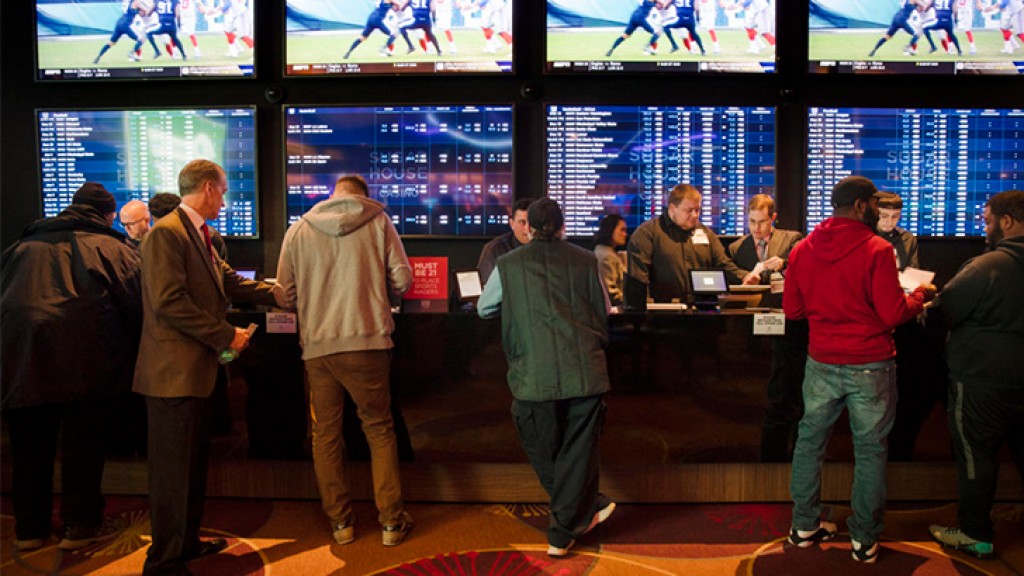
Class B licenses are for D.C. bars and restaurants that hope to use sports betting to attract customers. But while the opportunity for licenses is unique to D.C. right now, a similar class of license is eventually going to open up to businesses in Maryland.
Lawmakers said there’s hope to use sports betting licenses as a way to help small businesses generate more revenue and achieve “equity” that, in other states, is really only available to large gaming corporations that already dominate the market.
Any business that wants to take advantage of the license needs to understand just how much investment it takes.
The application process Grand Central owner Brian Vasile went through is expected to be replicated several times in D.C. and Maryland in the months to come, giving him unique insight into what other small business owners will be going through.
“Whatever you think it is, multiply it by 100,” said Vasile. “I don’t say that to intimidate people … you need to gamble to gamble.”
For one, D.C. requires a nonrefundable $100,000 license application fee. But that’s not taken until prospective applicants can prove they should be taken seriously.
After that, they go through rigorous financial disclosures, credit history background checks and mountains of other paperwork. It takes several months to process and Vasile says he spent lots of time retrieving documents in a timely fashion on multiple occasions.
He said the entirety of the application, with all the documents, was over 9,000 pages.
Since then, he’s learned all sorts of things about compliance, risk management and algorithms involved with sports betting. Vasile had to hire several people with experience in sports betting to help run the new operation.
Then there’s the security upgrades; his bar will have at least two people on the floor whenever the bar is open. He more than doubled the amount of cameras set up in the bar, as well, because every inch of the space has to be visible to video monitoring.
He took Grand Central’s old DJ booth and turned it into a betting window, but since the wagering is cash-only, it has ballistic glass and some rooms have extra locks that require multiple keys that need to be carried by multiple people.
Add in new TVs and the work it took to wire them into the bar, and now you’ve added around $50,000 to the $100,000 license application. Other renovations and upgrades cost him tens of thousands of dollars more.
The technology used to take the bets is being handled by Elys Gaming. The company partnered up with Grand Central in a similar fashion to the deals they have with small businesses in Europe, where this sort of setup is already common.
About a half dozen venues in Maryland are in conversations with Elys Gaming about forging a similar partnership there.
But with all the physical upgrades required in place, Vasile said now “payroll becomes the next most expensive,” part of this operation.
“We have four sports wagering managers, we have four ticket writers, we have surveillance and security officers,” he said. The staff he’s hired on that end of things is far more knowledgeable and experienced in sports betting than he is, but it took effort to bring them in.
Now, despite what city leaders have said about sports betting around D.C., most gamblers prefer to wager through mobile apps, and Grand Central and Elys Gaming are teaming up to create one that customers can use inside the bar.
It can only be used at Grand Central, whereas in Maryland, it’s expected that restrictions on mobile apps will likely be less onerous than in D.C. But the final regulations haven’t been approved yet.
“The regulations that D.C. has, it has to be geofenced to the property line,” said Vasile. Inside the bar, or even on the patio is fine. “You take a step, a foot off the patio, which is 12 inches, and it’s illegal. So there has to be a geofence that cuts off the ability to make a wager from the patio to the street.”
Vasile said Grand Central and Elys Gaming have come up with the solutions to make that viable. An app could be ready to go for customers there by sometime next spring.
Should D.C. get around to changing the rules regarding mobile betting in the future, which many in the gaming industry have been pushing for, it could make sports betting even more profitable for Vasile and other small business owners interested in becoming players in what’s otherwise a very top heavy field.
Categoría:Sportsbook
Tags: Sin tags
País: United States




Event
iGaming tech leader Cristina Turbatu commends ICE Barcelona's vision for Hall 7
Tuesday 20 Oct 2026 / 12:00
CGA Showcases Canada’s Competitive Edge at ICE Barcelona
Tuesday 13 Oct 2026 / 12:00
ICE Barcelona Hosts WorldGaming-Backed Nineball Championship in 2027
Tuesday 06 Oct 2026 / 12:00
SUSCRIBIRSE
Para suscribirse a nuestro newsletter, complete sus datos
Reciba todo el contenido más reciente en su correo electrónico varias veces al mes.