Interviews
Constante Traverso and the Need for a New Regulatory Framework in Peru
2 minutos de lectura
(Lima, SoloAzar Exclusive).- As part of Peru Gaming Show (PGS) 2026, tax law specialist Constante Traverso delivered the conference "Scope and Main Challenges After 25 Years of the First Regulation of Traditional Gaming in Peru." During his presentation, he reviewed the regulatory evolution of the sector, highlighted the progress achieved in terms of formalization and regulation, questioned the current tax framework, and presented a series of proposals aimed at strengthening the industry's competitiveness and establishing a public policy for gambling.
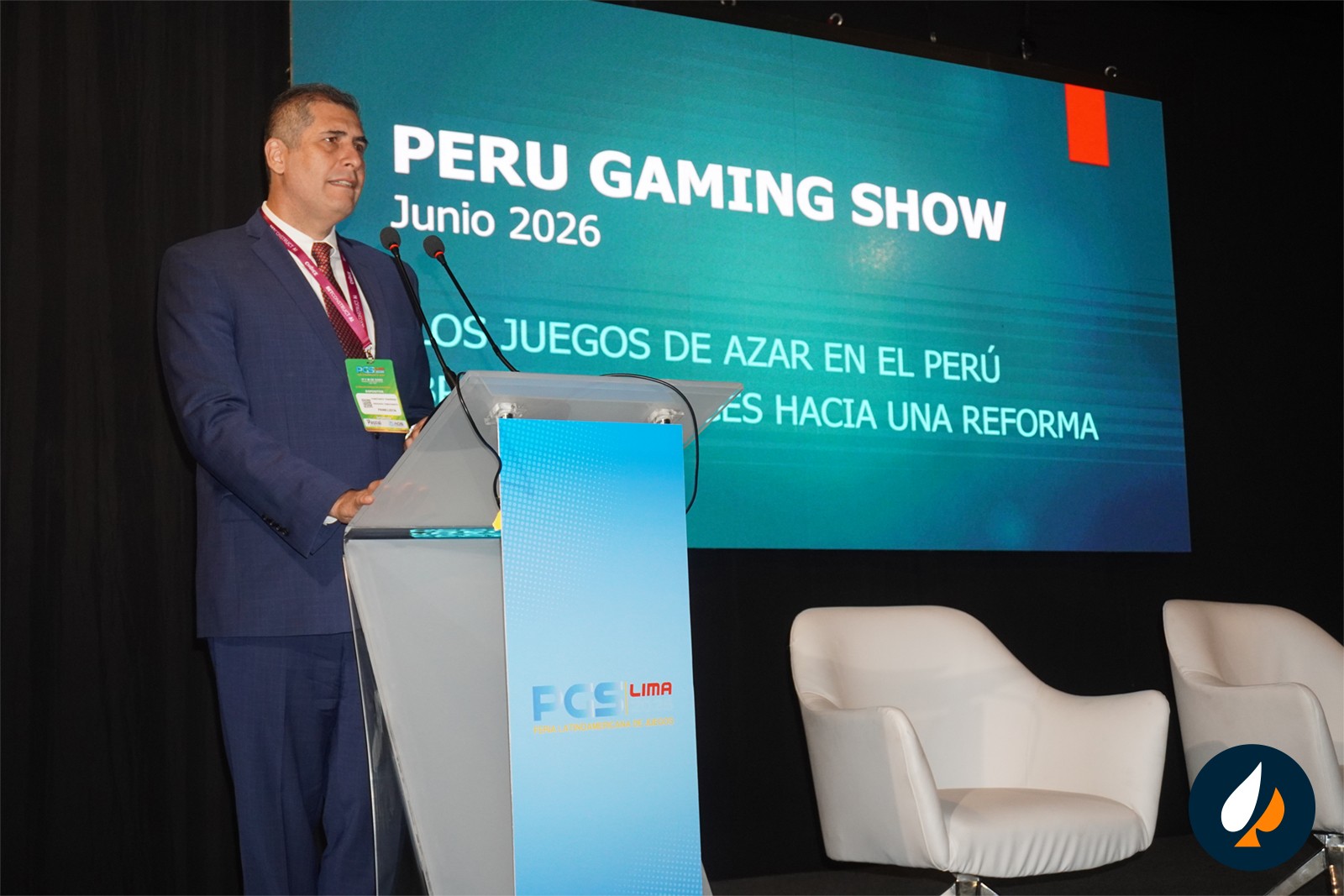
A 25-year review of regulation: progress and pending challenges
At the beginning of his presentation, tax specialist Constante Traverso reviewed his three decades of experience in the industry and explained that the purpose of his talk was to analyze the sector's evolution and propose reforms to address current challenges.
"This year I am celebrating 30 years working in the gaming industry, and I have tried to reflect my experience from these 30 years while also proposing some corrections and reforms that I believe are timely."
Before developing his analysis, Traverso highlighted the work carried out by MINCETUR's General Directorate of Casino Games and Slot Machines over the last two decades.
"I am convinced that this latest stage of the Gaming Directorate has been the best period of gambling regulation in Peru."
He also praised the regulator's technical capabilities and expressed his hope that this management model would continue.
"It is important to highlight this technical team that has been built, and we hope that the next government maintains and protects it, because it is truly a guarantee that this industry can continue to grow."
Four stages that shaped the history of regulated gaming in Peru
From failed regulation to the formalization process
Traverso divided the sector's evolution into four major stages. The first, before Law 27053 of 1999, was characterized—according to his explanation—by scattered regulations, contradictory criteria, and constant changes in the tax regime.
He later highlighted the approval of the first comprehensive regulation for the sector, although he noted that some aspects still need to be updated after more than two decades in force.
The specialist considered that the most successful period began in 2006 with the Reorganization and Formalization Law and the institutional strengthening of MINCETUR.
According to him, this process allowed the industry to achieve historic levels of formalization, employment, and investment.
"The Gaming Directorate was the only Peruvian state institution that successfully carried out a formalization process. It achieved 100% formalization of the activity."
Traverso recalled that, before this reform, there were more than 400 informal companies and a large part of the market operated under legal injunctions or outside the regulatory framework.
The selective consumption tax at the center of criticism
"More tax, but less revenue"
One of the main focuses of the conference was the analysis of the impact of the selective consumption tax applied to the sector.
Traverso argued that the current tax policy has produced effects opposite to those expected, reducing revenue, affecting companies' profitability, and causing establishments to close.
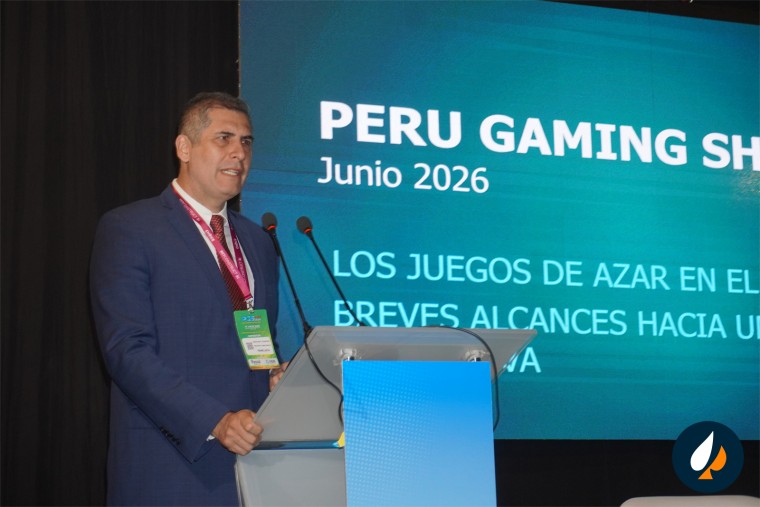
"More tax, but less revenue. I believe this deserves reflection"
In his view, the problem does not lie in the regulations promoted by MINCETUR, but rather in the decisions adopted by the Ministry of Economy and Finance.
"The regulator understands the business, but in the other ministry office we have not found the same level of openness."
The lawyer also questioned the application of the tax without considering operators' actual ability to contribute.
"It is a blind tax rate that affects the ability to pay."
As support for his analysis, he recalled that the Permanent Commission of Congress itself recommended in 2018 the repeal of the selective tax applied to slot machines and mentioned the constitutional debates that continue regarding its legality.
The pandemic worsened the sector's crisis
Traverso also reviewed the impact of the pandemic on the gaming industry and criticized the sector's exclusion from state economic recovery programs.
He recalled that casinos and gaming halls were classified among activities with a "negative social perception," preventing them from accessing financing mechanisms such as Reactiva Perú.
In this context, he stated that revenue levels from before the pandemic have still not been recovered.
"Higher taxes do not necessarily mean higher revenue; it depends on how regulations are designed and how taxes are structured."
Proposals to build a public gambling policy
Guarantees, sanctions, and administrative simplification
In the final part of his presentation, Traverso presented a series of proposals aimed at modernizing Peru's regulatory framework.
Among them, he proposed reducing the amount of guarantees required from operators, arguing that their financial cost is excessive compared to the limited number of executions recorded in recent years.
He also proposed reviewing the sanctions and violations framework to incorporate criteria of reasonableness and proportionality.
As an example, he questioned fines imposed for temporary failures in video surveillance systems.
"There are opportunities for improvement so that sanctions truly reflect the unlawful benefit, the severity of the damage, and the economic impact."
He also suggested introducing changes regarding aspects such as the legal definition of gaming venues, the handling of prize-related claims, proof of property-use rights for venues where gaming halls operate, and the criteria used to assess operators' financial solvency.
A state policy to guarantee sector development
As he concluded his conference, Traverso insisted that the main challenge is designing a permanent public policy for the gaming industry that goes beyond changes in government.
According to him, the lack of a coordinated state strategy creates contradictions between different public institutions and limits the development of an activity that has demonstrated its ability to generate formal employment, investment, and tax revenue.
"We need to build a public policy for gambling, with an efficient, modern, transparent state that promotes development."
Finally, he expressed confidence that the next government will promote a reform agenda agreed upon with the regulator and industry representatives in order to establish a more stable and competitive legal framework for Peru's gaming industry.
Categories: Exclusive
Tags: PGS, Peru Gaming Show,
Region: Europa
Sign Up
To subscribe to our newsletter, please fill in your details
Receive all the latest content in your email several times a month.