Interviews
LatAm Regulators Discussed Illegal Gambling and Innovation at SiGMA North America
2 minutos de lectura
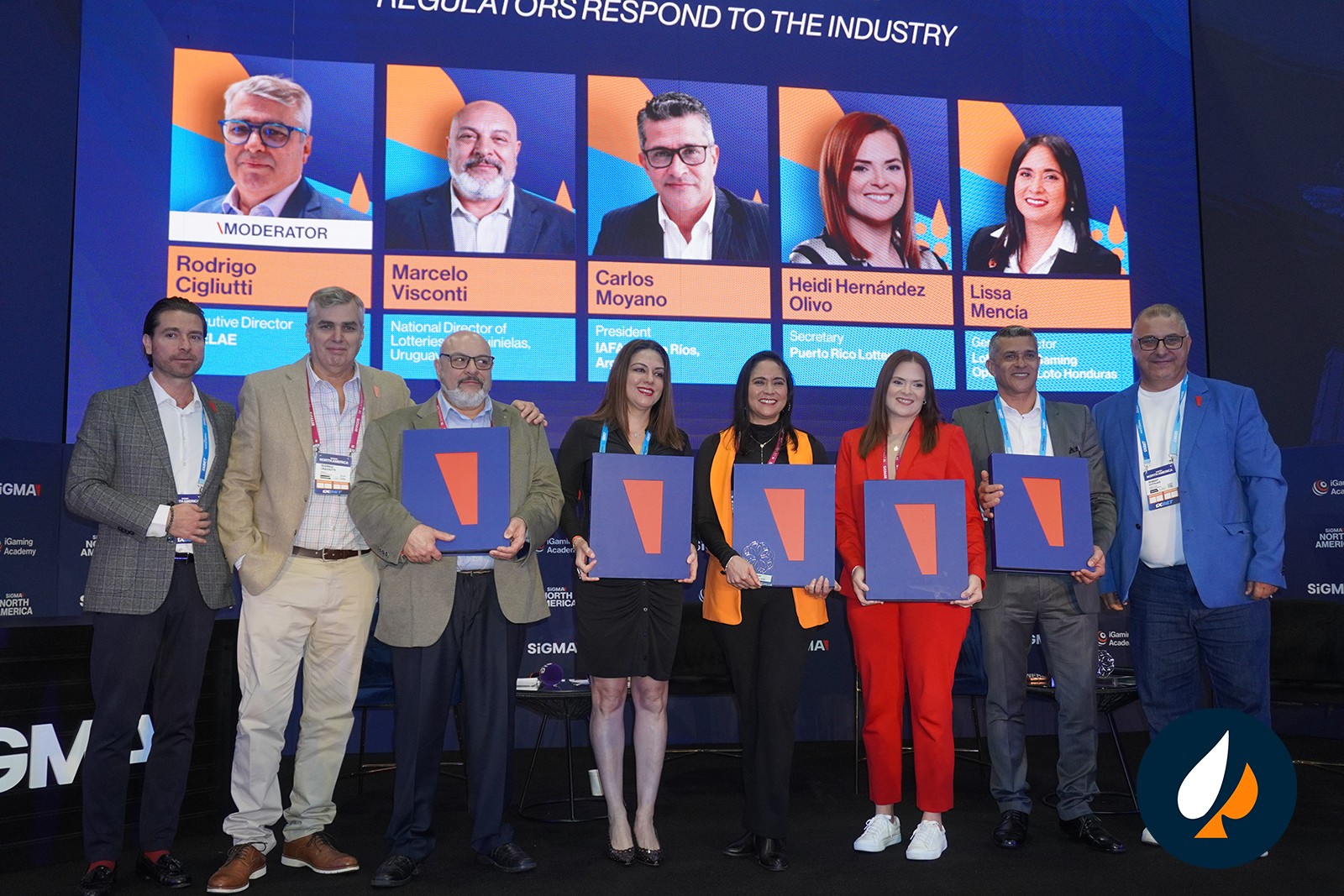
(Mexico City, SoloAzar Exclusive).- The panel "The Red Pen Forum: Regulators Respond to the Industry," held during SiGMA North America 2026, brought together representatives from Uruguay, Argentina, Puerto Rico, and Honduras to analyze regulatory challenges, digital transformation, illegal gambling, and the need to adapt lotteries for new generations. The conference was moderated by Rodrigo Cigliutti, Executive Director of CIBELAE (Ibero-American Corporation of State Lotteries and Betting), and featured the participation of Marcelo Visconti, National Director of Lotteries and Quinielas of Uruguay; Carlos Moyano, President of IAFAS Entre Ríos, Argentina; Heidi Hernández Olivo, Deputy Secretary of the Puerto Rico Lottery; and Lissa Mencía, General Director of Lottery Operations and Games at Loto Honduras.
Different Regulatory Models in Latin America
The gathering, held at Centro Banamex during the second day of SiGMA North America, highlighted the existing differences between the regulatory and operational models of lotteries and games of chance in the region. Participants agreed that Latin America cannot be treated as a homogeneous market due to the regulatory and operational particularities of each jurisdiction.
Introducing the debate, Rodrigo Cigliutti, Executive Director of CIBELAE, highlighted the diversity of existing organizations and models in the region. "We wanted to show the variety of lotteries and regulatory bodies that exist in Latin America and just how diverse and different they are," he noted.
In the case of Uruguay, Marcelo Visconti, National Director of Lotteries and Quinielas of Uruguay, explained that the country maintains a restrictive framework for the activity.
"In Uruguay, gambling is prohibited unless expressly authorized by law and, furthermore, it constitutes a state monopoly," he stated.
The model in Entre Ríos (Argentina) presents a different structure. Carlos Moyano, President of IAFAS Entre Ríos, explained that the state agency participates both directly and through concessionaires.
"We do it directly, through our own operations and with our own employees, and indirectly, through concessionaires," he detailed.
Digital Transformation Drives New Models
Digitalization also took center stage in the debate. Honduras presented the transformation process of its operations to integrate physical points of sale, mobile terminals, digital channels, and third-party platforms under an omnichannel strategy.
Meanwhile, in Argentina, the evolution of an online gaming platform incorporating video games and slot machines, alongside sports betting, was presented. The exchange showed how lotteries are moving from models focused on physical distribution toward frameworks that combine land-based, mobile, and digital channels.
Innovation to Attract New Generations
The need to revamp products and channels was also linked to attracting younger consumers.
Lissa Mencía, General Director of Lottery Operations and Games at Loto Honduras, directly tied innovation to this goal.
"We also focus heavily on innovation and expanding our game portfolio because we believe we must attract new generations; the lottery truly has to evolve and seek out other audiences as well," she explained.
Moyano pointed out that video lottery terminals are one of the tools used in Entre Ríos to broaden reach toward younger demographic segments. "We are trying to capture a younger population segment than the one traditionally reached through agencies," he indicated.
The IAFAS President added that retaining this audience represents one of the industry's challenges: "That is the challenge we face: trying to reach the younger segment... and getting them to stay over time."
Illegal Gambling Poses Different Challenges Depending on the Market
Competition from illegal gambling was another main focus of the panel. The regulators noted that the scale of the phenomenon and the tools available to combat it vary across jurisdictions, and that control measures must be complemented by products, promotions, and experiences capable of competing with unregulated alternatives.
Visconti estimated that illegal gambling accounts for up to 10% of the Uruguayan market, while Mencía placed that proportion at 22% in Honduras. In the latter case, she explained that illegal operators can compete with lower costs since they do not bear the same regulatory, tax, and social burdens as legal operations.
"In a game, they obviously pay out more than a legal operator, because we do pay the government, we pay taxes, and we also contribute to social projects, so their costs are lower," Mencía argued.
The Loto Honduras representative also pointed out that tightening the regulatory framework is not necessarily enough to shrink the illegal market.
"Although we have tried to establish a stricter regulatory framework and have worked to achieve it, we haven't seen real results," she stated.
As an alternative, she suggested developing proposals that allow the regulated offering to stand out.
"We can offer different products that illegal operators cannot copy, launch different promotions, and carry out specific initiatives focused on those areas where illegal operators are present," she explained.
Consumer Protection and Responsible Gaming
The debate also addressed the impact of illegal gambling from a consumer protection perspective. Visconti pointed out that the lack of oversight over unregulated operations limits the ability of agencies to apply responsible gaming tools and financial security controls.
"Since we cannot know how people are playing or how the gaming activity is unfolding, we have no chance to apply the responsible gaming measures or financial security controls that we do apply to legal operators," explained the National Director of Lotteries and Quinielas of Uruguay.
Furthermore, he warned about other risks associated with illegal operations: "The player is also exposed... exposed to fraud, exposed to not receiving their winnings if they win."
From Honduras, Mencía also highlighted the need to improve public communication regarding the difference between legal and illegal operations.
"There is no communication or effort from the government to explain that this is actually illegal gambling that does not contribute to the State," she affirmed.
Social Impact as a Differentiation Tool
Participants also analyzed the importance of communicating where the resources generated by state lotteries go. In this regard, Mencía argued that the value of legal products must be explained beyond just the prize the player might receive.
"People need to know that a ticket represents much more than a prize," she noted.
Heidi Hernández Olivo, Deputy Secretary of the Puerto Rico Lottery, explained that the entity changed its communication strategy to place a greater emphasis on the activity's social impact.
"We went from messages like 'play the lottery,' 'play to win,' or 'luck is looking for you' to explaining to people why it is important to play the lottery and where the money goes," she indicated.
Hernández Olivo added: "With every bet they place, they are contributing to all those sectors."
Coordination and Modernization of Regulatory Bodies
The panel also brought to the table the difficulties agencies face when acting against illegal gambling, especially when regulatory responsibilities are distributed across different jurisdictions.
Moyano pointed out that the Argentine federal system presents challenges in establishing coordinated action mechanisms against illegal online operations.
"There is no unified supranational policy that addresses this issue," he argued.
The President of IAFAS Entre Ríos also raised the need for mechanisms that allow for faster action against illegal websites.
"We do not have a higher-level body that allows us to have the necessary speed and agility to process complaints," he stated.
In addition to calling for tools for operators and greater enforcement capabilities, the debate raised the need for regulatory bodies themselves to keep pace with market transformation through new technological, logistical, and professional capabilities.
"We understand that a series of major changes in gaming are coming to the country, and we want to be up to the task," Moyano concluded.
The gathering closed with a call to strengthen international cooperation and the exchange of experiences among regulators. The participation of authorities from different jurisdictions made it possible to contrast common models and challenges regarding regulation, digital transformation, responsible gaming, and the fight against illegal operations.
Categories: Events
Tags: No Tags
Region: Europa
Sign Up
To subscribe to our newsletter, please fill in your details
Receive all the latest content in your email several times a month.